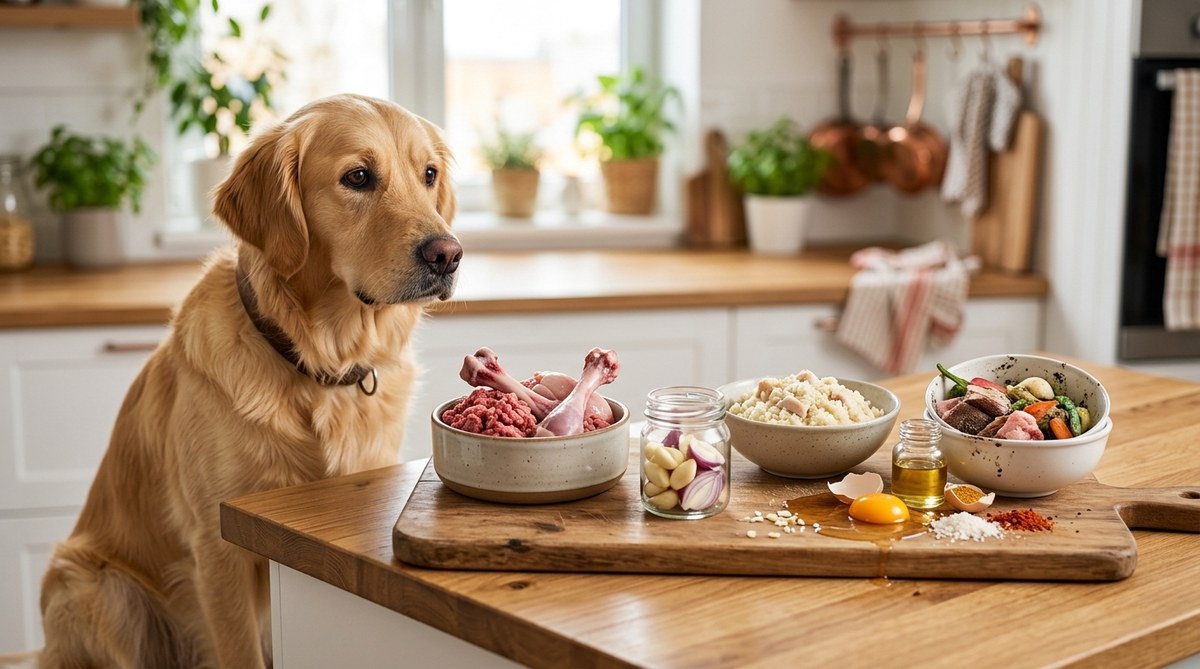
You love your dog. You want the best for them. That is why you are thinking about making their food at home. It feels natural. It feels safe. You can control every ingredient. But here is the truth that many owners miss: homemade dog food can be dangerous if you do not get it right.
A well-meaning owner can accidentally cause serious health problems. Nutritional deficiencies, organ damage, and even poisoning are real risks. The good news is that these problems are easy to avoid. You just need to know what to look for.
Homemade dog food mistakes often come from good intentions. The five most common errors are missing essential nutrients, using toxic ingredients, ignoring calorie balance, skipping variety, and forgetting food safety. Each one can harm your dog. Learn to spot them and your homemade diet will be safe, healthy, and delicious for your pet.
The biggest mistake: guessing the nutrients
Most homemade dog food recipes you find online are not complete. They might look good. They might include chicken, rice, and carrots. But your dog needs more than that. Dogs require specific amounts of calcium, phosphorus, zinc, vitamin D, and taurine. A diet built on guesswork will almost always miss something.
A study from the University of California found that over 90 percent of homemade dog food recipes were nutritionally unbalanced. That is a scary number. Dogs who eat unbalanced food for months can develop bone problems, heart issues, and a weak immune system.
If you want to make your own food, you need a recipe formulated by a veterinary nutritionist. Do not trust a blog post from someone who just loves their dog. Look for recipes that list exact measurements and include a complete vitamin and mineral premix.
For a deeper look at what your dog needs every day, check out our guide on essential tips for creating a balanced homemade dog food diet.
Mistake two: using ingredients that are toxic to dogs
This one might seem obvious, but it happens all the time. Some foods that are perfectly healthy for humans are dangerous for dogs. You would never feed your dog chocolate. But what about garlic? Onions? Grapes? Macadamia nuts? Xylitol, the sweetener found in many peanut butters and sugar-free gums, can kill a dog in small amounts.
Here is a list of common ingredients that should never go into homemade dog food:
- Onions and garlic (all forms: raw, cooked, powdered)
- Grapes and raisins
- Macadamia nuts
- Xylitol
- Avocado (the pit and skin)
- Alcohol
- Caffeine
- Cooked bones (they can splinter)
Even a small amount of onion powder in a stew can cause red blood cell damage over time. Be careful with seasoning. Dogs do not need salt, spices, or herbs. Keep it plain.
If you suspect your dog has eaten something toxic, call your veterinarian or a pet poison hotline right away.
Mistake three: ignoring calorie and portion balance
A bowl of homemade food might look like the right amount. But looks can be deceiving. Homemade food is often less calorie-dense than commercial kibble. Your dog might need a larger volume of food to get the same energy. Or you might be overfeeding without realizing it.
Weight management is a big deal for dogs. Obesity leads to joint pain, diabetes, and a shorter lifespan. On the other hand, underfeeding leaves your dog hungry and tired.
You need to calculate your dog’s daily calorie needs. The formula depends on their weight, age, and activity level. A 50-pound active Labrador needs more calories than a 50-pound senior Beagle who mostly naps.
Use this simple table to get started:
| Dog weight range | Typical daily calories (active adult) | Typical daily calories (senior) |
|---|---|---|
| 10 to 20 lbs | 400 to 600 | 300 to 450 |
| 20 to 40 lbs | 600 to 900 | 450 to 700 |
| 40 to 60 lbs | 900 to 1200 | 700 to 950 |
| 60 to 80 lbs | 1200 to 1500 | 950 to 1200 |
These are rough numbers. For a precise plan, talk to your vet. They can help you set a target and adjust as your dog ages.
For more details on portion control, read our article on how to calculate your dog’s daily calorie needs for weight management.
Mistake four: feeding the same thing every day
Variety is not just for humans. Dogs benefit from eating different protein sources and vegetables. If you feed chicken and rice every single day, your dog will miss out on nutrients found in beef, fish, eggs, and organ meats.
A monotonous diet can also lead to food allergies or sensitivities. Dogs can develop an intolerance to a protein they eat too often. Rotating proteins helps prevent that.
Here is a sample rotation plan you can follow:
- Week one: use ground turkey, sweet potato, and green beans.
- Week two: use beef heart, brown rice, and spinach.
- Week three: use sardines (canned in water), pumpkin, and carrots.
- Week four: use eggs, oats, and broccoli.
Each week, add a commercial vitamin premix to cover any gaps. This keeps meals interesting and complete.
If you want more ideas for variety, take a look at our list of wholesome homemade dog meal ideas for busy pet owners.
Mistake five: poor food safety and storage
Homemade dog food spoils faster than dry kibble. It has no preservatives. It is moist. Bacteria love it. If you leave a bowl of homemade food out for hours, your dog could get sick. Salmonella and E. coli are real risks.
Follow these rules to keep your dog safe:
- Store homemade food in the refrigerator for no more than three days.
- Freeze portions in single-serving containers. They will last up to three months.
- Thaw frozen food in the refrigerator, not on the counter.
- Wash your hands and all surfaces after handling raw meat.
- Do not leave uneaten food in the bowl for more than 30 minutes.
Some owners make a big batch on Sunday and portion it out for the week. That works well. Just make sure you freeze most of it and only thaw what you need for the next day.
“I see dogs with chronic digestive issues all the time. Often, the root cause is not the ingredients themselves. It is the way the food was handled or stored. Bacteria can turn a healthy meal into a dangerous one.” — Dr. Sarah Mills, DVM
The right way to start homemade dog food
If you are ready to make the switch, do not do it alone. Work with your veterinarian. They can run blood tests to check your dog’s current health and recommend a specific supplement plan.
Here is a simple process to get started safely:
- Schedule a checkup and ask your vet for a referral to a veterinary nutritionist.
- Choose a recipe that includes a complete vitamin and mineral premix.
- Calculate your dog’s daily calorie needs.
- Buy fresh ingredients and plan your storage.
- Introduce the new food slowly over seven days. Mix a little homemade food with their current food, and increase the ratio each day.
- Monitor your dog’s weight, energy, and stool quality for the first month.
- Schedule a followup blood test after three months to confirm everything is on track.
This process might feel like a lot of work. But it is worth it. Your dog will get food that is tailored to their needs, made with love, and backed by science.
For additional guidance on supplements, read our post about top natural supplements to boost your dog’s nutrition naturally.
Your dog deserves a diet that is safe and complete
Making food at home is one of the most caring things you can do for your dog. It gives you control. It shows you care. But care without knowledge can cause harm. The five mistakes we covered are the most common reasons homemade diets fail.
Avoid the guesswork. Avoid the toxic ingredients. Watch the portions. Rotate the proteins. Keep everything clean. Follow these rules, and your dog will thrive.
You have the motivation. Now you have the roadmap. Start with a vet visit, pick a solid recipe, and take it one step at a time. Your dog will thank you with a wagging tail and a healthy, happy life.