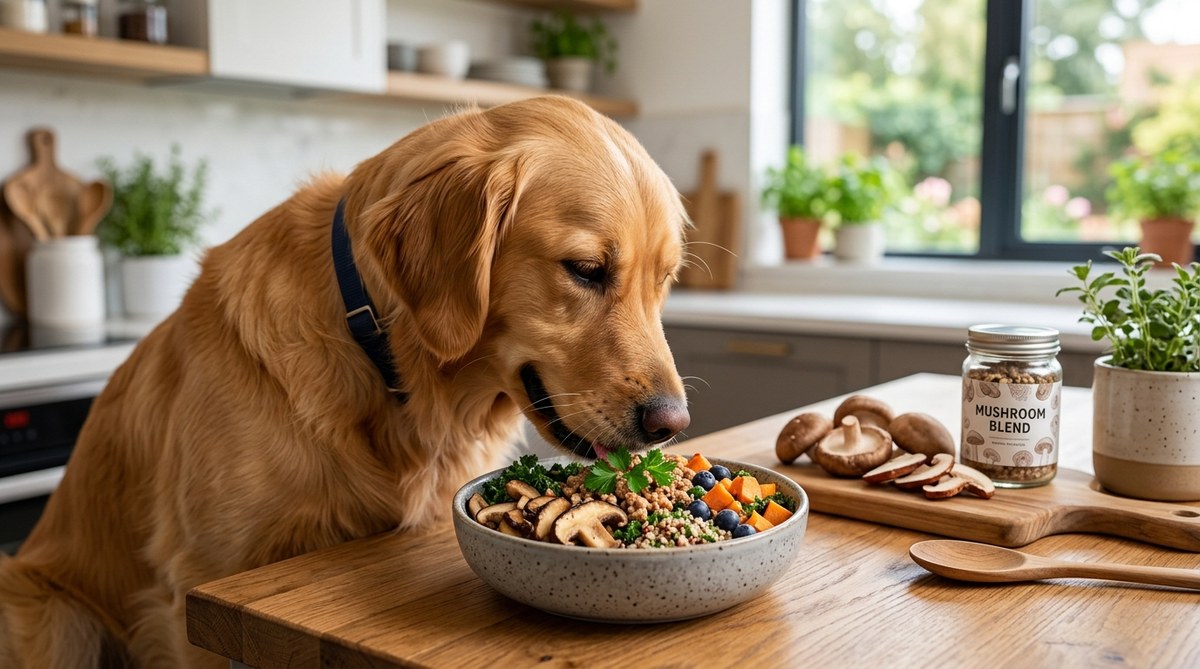
You have probably heard someone at the dog park mention adding mushroom powder to their pup’s bowl. It sounds a little unusual at first. But in 2026, functional mushrooms are becoming one of the most talked about natural supplements for dogs. And the research backs it up. These fungi are not just for your stir fry anymore. They contain powerful compounds that can support your dog’s immune system, brain function, and overall vitality. Before you toss a portobello into the bowl, there are important things to know about safety, dosage, and which mushrooms actually deliver results.
Functional mushrooms like reishi, turkey tail, and cordyceps offer real benefits for dogs when prepared correctly. They support immunity, reduce stress, and improve energy. But not all mushrooms are safe. Stick to species meant for supplements, cook them properly, and start with small doses. Always check with your vet before adding anything new to your dog’s diet in 2026.
Why Dog Owners Are Turning to Mushrooms
The shift toward natural wellness is not slowing down. Millennials and Gen Z dog owners are reading ingredient labels more carefully than ever. They want to move away from synthetic additives and toward whole food solutions. Mushrooms fit that need perfectly.
Fungi are adaptogens. That means they help the body handle stress better. For dogs, this can translate to calmer behavior during thunderstorms, less anxiety at the vet, and better recovery after playtime. Mushrooms also contain beta glucans, which are compounds known to support the immune system.
A 2025 study from the University of California looked at senior dogs given a mushroom extract blend. The dogs showed improved cognitive function and fewer signs of age related decline. That kind of science is driving more owners to ask about mushrooms for dogs benefits.
The Best Functional Mushrooms for Your Dog
Not every mushroom belongs in your dog’s bowl. Some are toxic. Others are just a waste of money. The ones that work are called functional mushrooms. They offer specific health benefits without causing harm.
Here are the most effective types for dogs in 2026:
- Reishi mushroom supports the immune system and helps reduce inflammation. It is also an adaptogen that can calm an anxious dog.
- Turkey tail mushroom is packed with immune boosting polysaccharides. It is often used to support overall wellness and fight off seasonal bugs.
- Cordyceps mushroom increases energy and oxygen flow. This one is great for active dogs or seniors who need a gentle stamina boost.
- Chaga mushroom is rich in antioxidants. It helps protect cells from damage and supports gut health.
- Lion’s mane mushroom is known for cognitive support. It may help older dogs stay sharp and focused.
Each of these mushrooms has a long history of use in traditional medicine. Modern research is now catching up. If you are looking for mushrooms for dogs benefits, these five species are your best starting point.
How to Safely Add Mushrooms to Your Dog’s Diet
Safety comes first. Wild mushrooms can be deadly. Even grocery store mushrooms need proper preparation. Follow these steps to keep your dog safe.
- Choose a trusted source. Buy mushroom powders or extracts from brands that test for purity. Avoid random foraged mushrooms.
- Start with a tiny amount. Give your dog one quarter of the recommended dose for the first week. Watch for any signs of an upset stomach.
- Cook or use extracts. Raw mushrooms are hard for dogs to digest. Lightly cooking culinary mushrooms or using a powdered extract makes the nutrients more available.
- Mix into food. Stir the powder into wet food, broth, or a spoonful of plain yogurt. This masks the earthy taste and ensures your dog eats it all.
- Track the results. Keep a journal of your dog’s energy, coat condition, and stool quality. This helps you see what works.
“I have been recommending functional mushrooms to my clients for the past three years. The biggest mistake people make is giving too much too fast. Slow and steady wins this race.” Dr. Eliza Hart, DVM, holistic veterinarian in Portland, Oregon
Common Mistakes to Avoid
Even well meaning owners can slip up. Here is a table that breaks down what to do and what to avoid.
| What to do | What to avoid |
|---|---|
| Use species specific supplements | Avoid giving wild mushrooms |
| Start with a low dose | Avoid jumping to full servings |
| Cook mushrooms lightly | Avoid feeding raw mushrooms |
| Buy from reputable brands | Avoid cheap powders with no lab testing |
| Rotate different mushroom types | Avoid relying on just one strain |
Sticking to these guidelines will help you avoid the most common pitfalls. If your dog has a sensitive stomach or a known health condition, talk to your vet before making any changes.
How Mushrooms Support Specific Health Needs
Different mushrooms target different problems. Knowing which one to use can make a big difference.
For dogs with joint pain or stiffness, reishi is a strong choice. It helps lower inflammatory markers in the body. That means less discomfort during walks or when getting up from a nap.
For dogs who seem anxious or stressed, cordyceps can help regulate the stress response. It works gently, without making your dog drowsy.
For dogs with dull coats or low energy, chaga provides antioxidant support. It helps the body fight off free radicals that cause fatigue and aging.
For senior dogs who seem forgetful or confused, lion’s mane may support cognitive function. It encourages nerve growth factor production, which helps maintain brain health.
These targeted benefits are why mushrooms for dogs benefits are so widely discussed in 2026. You do not need a cabinet full of pills. A single mushroom powder can cover multiple needs.
A Simple Daily Routine for Adding Mushrooms
You do not need to become a mycologist to make this work. Here is a simple routine that takes less than two minutes.
- Morning meal: Stir a measured scoop of reishi or turkey tail powder into your dog’s breakfast. Use warm water or broth to help it dissolve.
- Evening meal: Add a smaller dose of lion’s mane or chaga to dinner. This supports overnight recovery and calm sleep.
- Treat time: Mix cordyceps powder into a spoonful of peanut butter or coconut oil. Freeze it for a healthy lickable treat on hot days.
Rotate the mushrooms every few weeks. This prevents your dog from building a tolerance and ensures a broader range of nutrients.
If you are new to making food at home, check out our guide on essential tips for creating a balanced homemade dog food diet. It pairs well with mushroom supplements.
What the Science Says in 2026
The research on mushrooms for dogs benefits is growing. A 2026 review published in the Journal of Veterinary Herbal Medicine looked at over 40 studies on functional mushrooms in canines. The findings were consistent. Mushrooms like reishi and turkey tail showed measurable effects on immune markers, stress hormones, and gut bacteria diversity.
Another study from Cornell University tested a blend of cordyceps and lion’s mane on working dogs. The dogs showed better endurance and faster reaction times during training exercises. The researchers noted no negative side effects.
This kind of evidence is convincing skeptics. Even traditional veterinarians are starting to recommend mushroom supplements for specific cases like allergy support or post surgery recovery.
The Right Way to Read Labels
Pet supplement labeling is not always clear. Here is what to look for when you shop.
- Look for the species name. The label should say something like Ganoderma lucidum (reishi) or Hericium erinaceus (lion’s mane). Vague terms like “mushroom blend” are a red flag.
- Check for third party testing. Brands that use independent labs will say so on their website or packaging.
- Avoid fillers. Some products add rice flour or maltodextrin. You want pure mushroom powder or extract.
- Watch the dosage. A good product will list milligrams per serving. Start with the lowest amount suggested.
For more help choosing the right products, read our article on top natural supplements to boost your dog’s nutrition naturally.
A Note on Foraging and Wild Mushrooms
This cannot be said enough. Do not let your dog eat mushrooms growing in your yard or on a hike. Many wild mushrooms are toxic to dogs. Even experienced foragers can make mistakes. The consequences include vomiting, liver failure, and death.
Stick to store bought powders or extracts. They are safe, tested, and easy to use. If your dog does eat a wild mushroom, call your veterinarian or a pet poison hotline immediately.
Putting It All Together for Your Dog
Mushrooms are not a magic fix. They work best as part of a balanced diet, regular exercise, and good veterinary care. But when used correctly, they offer a natural way to support your dog’s health from the inside out.
In 2026, the options are better than ever. You can find high quality mushroom powders at pet supply stores, online retailers, and even some farmers markets. The cost is reasonable, especially compared to prescription supplements.
Start with one type of mushroom. See how your dog responds. Then slowly add more variety. Your dog does not need a complicated routine. Just consistency and a little patience.
If you want to learn more about building a complete diet plan, check out our guide on how to incorporate superfoods into your dog’s daily meals in 2026.
Your Dog’s Next Chapter Starts with Small Changes
Adding mushrooms to your dog’s diet is a small change that can lead to big results. Better immunity. Sharper cognition. Calmer nerves. Shinier coat. More energy. These are the things that make your dog’s tail wag a little harder.
You do not need to be an expert. You just need to start. Pick one mushroom powder from the list above. Try it for two weeks. Watch your dog closely. Chances are, you will notice a difference. And once you do, you will wonder why you did not try it sooner.
For more ideas on keeping your dog healthy and happy, explore our essential nutritional tips to keep your dog healthy and happy. Your dog deserves the best, and in 2026, mushrooms are part of that picture.