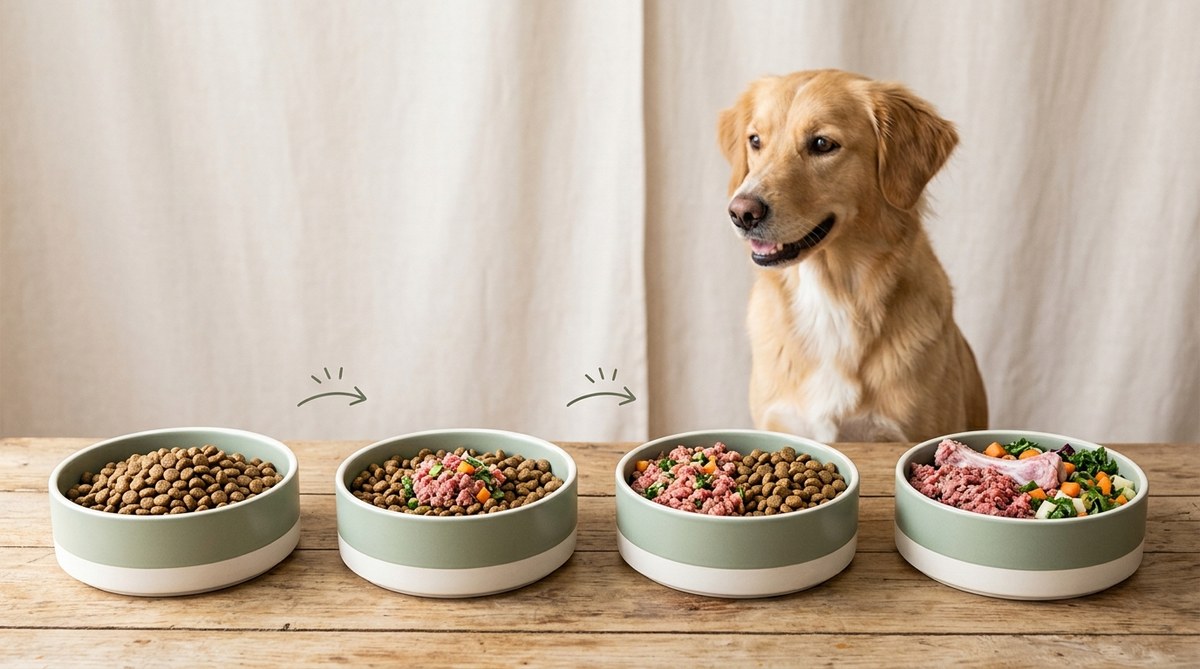
You have decided to move away from kibble and give your dog a more natural diet. That is a big step, and you probably feel both excited and a little nervous. The truth is switching to raw food can transform your dog’s health — shinier coat, better digestion, more energy. But doing it wrong can cause tummy troubles, loose stools, or even refusal to eat. The good news? With a solid plan, you can make the change smoothly. This guide walks you through exactly how to switch your dog to a raw food diet, from the first meal to full transition, so you avoid common mistakes and keep your pup happy.
A successful raw food transition takes patience and a gradual approach. Start by replacing 10 to 20 percent of your dog’s current meal with raw food, then increase slowly over 7 to 14 days. Watch for signs of digestive upset like loose stool or vomiting. Always balance the diet with muscle meat, organ meat, bones, and supplements. Go slow, keep a log, and consult your vet.
Why a Slow Transition Matters
Your dog’s digestive system produces specific enzymes to break down his usual food. Kibble is high in carbohydrates and starches. Raw meat, organs, and bones are completely different. If you swap overnight, his gut does not have the right tools to handle the new ingredients. That can lead to diarrhea, gas, vomiting, or a refusal to eat.
A gradual transition gives the gut time to adjust. It also lets you see exactly how your dog reacts to each new protein source. Some dogs need just a few days. Others, especially dogs with sensitive stomachs, may need two weeks or longer. Never rush.
Health Checks Before You Start
Before you change anything, make sure your dog is ready. Not all dogs can handle a raw diet right away. Consider these points:
- Visit your veterinarian. Ask for a full checkup, including a stool test. Your vet can tell you if your dog has underlying issues that might make raw feeding risky.
- Check for allergies. If your dog has known food allergies, choose a novel protein like rabbit, venison, or duck.
- Consider age and health. Puppies, seniors, and dogs with kidney or liver disease need extra care. You may need a customized plan.
- Get a baseline weight. Weigh your dog and note his body condition score. This helps you track changes.
If your dog has been on a processed diet for years, his gut microbiome may be less diverse. In that case, a slower schedule (over 14 to 21 days) is safer. For healthy adult dogs, 7 to 10 days often works well.
Step by Step: How to Switch Your Dog to Raw Food
Here is the practical method. I recommend the gradual replacement approach because it is the most forgiving.
- Start with one protein. Choose a single, simple meat like chicken or turkey. Avoid blends at first. Mix 20 percent raw with 80 percent of your dog’s current food.
- Feed the mix for two to three days. Watch his stool and energy. If everything looks good, move to the next step.
- Increase to 50 percent raw, 50 percent old food. Hold this ratio for another two to three days. Your dog might have looser stools at this stage — that is normal as long as he is still acting fine.
- Go to 75 percent raw, 25 percent old food. Stay here for another two to three days. If you see soft stool, add a little more old food back and slow down.
- Serve 100 percent raw. Once he handles the 75/25 mix well, you can fully switch. Keep the same protein for at least one week before trying other meats.
Pro tip: Always feed raw food at room temperature. Cold meat can cause stomach cramping. Thaw it in the fridge overnight, then let it sit out for about 20 minutes before serving.
Transition Schedule at a Glance
| Day range | Raw food portion | Old food portion | What to watch for |
|---|---|---|---|
| Days 1-3 | 20% | 80% | Soft stool, gas |
| Days 4-6 | 50% | 50% | Stool consistency, appetite |
| Days 7-9 | 75% | 25% | Energy level, vomiting |
| Day 10+ | 100% | 0% | Coat condition, stool firmness |
This table works for most dogs. If your dog shows signs of distress at any stage, go back to the previous ratio and hold for an extra day or two.
Common Mistakes and How to Avoid Them
- Adding too many ingredients too soon. Stick to one protein and one organ (like liver) at first. Introduce variety slowly.
- Skipping bone content. Raw meat alone is not balanced. You need edible bone (or a bone meal supplement) for calcium. Without it, your dog’s body will pull calcium from his own bones.
- Feeding spoiled meat. Raw food must be handled like raw chicken for humans. Store it in the freezer, thaw in the fridge, and discard anything that smells off.
- Ignoring portion sizes. A general guideline is 2 to 3 percent of your dog’s ideal body weight per day. Adjust based on activity level.
- Forgetting fiber. Low fiber can cause loose stool. Add a small amount of pureed pumpkin, green beans, or psyllium husk if needed.
“Every dog is an individual. Some transition in three days, others take three weeks. The key is watching your dog, not the calendar. If his stool goes from firm to pudding, you moved too fast. Back up and give his gut more time.” — Dr. Sarah Whitman, DVM, holistic veterinarian
Supporting Your Dog’s Nutrition During the Switch
A raw diet is only as good as its balance. Muscle meat is not enough. You also need organ meat (liver, kidney), secreting organs (spleen, pancreas), and bone. For many owners, a premade raw mix or a supplement blend helps fill the gaps.
If you want to build your own recipes, check out our guide on essential tips for creating a balanced homemade dog food diet. For extra support, you might consider top natural supplements to boost your dog’s nutrition naturally, especially during the first few weeks when his gut is still adapting.
Probiotics can also help. Fermented vegetables, kefir (unsweetened), or a high quality probiotic powder will support the microbiome. Many raw feeders add a spoonful of plain yogurt or goat milk to each meal.
Signs the Transition Is Going Well
- Firm, dark stools that are small and crumbly (that is normal on raw)
- Bright eyes and clean ears
- A shiny coat that feels soft
- Steady energy throughout the day
- Good appetite and enthusiasm for meals
If you see these signs, you are on the right track. Keep following the schedule.
When to Slow Down or Stop
Sometimes a dog tolerates the change for a few days, then starts having issues. That does not mean raw is wrong. It means you need to adjust your pace.
- Loose or watery stool: Add more old food back and use a bland topper like canned pumpkin. Wait until stool firms up before increasing raw again.
- Vomiting: Stop raw immediately. Feed only his old diet for 24 hours, then reintroduce raw at the 20 percent level. If vomiting returns, try a different protein.
- Refusal to eat: Some dogs are stubborn. Mix a small amount of raw with a strongly flavored topper like sardines or bone broth. If he still refuses after two meals, contact your vet.
If your dog has a history of pancreatitis or sensitive digestion, you may want to read essential tips for maintaining your dog’s digestive health before you start.
Building a Long Term Raw Routine
Once the transition is complete, you can begin rotating proteins and adding variety. Rotating meats (chicken, beef, lamb, fish) provides a broader nutrient profile. Aim for at least three different proteins over the course of a week.
You also need to balance over time, not necessarily every single meal. A typical week might look like:
- Monday: chicken quarters with liver
- Tuesday: ground beef with kidney
- Wednesday: sardines with egg
- Thursday: rabbit with bone
- Friday: turkey necks with green tripe
- Weekend: whatever is on sale or leftover from earlier
For easy meal ideas that keep things simple, browse our easy homemade dog meal ideas for optimal nutrition. And if you want to make treats to reward your pup during training, try our healthy homemade dog treats your pet will love.
Your Dog’s New Beginning
Switching your dog to a raw food diet is one of the most rewarding changes you can make for his health. It takes a little planning, a lot of patience, and careful observation. But within a few weeks you will likely notice a happier, healthier dog with more vitality. Trust the process, go slow, and always listen to what your dog’s body is telling you.
Start today by choosing a single protein and mixing that first 20 percent. Keep a notebook or a note on your phone to track stool quality and appetite. If you hit a bump, slow down. Your dog will thank you with tail wags and glossy fur for years to come.