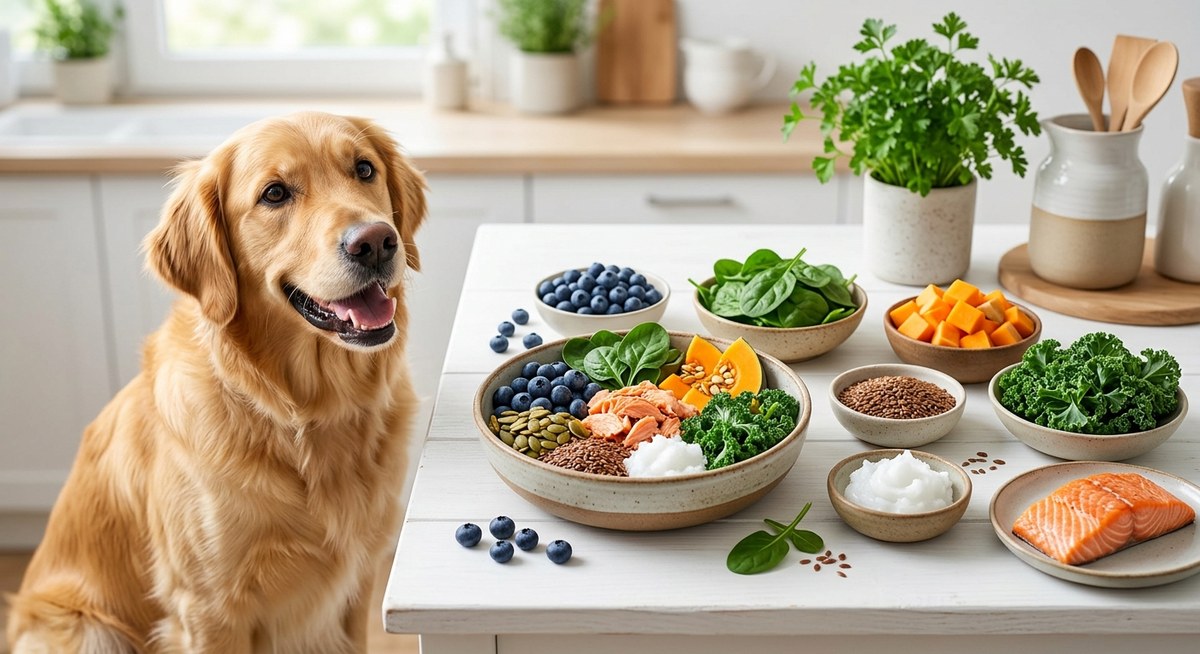
You want your dog to live a long, vibrant life. The food you put in their bowl is the foundation of that health. In 2026, more pet parents are turning to superfoods to give their pups an edge. These nutrient packed ingredients can support everything from digestion to joint health. Let’s dive into seven superfoods that can make a real difference for your dog.
Adding superfoods to your dog’s diet can improve digestion, boost immunity, and support joint health. This guide covers seven nutrient-dense options including blueberries, pumpkin, salmon, sweet potato, chia seeds, bone broth, and turmeric. Learn how to serve them safely and effectively to transform your dog’s health in 2026.
Why Superfoods Belong in Your Dog’s Bowl
Superfoods are not a trend. They are whole foods that offer concentrated benefits. Think of them as a nutritional upgrade for your dog. In 2026, we know that a healthy gut and strong immune system start with what goes into the bowl. These foods are not replacements for a balanced diet, but they are powerful additions.
A good rule of thumb is to keep 90% of your dog’s calories coming from a complete and balanced base (like high quality kibble or a vet approved homemade recipe). The remaining 10% can come from treats and superfood boosters. That small slice can have a big impact.
The 7 Superfoods Your Dog Needs in 2026
1. Blueberries
Blueberries are tiny antioxidant powerhouses. They fight free radicals that cause aging and inflammation. They are also low in calories and high in fiber. A handful of frozen blueberries makes a great training treat on a hot day. For small dogs, start with two to three berries. For large dogs, up to ten is fine.
2. Pumpkin (Plain, Canned)
Pumpkin is a gut health hero. It is full of soluble fiber that helps with both diarrhea and constipation. It also contains vitamin A and zinc for skin and coat health. Use only plain canned pumpkin (not pumpkin pie filling). Add one tablespoon for small dogs, two to three for medium, and up to four for large breeds. Stir it into their food.
3. Salmon (Cooked, Boneless)
Salmon provides omega 3 fatty acids that reduce inflammation and support brain function. Your dog’s coat will thank you. Always cook salmon thoroughly to eliminate parasites. Remove all bones. Flake it over their meal. Two to three times per week is plenty. Avoid salmon oil if your dog has pancreatitis.
4. Sweet Potato (Cooked, Plain)
Sweet potatoes are rich in beta carotene, vitamin C, and fiber. They are also a gentle carb source for dogs with sensitive stomachs. Bake or steam them, then mash or dice. Never feed raw sweet potato. A few tablespoons once or twice a week is a good starting point.
5. Chia Seeds
Chia seeds are tiny but mighty. They contain omega 3s, protein, and calcium. They also form a gel that helps with digestion. Soak one teaspoon of seeds in three tablespoons of water for 15 minutes. Add the gel to your dog’s food. Start with a small amount to see how your dog handles it.
6. Bone Broth (Unsalted, No Onions)
Bone broth supports joint health and hydration. It is rich in collagen and amino acids. Use only broth made from bones, water, and maybe apple cider vinegar. Avoid store bought broth with added salt, onions, or garlic. Serve warm or chilled. A few ounces per day for a large dog, less for smaller dogs.
7. Turmeric (With Black Pepper)
Turmeric is a natural anti inflammatory thanks to curcumin. The catch is that dogs absorb it better when combined with black pepper (which contains piperine) and a little healthy fat. Make a simple turmeric paste: mix one part turmeric with two parts water, simmer until thick, then stir in a pinch of black pepper and a teaspoon of coconut oil. Add a half teaspoon to a full teaspoon per day depending on your dog’s size.
How to Introduce Superfoods Safely
Follow these steps to avoid stomach upset.
- Start with one superfood at a time. Wait three to four days before adding another. This helps you spot any intolerance.
- Begin with a tiny amount. A teaspoon or less for small dogs, a tablespoon for large dogs. Gradually increase over a week.
- Monitor your dog’s stool. Loose stool means you need to back off or stop that food.
- Always cook or prepare as directed. Raw sweet potato, raw salmon, and raw turmeric can be harmful.
- Consult your veterinarian first. Especially if your dog has a health condition, is on medication, or is pregnant.
“Whole foods can be powerful medicine for dogs, but they are not a one size fits all solution. Always introduce new ingredients slowly and watch for changes in digestion or behavior. When used wisely, superfoods are a safe and effective way to support overall health.”
— Dr. Lara Thompson, DVM, integrative veterinarian
Common Mistakes vs. Best Practices
| Mistake | Best Practice |
|---|---|
| Feeding too much too fast | Start with a small amount and increase gradually |
| Using processed versions (canned pie filling, salted broth) | Choose plain, whole foods with no added ingredients |
| Ignoring food safety (raw sweet potato, unsoaked chia seeds) | Cook veggies, soak seeds, and always prepare properly |
| Combining many superfoods at once | Introduce one at a time to isolate effects |
| Skipping the vet for dogs with chronic conditions | Ask your vet before making any dietary changes |
Pairing Superfoods with a Balanced Diet
Superfoods work best when added to a solid nutritional foundation. If you feed commercial kibble, look for one with whole proteins and few fillers. If you make homemade meals, follow a recipe that meets AAFCO standards. You can get started with our guide on essential tips for creating a balanced homemade dog food diet. For those interested in extra support, check out our list of top natural supplements to boost your dog’s nutrition naturally.
Remember, superfoods are supplements, not meal replacements. A tablespoon of pumpkin on top of a complete diet is excellent. A bowl of only pumpkin is not.
Making Superfoods a Simple Part of Your Routine
You do not need to overhaul your dog’s diet overnight. Pick one or two superfoods from the list that match your dog’s needs. For example, if your dog has joint stiffness, try bone broth and turmeric. If their digestion is off, start with pumpkin. Keep a small container of soaked chia gel in the fridge for easy sprinkling.
Here is a bullet list of ways to keep it simple:
- Freeze blueberries in a bag for treats on the go.
- Make a batch of turmeric paste and store it in the fridge for up to two weeks.
- Buy canned pumpkin in bulk and freeze extra portions in an ice cube tray.
- Cook extra salmon on the weekend and flake it over meals during the week.
Internal links for more ideas:
– Healthy Homemade Dog Treats Your Pet Will Love
– Easy Dog Food Recipes for Sensitive Stomachs
Start with small changes. Your dog will show you the results in their energy, coat, and tail wags. In 2026, give them the gift of better nutrition one superfood at a time.