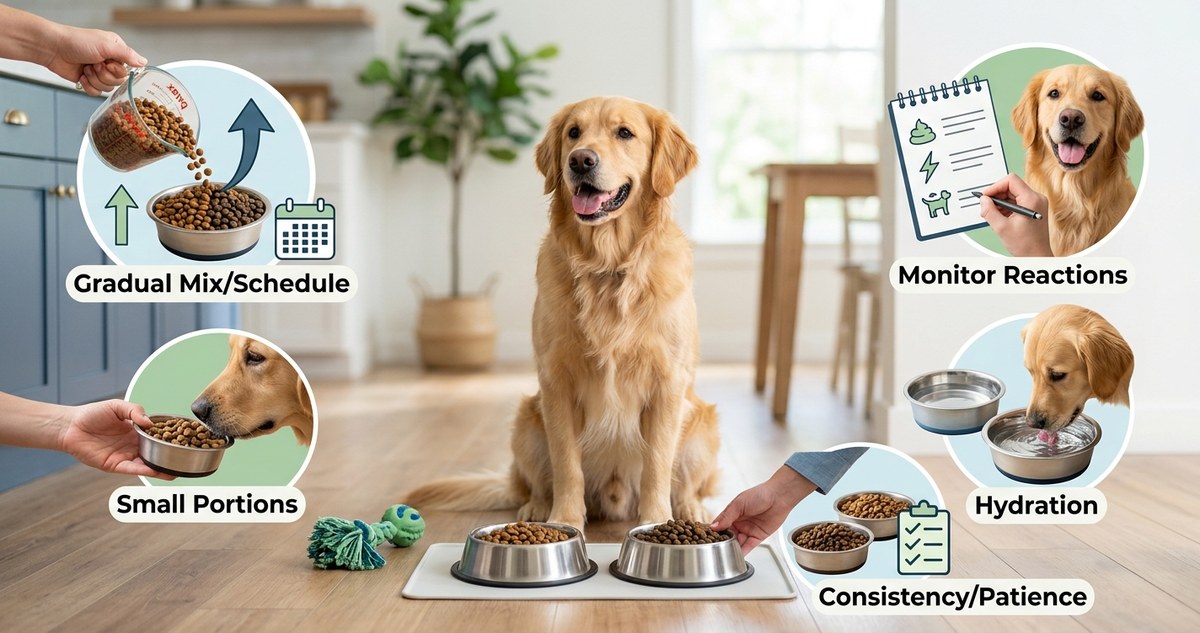
Your dog’s health starts in their bowl. Changing their food is a big deal for their stomach and overall well-being. Whether you are moving to a higher quality kibble, switching to a homemade diet, or trying a new protein source for allergies, doing it the right way matters. A rushed switch can lead to vomiting, diarrhea, or a dog that refuses to eat entirely. This guide walks you through exactly how to transition dog to new food safely, so your pup stays happy and healthy throughout the process.
Switching your dog’s food requires patience. The golden rule is a slow transition over 7 to 10 days. You will mix increasing amounts of the new food with the old food each day. This gradual shift helps your dog’s digestive system adapt, preventing vomiting, gas, and loose stools. Always monitor your dog’s stool consistency and appetite. When done correctly, a safe transition supports long term digestive health and happy mealtimes for years to come.
The Golden Rule of Dog Food Transitions
Dogs have sensitive digestive systems. Their gut bacteria are perfectly tuned to the food they currently eat. When you introduce a new protein source, fat content, or fiber blend, you are essentially asking their entire gut ecosystem to shift gears. That doesn’t happen overnight.
In 2026, pet owners are more informed than ever about the importance of gut health. We see it in the rise of probiotics, prebiotics, and whole food ingredients in commercial dog foods. But even the best food in the world will cause problems if it is introduced too quickly.
The most common mistake we see is switching too fast. It is easy to understand why. You bought a bag of premium food and you are excited to give it to your dog. You want them to feel better and look healthier right away. But their stomach needs time to catch up to your enthusiasm.
“A sudden change in diet is one of the most common causes of gastrointestinal upset in dogs,” says Dr. Sarah Miller, a veterinarian with 15 years of experience. “The microbiome in the gut needs time to adapt to new ingredients. Rushing it almost always leads to loose stools or vomiting.”
For more on supporting your dog’s gut during a switch, check out our guide on how to choose the best probiotics for your dog’s gut health in 2026.
The Step by Step 7 Day Transition Plan
This is the industry standard that most veterinarians recommend. It gives your dog’s digestive system the gradual change it needs to stay on track.
- Days 1 and 2: Serve 75% of the old food with 25% of the new food. Mix them thoroughly.
- Days 3 and 4: Move to a 50/50 split. Half old food, half new food.
- Days 5 and 6: Shift to 25% old food and 75% new food.
- Day 7 onward: Serve 100% of the new food.
This schedule works great for most healthy adult dogs. But every dog is different. Some dogs need a longer window. If you have a puppy, a senior dog, or a dog with a sensitive stomach, stretch the timeline to 10 or even 14 days. The goal is to finish the switch without any digestive upset. If you see loose stool at any step, hold at that ratio for an extra day or two before moving forward.
If you are switching to a homemade diet, the same slow mixing rule applies. You can read our guide on essential tips for creating a balanced homemade dog food diet to make sure your recipes are complete.
Monitoring Your Dog’s Health During the Switch
Watching your dog’s body language and output is the best way to know if the transition is going well. You do not need special equipment. You just need to pay attention.
- Stool quality: Firm, dark chocolate colored stools that hold their shape are the gold standard. Mushy stool or diarrhea means you are moving too fast.
- Appetite: A healthy dog should be excited about mealtime. If your dog starts skipping meals, they might not like the new food or they might be feeling nauseous from the change.
- Energy levels: Mild lethargy can happen during a transition. But significant sluggishness is a red flag to slow down or stop.
- Gas and bloating: Some extra gas is normal during a diet change. If your dog is clearing the room or seems uncomfortable, their gut is struggling to keep up.
If you see blood in the stool, repeated vomiting, or signs of an allergic reaction like facial swelling or hives, stop feeding the new food right away. Call your veterinarian immediately. These are not normal side effects of a food transition.
Common Transition Mistakes and How to Fix Them
Even with the best intentions, things can go wrong. Here is a look at common slip ups and how to get back on track.
| Mistake | Why It Happens | How to Fix It |
|---|---|---|
| Switching too fast | You are excited to get your dog on the new food | Extend the transition to 10 to 14 days |
| Mixing in table food or too many treats | You are trying to mask the new taste | Stick to the plan; extras can cause pickiness and upset stomach |
| Skipping gut support | You forgot to add probiotics | Add a daily probiotic or 1 tablespoon of plain canned pumpkin per meal |
| Giving up too early | Your dog refuses to eat the mix | Try warming the food for 10 seconds in the microwave or add a splash of bone broth |
Patience is your most powerful tool. Most problems are solved by simply slowing down. If your dog is a picky eater, do not keep offering different foods. That can create a cycle of pickiness. Stick to the mix and they will eat when they are hungry.
For a deeper look at supporting your dog’s digestion, visit our guide on essential tips for maintaining your dog’s digestive health.
When a Direct Switch Is Necessary
A slow transition is the standard. But sometimes life forces you to act fast. If your dog’s current food is recalled, if it has gone bad, or if your dog is having a medical emergency related to their diet, you might need to switch it all at once.
In these cases, you will need to take extra steps to protect their stomach. Start by adding a probiotic to their new food from day one. You can also add a small amount of plain canned pumpkin or boiled white rice to help bind their stool. Watch their output closely for the first week.
If you are switching because of a suspected food allergy, you might need to do a strict ingredient trial under your vet’s supervision. This is not a casual change. It is a medical test. Follow your vet’s instructions exactly.
Learn more about identifying problem foods by reading is your dog suffering from food allergies? here’s how to tell.
The Role of Natural Additives During a Food Transition
Certain whole foods can make the switch much easier on your dog’s stomach. They add fiber, moisture, and soothing properties that support digestion.
- Canned pumpkin: Plain, pureed pumpkin is high in soluble fiber. It firms up loose stools and slows down diarrhea.
- Bone broth: Adds flavor, encourages picky eaters, and provides extra hydration.
- Probiotics: Help balance the gut flora. You can use a powder supplement or plain Greek yogurt (if your dog tolerates dairy).
- Slippery elm bark: A natural supplement that coats the digestive tract and reduces irritation.
Only introduce one new addition at a time. If you add pumpkin, broth, and a probiotic all at once, you will not know which one helped or which one caused a problem. Start with one, wait 48 hours, and then add another if needed.
For more powerful ingredients to add to your dog’s bowl, check out these 7 superfoods that will transform your dog’s health in 2026.
Signs the New Food Isn’t Working
Sometimes, even a perfect 10 day transition is not enough. The food itself might not be right for your dog. Every dog is an individual. A food that works wonders for one dog can cause problems for another.
- Chronic loose stool or constipation: If your dog’s stool does not firm up within a week of finishing the transition, the food is likely not a good match.
- Excessive scratching or ear infections: These are common signs of food sensitivity or allergies.
- Weight loss or low energy: The food might not have enough calories or the right nutrient profile for your dog’s needs.
- Dull coat or dry, flaky skin: This can indicate a lack of essential fatty acids in the new diet.
If you see one or more of these signs after you complete the switch, it might be time to try a different formula. Pay close attention to the ingredient list on your next bag of food. Knowing exactly what you are feeding is half the battle.
Wondering what is really in that bag? Learn how to read dog food labels like a pro in 2026.
A Smooth Transition Sets the Foundation for Lifelong Health
Taking one or two weeks to switch foods is a small investment for your dog’s long term well being. It reduces stress on their body. It ensures they actually absorb the nutrients from their new diet. And it helps them develop a healthy, happy relationship with mealtime.
Your dog trusts you to make the best choices for them. By following this guide on how to transition dog to new food safely, you are honoring that trust. Go slow. Keep an eye on their stool. Do not be afraid to pump the brakes if you need to. Your dog will thank you with wagging tails and clean bowls.
Here is to happy, healthy eating for your pup in 2026 and beyond.