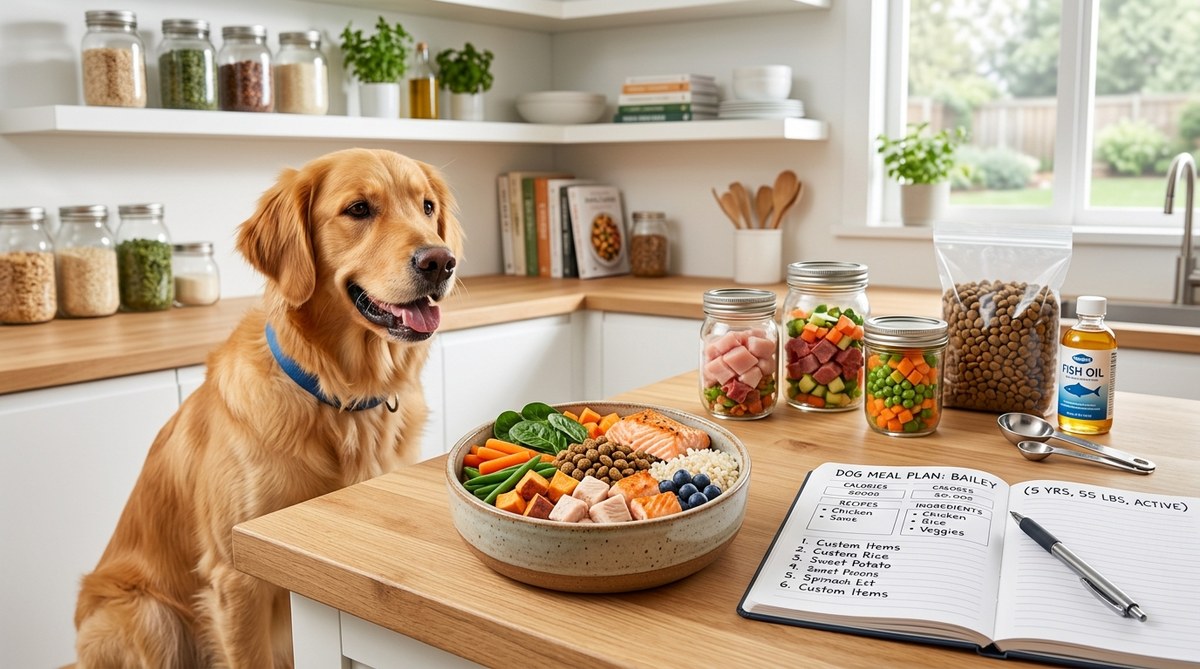
Your dog is not a machine. Two dogs of the same breed can have completely different energy levels, digestion patterns, and food preferences. That is why a generic bag of kibble rarely fits every dog the same way. A custom meal plan for dogs acknowledges that your pet is an individual with specific needs based on age, weight, activity, allergies, and even temperament. When you take the time to build a meal plan that fits your dog, you are not just feeding them. You are supporting their energy, their coat, their digestion, and their long term health.
A custom meal plan for dogs is not about following a trendy diet or copying what works for another pet. It is about matching your dog’s age, weight, activity level, and health history with the right balance of protein, fats, carbs, and essential nutrients. This guide walks you through building a plan that works for your dog and your lifestyle, with practical steps, expert advice, and tips for long term success and overall wellbeing.
Why a One Size Fits All Dog Food Bag Falls Short
Most commercial dog foods are formulated to meet the average needs of an average dog. But your dog is not average. A senior Labrador with creaky joints needs different nutrition than a six month old Border Collie puppy who runs five miles a day. A French Bulldog with seasonal allergies has very different dietary requirements than a healthy mixed breed who has never had a health issue. When you rely on a generic diet, you leave those differences unaddressed.
A custom meal plan for dogs lets you adjust protein levels, fat content, fiber sources, and supplementation based on what your dog actually needs. This is especially important for dogs with chronic conditions like kidney disease, diabetes, or food sensitivities. Even healthy dogs benefit from a plan that matches their lifestyle. A dog who spends weekends hiking needs more calories and joint support than a dog who prefers naps on the couch.
What Goes Into a Truly Personalized Dog Meal Plan
Building a custom meal plan for dogs is not complicated, but it does require attention to detail. You need to consider several factors before you start chopping vegetables or ordering ingredients.
The Core Factors to Assess
- Age and life stage. Puppies need more protein and calcium for growth. Adults need maintenance levels of nutrients. Seniors often benefit from lower phosphorus, higher omega 3s, and easier to digest proteins.
- Body condition score. This is more accurate than just looking at the scale. A dog at an ideal weight has a visible waist and ribs you can feel with light pressure. Overweight or underweight dogs need calorie adjustments.
- Activity level. A working dog or agility competitor burns far more calories than a house pet. Adjust portion sizes and macronutrient ratios accordingly.
- Health history. Food allergies, digestive issues, previous illnesses, and current medications all affect what your dog should eat. Some dogs need hydrolyzed protein. Others need low fat meals.
- Food preferences and texture. Some dogs love crunchy vegetables. Others prefer soft, mushy food. A plan only works if your dog actually eats it.
How to Build a Custom Meal Plan for Dogs in Five Steps
These steps take you from a blank page to a clear, actionable feeding plan. Take your time with each one. The goal is a sustainable routine, not a one week experiment.
-
Calculate your dog’s daily calorie needs. Start with the resting energy requirement formula: 70 times (body weight in kilograms to the 0.75 power). Then multiply by a factor based on activity level. A sedentary dog uses a factor of 1.2. A very active dog might use 2.0 or higher. This number is your target for total daily calories.
-
Choose a primary protein source. Select one or two proteins that your dog tolerates well. Common choices include chicken, turkey, beef, lamb, and fish. If your dog has suspected allergies, consider novel proteins like venison, duck, or rabbit. Rotate proteins every few weeks to provide variety and reduce the risk of developing new sensitivities.
-
Balance the macronutrient ratios. Aim for roughly 40 to 50 percent protein, 30 to 40 percent healthy fats, and 10 to 20 percent carbohydrates from vegetables and whole grains. Adjust these ratios based on your dog’s condition. Dogs with kidney issues need lower protein. Dogs with pancreatitis need lower fat. Active dogs can handle more carbs for energy.
-
Add vegetables and fiber sources. Include leafy greens, carrots, green beans, pumpkin, or sweet potatoes. These provide vitamins, minerals, and fiber for healthy digestion. Steam or puree vegetables to make them easier to digest. Aim for about 10 to 15 percent of the total meal volume from vegetables.
-
Supplement to fill nutritional gaps. Even the best homemade recipes can fall short in certain nutrients. Calcium is the most common deficiency. Add a calcium source like ground eggshell powder or a bone meal supplement. Also consider adding a fish oil source for omega 3 fatty acids, a vitamin E supplement, and a trace mineral mix. Work with a veterinarian or a board certified veterinary nutritionist to get the doses right.
For more guidance on the supplement side, check out this resource on top natural supplements to boost your dog’s nutrition naturally.
Common Mistakes People Make With Dog Meal Plans
Even experienced dog owners slip up when they start building a custom meal plan for dogs. The table below shows the most frequent errors and how to avoid them.
| Mistake | Why It Hurts Your Dog | The Fix |
|---|---|---|
| Guessing portion sizes without weighing food | Leads to weight gain or loss over time | Use a kitchen scale and measure every ingredient in grams |
| Forgetting to balance calcium and phosphorus | Causes bone problems, especially in growing puppies | Add a calcium supplement or use ground eggshell at a rate of about half a teaspoon per pound of food |
| Using too many fatty meats | Can trigger pancreatitis or cause loose stools | Stick to lean cuts and remove visible fat. Use fish oil for healthy fats instead |
| Relying on the same protein for months | Increases the chance of developing food sensitivities | Rotate proteins every 4 to 6 weeks using different meats or fish |
| Adding too many carbs from grains or starches | Spikes blood sugar and can lead to weight gain | Keep carbs below 20 percent of the meal. Focus on low glycemic vegetables |
| Ignoring water content in homemade food | Homemade meals have more water, so dogs may seem less hungry but need enough calories | Calculate calories on a dry matter basis to compare with commercial food |
Essential Nutrients That Deserve Extra Attention
When you build a custom meal plan for dogs, these nutrients are the ones most often overlooked. Make sure each one is present in the right amount.
- Calcium. Critical for bone health, nerve function, and muscle contraction. Homemade diets are almost always too low in calcium without supplementation.
- Omega 3 fatty acids. Support skin, coat, joints, and brain health. Fish oil from sardines, anchovies, or salmon is the best source.
- Vitamin D. Dogs cannot synthesize vitamin D from sunlight the way humans do. They need it from food. Egg yolks and fatty fish are good sources.
- Zinc. Supports immune function and skin health. Beef, lamb, and pumpkin seeds are rich in zinc.
- Taurine. An amino acid essential for heart health. Dogs can produce some taurine, but certain breeds (like Golden Retrievers and Newfoundlands) may need extra from meat or supplements.
If you want a deeper look at the nutrients that are often missing in store bought food, read this article on 5 essential nutrients often missing in commercial dog food.
When and How to Adjust Your Dog’s Meal Plan
A custom meal plan for dogs is not a set it and forget it system. Your dog’s needs change over time. Be ready to adjust the plan when you notice any of these signs.
- Weight changes. If your dog gains or loses more than 5 percent of body weight, adjust calories by 10 percent and monitor for two weeks.
- Coat or skin issues. A dull coat or flaky skin often means the fat profile needs tweaking. Increase omega 3s or try a different protein source.
- Digestive upset. Loose stools, gas, or vomiting after a meal change means something is not agreeing with your dog. Remove the last new ingredient and try a gentler alternative.
- Energy shifts. If your normally active dog seems sluggish, check calorie intake and protein levels. Senior dogs may need fewer calories but higher quality protein.
For dogs with sensitive stomachs, you might find this guide on easy dog food recipes for sensitive stomachs helpful for making the transition smoother.
What the Experts Recommend for Long Term Success
“A custom meal plan for dogs should always start with a full nutritional assessment. I recommend pet owners work with a veterinary nutritionist at least once to verify that the diet meets all AAFCO nutrient profiles. After that, annual check ins keep the plan on track as the dog ages.” Dr. Rachel Hartman, DVM, DACVN
That advice rings true for every dog owner. Even if you feel confident in your recipe building skills, a professional review can catch small imbalances that cause problems months later. Many veterinary nutritionists offer remote consultations, so distance is not a barrier.
If you are considering a grain free approach, be sure you understand the full picture first. This article on what every dog owner should know about grain-free diets explains the potential risks and benefits clearly.
Keeping the Plan Simple Without Sacrificing Quality
A custom meal plan for dogs does not need to involve ten ingredients or expensive superfoods. Some of the best plans use just a few high quality components. A simple template might look like this.
- A lean protein such as ground turkey or boneless chicken thigh.
- A carbohydrate source like cooked sweet potato or brown rice.
- A vegetable mix including steamed broccoli, spinach, and carrots.
- A fat source such as fish oil or flaxseed oil.
- A calcium supplement and a multivitamin powder.
Cook the protein thoroughly. Steam the vegetables until soft. Mix everything together in the right proportions. Store portions in the fridge for up to three days or freeze for longer storage.
Batch cooking once a week saves time and keeps you consistent. If you need recipe inspiration, these wholesome homemade dog meal ideas for busy pet owners are designed to fit into a realistic weekly routine.
The Link Between Custom Nutrition and Overall Health
A well designed meal plan does more than just fill your dog’s bowl. It supports their immune system, keeps their teeth cleaner, reduces inflammation, and helps maintain a healthy weight. Dogs who eat a balanced homemade diet often have more consistent energy levels, better stool quality, and shinier coats. These benefits add up over months and years.
That said, homemade feeding does require diligence. You cannot rely on guesswork. Every meal needs to hit the right nutritional targets. That is why learning to read labels and understand ingredient quality matters so much. This guide on how to read dog food labels like a pro in 2026 applies to both commercial and homemade ingredients.
Building a Routine That Lasts
The best custom meal plan for dogs is one you can actually stick with. If a plan requires five hours of prep every Sunday and you only have one hour, it will not last. Be honest about your time, your budget, and your cooking skills. Start with a simple rotation of two or three recipes. Once that feels natural, you can add variety.
Track your dog’s response. Keep a simple log of weight, energy, stool quality, and any skin issues. This record helps you spot patterns and adjust before problems become serious. If you notice a positive change, keep doing what works. If something seems off, change one variable at a time.
For owners who want to expand their recipe collection, these easy dog food recipes for sensitive stomachs provide gentle options that work well as a starting point. And if you are curious about specific superfoods that can enhance your dog’s health, take a look at this list of 7 superfoods that will transform your dog’s health in 2026.
Your Dog’s Wellbeing Starts With What You Serve Today
Every meal is an opportunity to support your dog’s health. A custom meal plan for dogs gives you direct control over what goes into their body. That control is a gift, but it comes with responsibility. Take the time to learn the basics. Measure your ingredients. Adjust as your dog changes. And do not be afraid to ask for help from a professional.
Your dog does not need a perfect diet on day one. They need a good diet that gets better over time. Start with one balanced recipe. See how your dog responds. Tweak the portions. Rotate the proteins. Add supplements as needed. Before you know it, you will have a feeding routine that is as unique as your dog. And your dog will thank you with every tail wag, every healthy nap, and every happy walk.