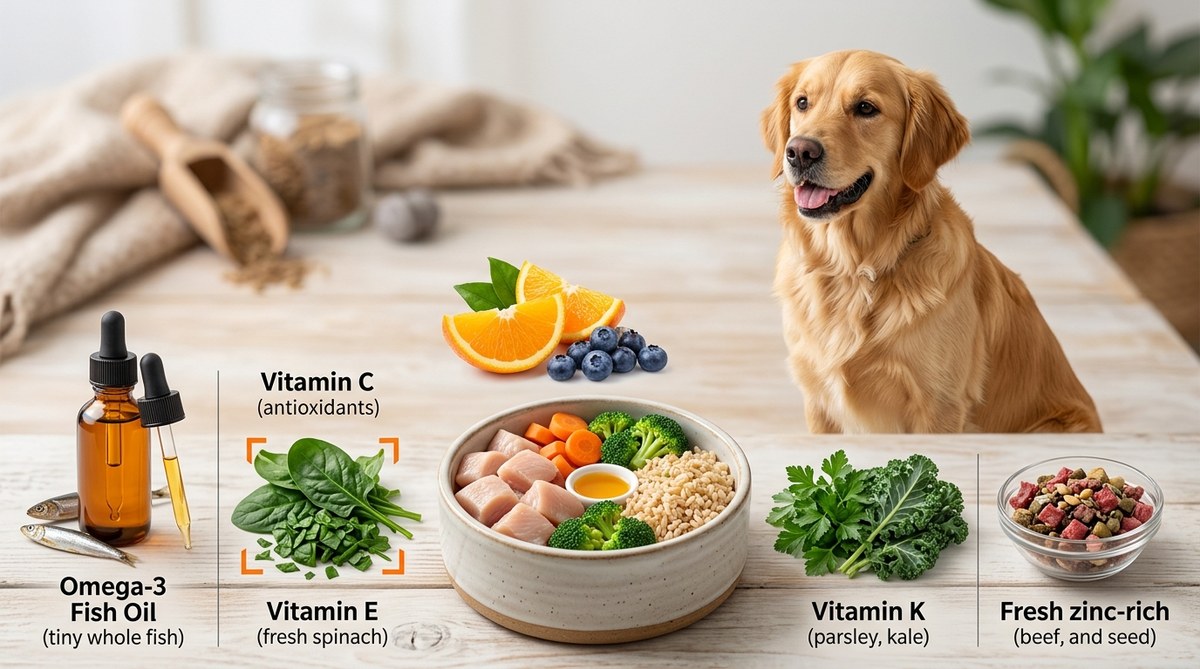
You read the ingredient list. You chose a brand you trust. The bag says “complete and balanced.” So why does your dog still seem off? Maybe their coat looks dull. Maybe their digestion is unreliable. Or maybe they just lack that spark of energy. The truth is that many commercial dog foods, even premium ones, can fall short on certain nutrients. Processing heat, long shelf storage, and the use of synthetic vitamin premixes all contribute to gaps in what your dog actually absorbs versus what the label promises. Let’s look at the five most common nutrients missing in commercial dog food and how you can help your dog get them.
Commercial dog food labels often say “complete and balanced,” but many formulas fall short on key nutrients due to processing, storage, and ingredient sourcing. Omega-3 fatty acids, probiotics, digestive enzymes, glucosamine, and antioxidants are among the most commonly missing elements. These gaps can affect your dog’s coat, joints, digestion, and immune system. Adding whole foods or targeted supplements can help restore nutritional balance and support long term health for your pet.
Why Even High Quality Kibble Can Miss the Mark
Dog food manufacturing is a high heat, high pressure process. Kibble is extruded at temperatures that can exceed 250 degrees Fahrenheit. That heat breaks down delicate nutrients like enzymes, probiotics, and certain fatty acids. Then the food sits in a bag or can for months before it reaches your dog’s bowl. Vitamins degrade over time. Fats oxidize. The result is a product that meets AAFCO standards at the time of production but may deliver less than expected by the time you open the bag.
The AAFCO nutrient profiles set minimum requirements, not optimal targets. They are designed to prevent deficiency diseases like rickets or beriberi. But they do not guarantee thriving health, especially for dogs with higher needs like active working breeds, seniors, or puppies. If you are feeding a standard commercial diet, there is a good chance your dog is not getting optimal levels of several key nutrients.
The 5 Nutrients Most Often Missing in Commercial Dog Food
1. Omega-3 Fatty Acids
Omega-3s are among the most studied nutrients for canine health. They support brain development, reduce inflammation, maintain a glossy coat, and protect kidney and heart function. The two most important forms are EPA and DHA, which come primarily from marine sources like fish oil and algae.
Commercial dog foods often rely on plant based omega-3s from flaxseed or canola oil. Dogs convert these poorly. The conversion rate from ALA (the plant form) to EPA and DHA is very low in canines. So even if the label lists omega-3s, your dog may not be getting enough usable EPA and DHA.
Signs of low omega-3 intake include dry flaky skin, a dull coat, excessive shedding, and chronic itching without allergies. Over time, low omega-3s can contribute to joint stiffness and cognitive decline in older dogs.
Good sources to add: wild caught salmon oil, sardines (canned in water, no salt), and algae based DHA supplements.
2. Probiotics and Prebiotics
A healthy gut microbiome is the foundation of your dog’s immune system. Probiotics are live beneficial bacteria that support digestion and crowd out harmful pathogens. Prebiotics are fibers that feed those bacteria.
Most commercial kibble cannot contain live probiotics because the extrusion process kills them. Some brands spray probiotics onto the kibble after cooking, but the viability decreases over the shelf life. By the time you feed the bag, the probiotic count may be negligible.
Signs of low probiotic intake include irregular stool consistency, frequent gas, bad breath, and a weaker immune response (your dog gets sick more often after visiting the dog park or boarding).
Good sources to add: plain unsweetened kefir, fermented vegetables, and high quality probiotic supplements designed for dogs. For more on supporting your dog’s gut, check out our guide on essential tips for maintaining your dog’s digestive health.
3. Digestive Enzymes
Digestive enzymes break down proteins, fats, and carbohydrates into absorbable molecules. Dogs produce some enzymes naturally in their pancreas, but the cooking process in commercial food destroys the enzymes that would otherwise be present in raw ingredients.
A diet low in digestive enzymes forces your dog’s pancreas to work harder. Over time, this can lead to reduced nutrient absorption. Your dog might eat plenty of food but still miss out on key vitamins and minerals.
Signs of low enzyme intake include undigested food in the stool, loose stools, excessive gas, and a dull coat despite adequate protein intake.
Good sources to add: raw goat milk, raw green tripe, papaya (rich in papain), and enzyme supplements with protease, lipase, and amylase.
4. Glucosamine and Chondroitin
These two compounds are the building blocks of healthy cartilage and joint fluid. They help cushion joints and slow the progression of arthritis. AAFCO does not require glucosamine or chondroitin in dog food formulations for adult maintenance. Many brands add them only in “joint health” formulas or senior diets.
Even when they are added, the amounts are often too low to be therapeutic. Studies suggest dogs need around 30 to 50 milligrams of glucosamine per pound of body weight daily for joint support. Most commercial foods provide a fraction of that.
Signs of low glucosamine include stiffness after lying down, hesitation to jump on the couch, reduced play drive, and audible clicking in the joints.
Good sources to add: green lipped mussel powder, chicken feet (raw or dehydrated), bone broth, and standalone glucosamine chondroitin supplements.
5. Antioxidants (Vitamin E, Selenium, and Carotenoids)
Antioxidants neutralize free radicals that cause cellular damage and accelerate aging. Vitamin E, selenium, and carotenoids like beta carotene and lutein are critical for immune function, eye health, and skin repair.
Commercial foods do include some vitamin E as a preservative. But the levels added for preservation are often below what is optimal for immune health. Selenium content depends heavily on the soil where ingredients were grown, and it varies widely. Carotenoids are rarely added at all.
Signs of low antioxidant intake include lethargy, poor wound healing, frequent infections, and a weaker response to vaccines.
Good sources to add: blueberries, spinach, carrots, pumpkin seeds, and a full spectrum antioxidant supplement.
How to Spot Nutrient Deficiencies in Your Dog
Your dog cannot tell you they feel off. But their body gives signs. Watch for these common indicators that your dog may be missing key nutrients from their commercial food.
- Dull, brittle, or thinning coat
- Dry, flaky, or greasy skin
- Soft, irregular, or overly smelly stools
- Excessive gas or occasional vomiting
- Low energy or reluctance to play
- Stiff movements or difficulty standing up
- Frequent ear infections or skin issues
- Slow healing of minor cuts or scrapes
- Dull eyes or increased tear staining
- Pica (eating dirt, rocks, or other non food items)
If you notice several of these signs, it may be time to look beyond the bag. You can read more about top natural supplements to boost your dog’s nutrition naturally for specific product recommendations.
Whole Food Sources Versus Supplements: What Works Best
| Nutrient | Best Whole Food Source | Best Supplement Form | Notes |
|---|---|---|---|
| Omega-3s (EPA/DHA) | Sardines, mackerel | Fish oil or algae oil | Avoid flaxseed as primary source |
| Probiotics | Plain kefir, raw goat milk | Spore based probiotic | Look for CFU count at expiry |
| Digestive Enzymes | Raw green tripe, papaya | Full spectrum enzyme blend | Needs protease, lipase, amylase |
| Glucosamine/Chondroitin | Chicken feet, bone broth | Green lipped mussel powder | Dosage matters more than source |
| Antioxidants | Blueberries, spinach, carrots | Vitamin E + selenium blend | Look for mixed tocopherols |
Expert Advice on Filling Nutritional Gaps
“I tell my clients to think of commercial kibble as a convenient base, not a complete solution. The heating process destroys enzymes, reduces vitamin potency, and kills probiotics. Adding a rotation of fresh whole foods and a quality supplement is one of the best things you can do for your dog’s long term health.”
Dr. Rebecca Torres, DVM, CVA (Certified Veterinary Acupuncturist), small animal practitioner in Portland, Oregon.
A Simple Process to Fix the Gaps
You do not need to overhaul your dog’s diet overnight. Start with one change at a time. Here is a practical sequence that works for most dogs.
- Add a marine based omega-3 source. Start with fish oil or sardines. Give it two weeks and watch for coat improvement.
- Introduce a probiotic or fermented food. Start with a small amount of kefir or a spore based probiotic. Monitor stool quality for a week.
- Include a digestive enzyme with meals. This helps your dog absorb more from the food they already eat. Especially helpful for dogs over seven years old.
- Add a joint support ingredient. Green lipped mussel powder or chicken feet are excellent. Start before your dog shows stiffness, not after.
- Rotate in antioxidant rich whole foods. A handful of blueberries, a spoonful of pumpkin, or some chopped spinach a few times per week.
If you prefer to cook for your dog entirely, our guide on essential tips for creating a balanced homemade dog food diet walks you through the full process.
Making It Work With Your Current Routine
You do not need to give up commercial food to fix these gaps. Most dog owners stick with kibble for convenience. That is fine. The goal is to supplement strategically rather than replace everything.
The table above gives you a clear starting point. Pick two or three nutrients your dog likely needs most based on their age, breed, and current health. A senior dog with stiff joints probably needs glucosamine and omega-3s first. A young dog with a sensitive stomach likely needs probiotics and digestive enzymes first. A dog with a dull coat and low energy probably needs omega-3s and antioxidants first.
For a broader overview of how to build a complete nutrition plan, check out the ultimate guide to choosing the right dog food in 2026. It covers label reading, ingredient quality, and how to spot marketing tricks.
Building a Stronger Nutrition Foundation for Your Dog
Commercial dog food is a modern convenience that helps millions of dogs get fed consistently. But convenience often comes with trade offs. The nutrients missing in commercial dog food are not random. They are the ones most vulnerable to heat, storage, and the limits of synthetic fortification. Omega-3s, probiotics, digestive enzymes, glucosamine, and antioxidants are all essential for your dog to truly thrive. By adding targeted whole foods and supplements, you can fill those gaps without giving up the ease of kibble. Your dog does not need a perfect diet. They need a diet that supports their actual body, not just the label’s promises. Start with one change this week. Your dog will show you the difference.