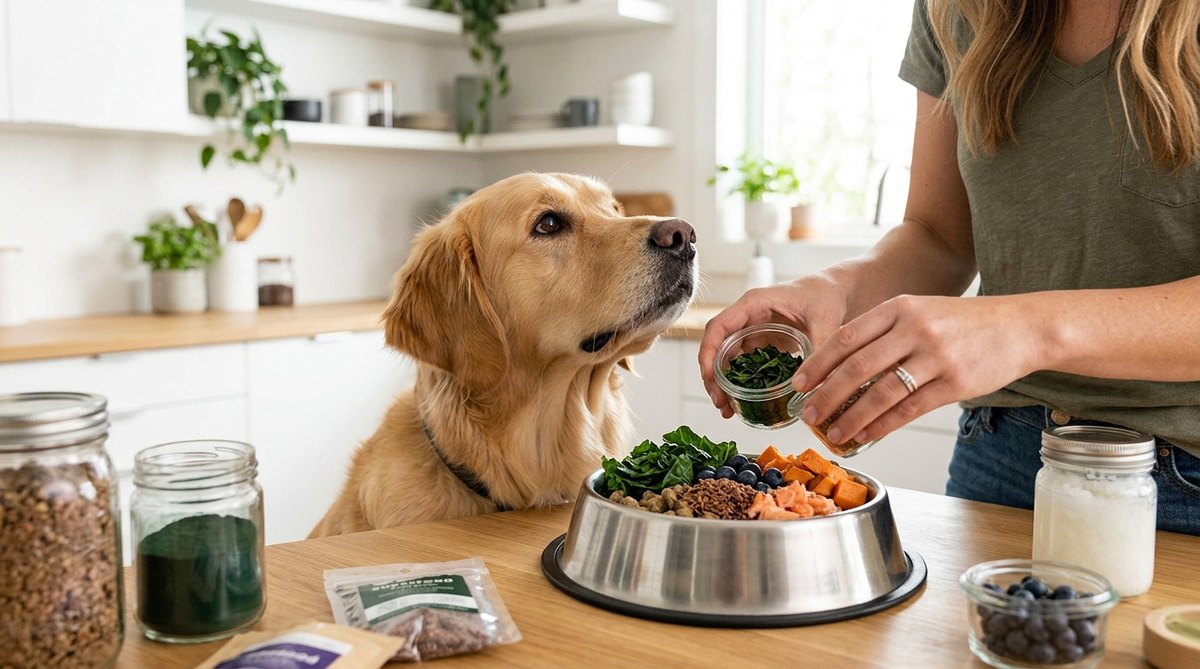
You want your dog to live a long, vibrant life. The food you serve each day plays a huge role in that. More pet owners in 2026 are turning to natural, nutrient dense foods to support everything from digestion to joint health. Superfoods for dogs are not a trend. They are a simple way to add extra vitamins, antioxidants, and healthy fats to your dog’s bowl without overhauling their entire diet.
Adding superfoods to your dog’s meals doesn’t have to be complicated. Start with one or two whole foods like blueberries, pumpkin, or salmon. Introduce them slowly, watch for allergies, and keep portions small. A 10 percent rule works well. This guide shows you exactly how to mix superfoods into kibble, raw, or homemade diets safely. Your dog will thank you with more energy and a shinier coat.
What Exactly Are Superfoods for Dogs?
Superfoods are whole foods packed with high levels of vitamins, minerals, and antioxidants. For dogs, they offer targeted benefits. Blueberries help fight oxidative stress. Pumpkin supports digestion. Salmon provides omega 3 fatty acids for skin and coat health. These foods go beyond basic nutrition. They can help reduce inflammation, boost the immune system, and even support brain function in older pups.
The key is balance. Superfoods are not meant to replace a complete and balanced diet. They are add ons. Think of them as a nutritional boost, similar to how you might add spinach to a smoothie. For healthy dogs, a small amount each day can make a real difference over time.
Top Superfoods for Your Dog in 2026
Here are some of the most effective superfoods for dogs you can start using today. Each one has a unique benefit and is easy to prep.
- Blueberries – Rich in antioxidants and fiber. Serve fresh or frozen. A few berries for small dogs, a handful for large breeds.
- Pumpkin (plain, canned) – High in soluble fiber. Helps with both diarrhea and constipation. Use one to two tablespoons per meal.
- Salmon (cooked, boneless) – Packed with omega 3s. Good for skin, coat, and joints. Flake it over food twice a week.
- Sweet Potato (cooked, no skin) – Loaded with beta carotene and vitamins. Mash or cube. Use as a topper or in homemade treats.
- Spinach (chopped or steamed) – Iron, calcium, and antioxidants. Lightly steam to reduce oxalates. Sprinkle on food.
- Chia Seeds – Omega 3s, fiber, and protein. Soak in water first. Add a teaspoon to meals.
- Turmeric (with black pepper) – Natural anti inflammatory. Use a pinch per meal. Always pair with pepper for absorption.
How to Safely Introduce Superfoods into Your Dog’s Diet
Starting any new food requires care. Dogs have sensitive stomachs. Follow these four steps to make the transition smooth.
- Choose one superfood at a time. Pick a single ingredient, like pumpkin or blueberries. Do not mix multiple new foods at once. This way, if your dog has a reaction, you know the cause.
- Start with a small amount. For a 50 pound dog, start with half a teaspoon of a superfood. For smaller dogs, use a pinch. Observe your dog over 24 hours for any signs of upset stomach, gas, or loose stool.
- Gradually increase the portion. If your dog tolerates the new food well, slowly increase to the recommended serving size over five to seven days. For example, go from half a teaspoon to one teaspoon, then to one tablespoon.
- Mix it into the regular meal. Stir the superfood into wet food, kibble, or a raw blend. This ensures your dog eats it evenly. Do not serve superfoods alone as a meal replacement.
Remember the 10 percent rule. Treats and extras, including superfoods, should make up no more than 10 percent of your dog’s daily calories. The other 90 percent should come from a complete and balanced diet. If you are feeding homemade food, work with a veterinary nutritionist to maintain the right ratio.
Common Mistakes to Avoid
Even well meaning owners can slip up. The table below shows common errors and how to fix them.
| Mistake | Why It Matters | Better Approach |
|---|---|---|
| Feeding raw potatoes or onions | Toxic to dogs (glycoalkaloids and thiosulfates) | Always cook potatoes; never give onions or garlic |
| Adding too much turmeric | Can cause stomach upset or interfere with medications | Use a pinch (1/8 tsp per 20 lbs) and pair with black pepper |
| Using canned pumpkin with added sugar | Extra sugar or spices cause stomach distress | Buy 100 percent pure pumpkin puree, no additives |
| Overfeeding high fat foods like salmon | Can cause pancreatitis in sensitive dogs | Limit fatty fish to twice per week in small portions |
| Giving chia seeds dry | Seeds swell in stomach and can cause blockages | Always soak seeds in water for 10 minutes before serving |
A common myth is that all superfoods are safe in any amount. That is not true. Even healthy ingredients like spinach contain oxalates, which can contribute to kidney issues in large amounts. Moderation is the key.
Expert Advice: Dr. Lisa Parker, a holistic veterinarian in Austin, Texas, says, “I tell my clients to think of superfoods as the garnish, not the main course. A teaspoon of pumpkin or a few blueberries can do wonders, but only if the core diet is solid. Start low, go slow, and always choose whole foods over powders or processed mixes.”
Making Superfoods a Daily Habit
Once you know the basics, incorporating superfoods becomes part of your routine. Keep a bag of frozen blueberries in the freezer. Boil a sweet potato once a week and mash it for easy topping. Store canned pumpkin in the fridge for grab and go servings. You can also make your own wholesome homemade dog meal ideas for busy pet owners that already include superfoods.
For dogs with specific needs, superfoods can target common issues. If your dog has a dull coat, add fish oil or salmon. For digestive troubles, try pumpkin or probiotics. Senior dogs often benefit from turmeric and blueberries to support joints and brain health. Always check with your vet before making changes, especially if your dog has a medical condition or is on medication.
Remember to rotate the superfoods you use. Variety prevents nutrient imbalances and keeps meals interesting for your dog. One week use blueberries and spinach, the next week try pumpkin and chia seeds. The goal is to build a broad nutrient profile without overdoing any single ingredient.
A Simple Weekly Plan to Get Started
If you feel overwhelmed, do not be. Here is a clear schedule to ease into it.
- Monday: Add one tablespoon pure pumpkin to breakfast.
- Wednesday: Swap in half a cup of frozen blueberries (thawed) with dinner.
- Friday: Flake a small portion of cooked salmon over the evening meal.
- Sunday: Sprinkle a pinch of turmeric (with pepper) on lunch.
That is only three to four additions per week. You can scale up or down based on your dog’s size and tolerance. Keep a journal of what you add and how your dog responds. It will help you fine tune the plan.
Final Thoughts on Superfoods for Dogs
Every dog deserves a diet that supports their best life. Superfoods for dogs are an accessible, affordable way to make that happen. You do not need expensive supplements or complicated recipes. A few whole foods from your own kitchen can transform your dog’s health over time. Start with one superfood today. Watch your dog’s energy, coat, and overall happiness improve. It is one of the most rewarding changes you can make as a pet owner in 2026.