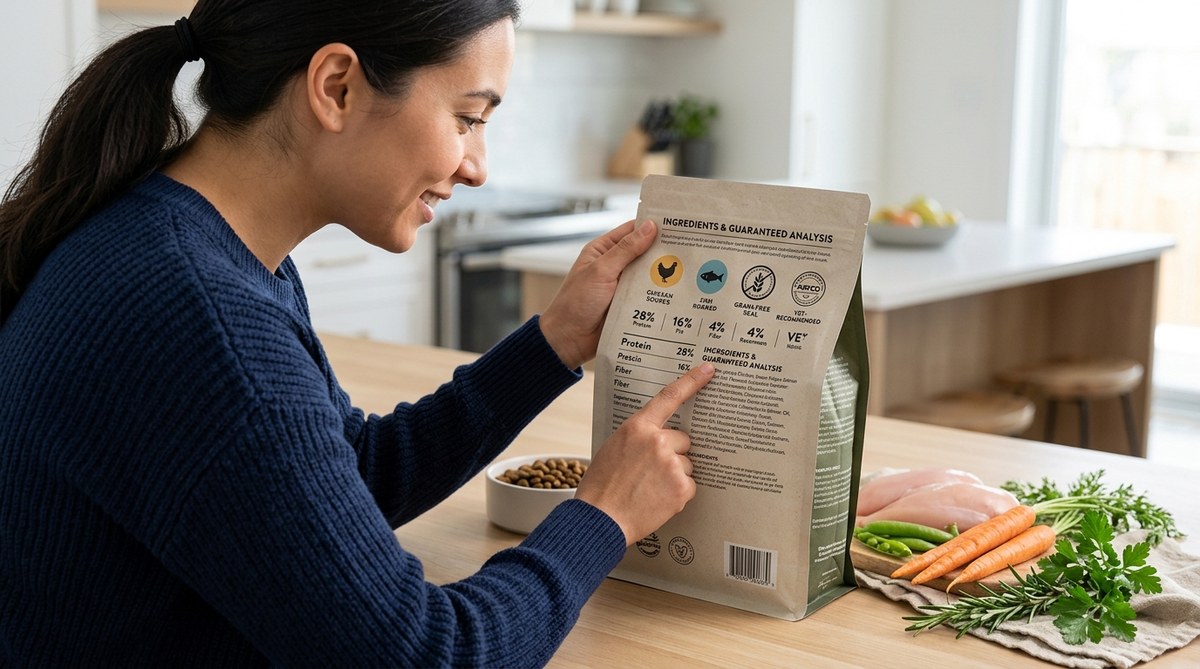
You walk down the pet food aisle and see dozens of bags with bright claims: “premium,” “natural,” “holistic.” But what do any of those words actually mean? Most dog food labels are designed to sell you something first and inform you second. Once you learn how to read them the right way, you stop relying on marketing and start making choices based on real nutrition. And that is exactly what your dog deserves.
Confused by dog food labels? You are not alone. This guide breaks down every part of a dog food label so you can choose with confidence. You will learn to decode ingredient lists, understand the guaranteed analysis, spot misleading marketing claims, and find the AAFCO statement that matters most. By the end, you will know exactly what to look for and what to skip when shopping for your dog’s next meal.
Why Dog Food Labels Are Worth Your Attention
Pet food is a massive industry, and every brand wants your business. That means packaging is packed with buzzwords designed to catch your eye. But here is the truth: many of those claims are not regulated as strictly as you might think. Terms like “premium” or “gourmet” have no official definition. Learning how to read dog food labels gives you the tools to separate real quality from clever copy.
When you understand what to look for, you can compare foods accurately, avoid ingredients that do not serve your dog, and feel good about every purchase. This is not about being perfect. It is about being informed.
The 4-Step System to Read Any Dog Food Label
These four steps work on every bag, can, or pouch you pick up. Follow them in order and you will never feel lost again.
Step 1: Read the Ingredient List the Right Way
Ingredients are listed by weight before cooking. That means a food with “chicken” listed first sounds great, but you need to keep reading. If the next few ingredients are corn, wheat, and by-products, the protein content drops fast.
Here is what to look for in an ingredient list:
- A named protein source (chicken, salmon, lamb, beef) in the first position
- Whole food ingredients you recognize, like sweet potatoes, blueberries, or peas
- Healthy fats such as chicken fat or fish oil (not generic “animal fat”)
- Avoidance of artificial colors, flavors, and preservatives like BHA, BHT, and ethoxyquin
One common trap is thinking “meal” is bad. Chicken meal is actually a concentrated source of protein because the water has been removed. Do not skip a food just because it uses meal. In many cases, it is more protein-dense than fresh meat.
Step 2: Decode the Guaranteed Analysis
The guaranteed analysis panel lists minimum percentages of crude protein and crude fat, plus maximum percentages of crude fiber and moisture. This is where many people get tripped up.
The numbers look straightforward, but they are based on “as fed” values. That means they include the water content. If you are comparing a dry kibble to a canned food, the canned food will always show lower protein and fat percentages because it contains more moisture. To compare them fairly, you need to convert to a dry matter basis. The math is simple: divide the nutrient percentage by (100 percent minus the moisture percentage), then multiply by 100.
Most quality dry foods will show protein in the 25 to 35 percent range and fat in the 12 to 20 percent range on a dry matter basis. For puppies and active dogs, you want higher protein and fat. For senior dogs with health issues, your vet may suggest moderate levels.
Step 3: Find the AAFCO Nutritional Adequacy Statement
This is the single most important part of any dog food label. The AAFCO statement tells you whether the food is “complete and balanced” for a specific life stage. Without this statement, the food is considered a snack or supplement, not a full meal.
Look for language like: “This food is formulated to meet the nutritional levels established by the AAFCO Dog Food Nutrient Profiles for all life stages” or “for growth” or “for maintenance.”
The life stage matters. Puppies need more calories, protein, and calcium than adult dogs. Senior dogs have different needs too. A food labeled “all life stages” is technically safe for everyone, but it is often calibrated for growing puppies and may be too rich for a couch potato senior. If your dog is in a specific life stage, try to match the label to that stage.
Step 4: Use Feeding Guidelines as a Template
Feeding charts on bags are a starting point, not a rule. They are usually based on an average dog with average activity. Your dog might need more or less depending on their metabolism, exercise level, and body condition.
Start with the recommended amount, then monitor your dog’s weight over two weeks. If they are gaining, cut back by 10 percent. If they are losing, add a little more. Your dog’s ribs should be easy to feel without pressing hard, and they should have a visible waist when viewed from above.
“The feeding guide on the bag is designed to sell more food, not to perfectly match your dog’s needs. Use it as a baseline, but always adjust based on your dog’s body condition score. A lean dog lives longer and healthier than one carrying extra weight.” Dr. Laura Benson, DVM, DACVN
What Marketing Claims Actually Mean
Dog food bags are full of phrases that sound important but carry little legal weight. Here is a short guide to the most common ones.
| Claim on Label | What It Actually Means | What It Does Not Mean |
|---|---|---|
| Natural | Ingredients are not chemically synthesized. No official standard for pet food. | Does not mean organic, grain-free, or preservative-free. |
| Holistic | Not defined by any regulatory body. | No nutritional or safety guarantee. |
| Premium or Super-Premium | No official definition. | Does not guarantee better ingredients. |
| Grain-Free | No grains like wheat, corn, or rice. | Not necessarily healthier. Linked to DCM in some dogs. |
| Human-Grade | Labeled as edible for humans. Rarely verified. | Does not guarantee balanced nutrition for dogs. |
| No By-Products | No rendered animal parts. | Can still contain low-quality protein sources. |
If a claim sounds too good to be true, check the ingredient list and the AAFCO statement. Those two sections tell the real story.
Common Mistakes When Reading Dog Food Labels
Even experienced pet owners slip up on a few key points. Avoid these errors and you will be ahead of most shoppers.
-
Judging food by the first ingredient only. A food can start with chicken and still be loaded with fillers. Read the whole list, not just the first line.
-
Ignoring the moisture content. When comparing dry food to wet food, always convert to dry matter. Otherwise you are comparing apples to oranges.
-
Trusting vague claims without verification. “All natural” sounds great, but it means almost nothing. Look for specific certifications like organic or non-GMO if those matter to you.
-
Skipping the AAFCO statement. If a food lacks this statement, it is not a complete diet. Do not feed it as a primary meal.
-
Following feeding guidelines blindly. Your dog is an individual. Use the chart as a rough guide, but adjust based on their actual body condition.
If you want to take control of your dog’s diet even further, consider learning about essential tips for creating a balanced homemade dog food diet. Homemade diets give you full control over every ingredient, but they require careful planning to stay balanced.
How to Apply Your New Knowledge at the Store
You do not need to spend 20 minutes analyzing every bag. Once you practice these steps a few times, the process becomes second nature. Here is a quick checklist you can use on your phone or a sticky note.
- [ ] First ingredient is a named protein source
- [ ] Fewer than five filler ingredients (corn, wheat, soy)
- [ ] Protein on dry matter basis is at least 25 percent
- [ ] Fat on dry matter basis is between 12 and 20 percent
- [ ] AAFCO statement matches your dog’s life stage
- [ ] No artificial colors, flavors, or BHA/BHT
- [ ] Feeding guidelines match your dog’s size and activity level
Run through this checklist for two or three brands and you will see clear differences. Some foods will pass every point. Others will fail on the first or second item. That is the power of knowing how to read dog food labels.
Why This Matters More Than Ever in 2026
The pet food industry changes every year. New brands appear. Old brands get bought and reformulated. Marketing gets louder. The one constant is your ability to read a label and decide for yourself. Especially in 2026, with new regulations being discussed around labeling transparency, being an informed shopper helps you adapt to changes without stress.
You can also pair label reading with broader nutritional knowledge. For instance, many commercial foods lack certain nutrients that are easy to add at home. Checking out 5 essential nutrients often missing in commercial dog food can help you fill those gaps. And if you are interested in prevention, understanding essential nutritional tips to keep your dog healthy and happy rounds out your whole approach to care.
A Simple Way to Start Today
You do not need to overhaul your dog’s diet overnight. Pick one bag of food you already have at home. Grab it and walk through the four steps from this guide. Read the ingredient list. Check the guaranteed analysis. Find the AAFCO statement. Look at the feeding guidelines. See where that food lands on the checklist.
If it passes, great. If it does not, you know what to look for next time. No guilt. Just information that helps you make a better choice when you are ready.
Reading dog food labels is not a complicated skill. It is a simple habit that pays off in better health, more energy, and fewer vet visits for your dog. And every time you pick up a new bag, you will feel more confident knowing exactly what is inside.
For even more ways to support your dog’s well being, take a look at top natural supplements to boost your dog’s nutrition naturally or learn about 7 superfoods that will transform your dog’s health in 2026. Small changes add up over time.
Making Label Reading Part of Your Routine
The best habit you can build is to never buy a new dog food without scanning the label first. Even if you are loyal to a brand, check every few months. Recipes change. Companies get sold. A food that was great last year might have a different formula today.
If you are feeding a homemade or raw diet, label reading still applies to any commercial treats, toppers, or supplements you add. The same rules work for any packaged product. And if you are curious about a specific diet approach, what every dog owner should know about grain-free diets can help you decide if that path is right for your dog.
You have everything you need right now to walk into any pet store and make a confident choice. Your dog does not care about the fancy bag design. They care about what is inside. And now you know exactly how to find that answer.