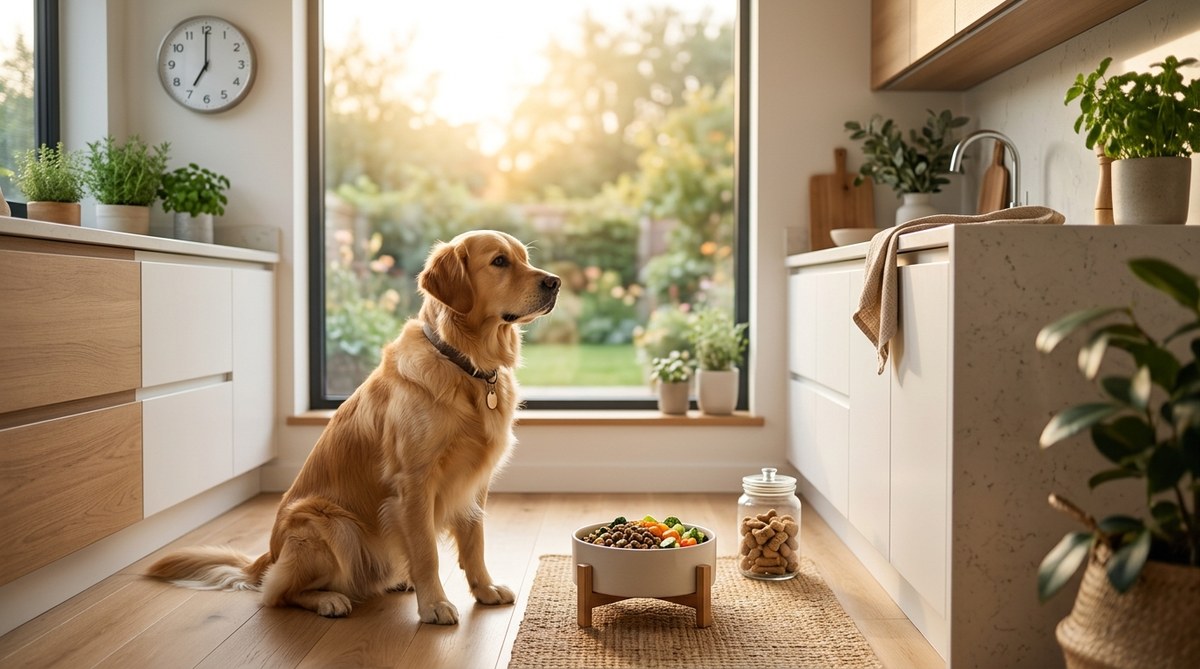
Your dog’s digestion starts with timing. You might notice your pup seems bloated after dinner, or maybe they vomit a few hours after eating. These issues are often linked to when you feed them, not just what you feed them. Dogs have evolved with a natural internal clock that governs everything from hormone release to gut motility. When you feed at the wrong time, you fight against that clock. When you feed at the right time, you work with it. The result is smoother digestion, less gas, and a happier belly.
The best time to feed your dog for optimal digestion is early morning (7:00 AM to 8:00 AM) and early evening (5:00 PM to 6:00 PM). This two-meal schedule aligns with your dog’s natural circadian rhythm, giving their digestive system enough time to process food before sleep and reducing the risk of bloat, acid reflux, and overnight vomiting.
Why Your Dog’s Internal Clock Matters
Dogs are not built to eat on a human schedule. A midnight snack or a late dinner at 9:00 PM might work for you, but it can wreak havoc on your dog’s digestion. Like humans, dogs have a circadian rhythm. This natural cycle controls when their body produces digestive enzymes, when their metabolism runs, and when their gut rests.
When you feed your dog late at night, their stomach has to work while their body wants to sleep. This mismatch can lead to:
- Poor nutrient absorption
- Increased gas and bloating
- Acid reflux
- Vomiting during the night
- Restless sleep
Feeding too early in the morning, before their system is active, can also cause problems. The sweet spot sits right in the middle of their natural active window.
The Ideal Feeding Window for Digestive Health
Based on veterinary research and canine biology, the two best times to feed your dog are:
- Morning meal: 7:00 AM to 8:00 AM
- Evening meal: 5:00 PM to 6:00 PM
This schedule gives your dog a full 12 hours between meals on the front end and about 11 to 12 hours between the evening meal and the next morning’s breakfast. That gap is critical. It allows the stomach to empty completely before the next meal, prevents fermentation of undigested food in the gut, and reduces the chance of overnight vomiting.
Puppies and senior dogs may need slight adjustments. Puppies often need three smaller meals spread across the day. Senior dogs with slower metabolisms may benefit from an even earlier evening meal, around 4:00 PM.
How to Transition to a New Feeding Schedule
Changing your dog’s feeding time should not happen overnight. A sudden shift can cause stress and digestive upset. Follow these steps to make the change smoothly:
- Move meals by 15 minutes each day. If your dog currently eats at 8:00 PM, start feeding at 7:45 PM for two days, then 7:30 PM for two days, and so on until you reach 5:30 PM or 6:00 PM.
- Keep the morning meal consistent. Once you set a morning time, stick to it within a 30 minute window. Dogs thrive on routine.
- Monitor stool quality. Watch for loose stool or constipation during the transition. If you see issues, slow down the pace of change.
- Adjust portion sizes if needed. A later evening meal might mean your dog needs slightly less food to avoid feeling too full before bed.
“A consistent feeding schedule is one of the most underrated tools for managing digestive health in dogs. When the body knows when food is coming, it prepares by releasing enzymes and bile at the right time. This reduces gas, bloating, and the risk of gastric dilatation-volvulus in deep-chested breeds.” – Dr. Sarah Mitchell, DVM, veterinary nutritionist
Common Feeding Mistakes That Hurt Digestion
Even with the right timing, some habits can sabotage your dog’s gut health. Here is a table of common mistakes and the better approach.
| Mistake | Why It Hurts Digestion | Better Approach |
|---|---|---|
| Free feeding (leaving food out all day) | Stomach never empties, leading to fermentation and gas | Feed two measured meals at set times |
| Feeding right before a walk or play | Exercise on a full stomach can cause vomiting or bloat | Wait at least 60 minutes after eating before activity |
| Giving large treats close to mealtime | Treats add extra calories and disrupt hunger signals | Offer treats between meals, not within an hour of feeding |
| Changing food brands without a transition | Sudden diet changes upset the gut microbiome | Mix old and new food over 5 to 7 days |
| Feeding from a raised bowl for deep-chested breeds | May increase risk of bloat in breeds like Great Danes | Use a slow feeder bowl and keep the bowl on the floor |
What About Dogs Who Eat Once a Day?
Some owners prefer one large meal per day. While this is common for some adult dogs, it is not ideal for digestion. A single large meal can overwhelm the stomach and lead to:
- Higher risk of gastric dilation
- Increased acid production
- Longer periods of hunger that can cause bile reflux
If you must feed once a day, choose the morning window. Feeding a large meal at night increases the risk of overnight vomiting and restless sleep. A morning meal gives your dog the whole day to digest.
The Role of Food Type in Digestion Timing
The best time to feed also depends on what you are feeding. Different foods digest at different rates.
- Kibble (dry food) takes longer to break down. Feed it at least 3 hours before bedtime.
- Wet food digests faster. It is a good option for the evening meal if your dog has a sensitive stomach.
- Raw or homemade diets vary widely. If you are using fresh ingredients, consider checking out our essential tips for creating a balanced homemade dog food diet to ensure proper nutrition.
- High protein diets can increase stomach acid. Pair them with a small amount of fiber to slow digestion.
If your dog struggles with chronic bloat or vomiting, the timing of their last meal matters more than the type of food. Moving the evening meal earlier by just one hour can make a dramatic difference.
How to Tell If Your Feeding Schedule Is Working
Your dog will tell you if the timing is right. Look for these signs of good digestive health:
- Consistent, firm stool at the same time each day
- No vomiting or gagging after meals
- A calm, relaxed belly (not hard or distended)
- Normal energy levels after eating
- No excessive gas
If you see any of these issues, adjust the feeding window by 30 minutes in either direction. Every dog is slightly different. A Labrador might do well with a 6:00 PM dinner, while a Shih Tzu might need 4:30 PM.
Building a Daily Schedule Around Meal Times
A good feeding schedule works with your daily routine, not against it. Here is a sample day for a dog on the optimal feeding plan:
- 7:00 AM: Morning meal
- 7:30 AM: Short walk (after a 30 minute rest)
- 12:00 PM: Small training treat (if needed)
- 5:30 PM: Evening meal
- 6:30 PM: Evening walk or play
- 9:00 PM: Last potty break before bed
This schedule leaves at least 3 hours between the evening meal and bedtime. That gap is essential for preventing overnight digestive issues.
If you are looking for ways to support your dog’s gut health beyond timing, consider adding top natural supplements to boost your dog’s nutrition naturally. Probiotics and digestive enzymes can help bridge the gap if your dog still struggles with digestion.
When to See a Veterinarian
Sometimes timing is not enough. If your dog continues to vomit, has chronic diarrhea, or shows signs of bloat despite a perfect schedule, it is time to see a vet. Underlying conditions like pancreatitis, food allergies, or inflammatory bowel disease can mimic timing issues. A veterinarian can run tests to rule out these problems.
For more information on identifying food sensitivities, read our guide on is your dog suffering from food allergies here’s how to tell.
A Simple Rule for Lasting Digestive Health
Feed your dog when the sun is up and let their stomach rest when the sun goes down. That is the simplest way to think about it. Morning and early evening meals mirror the natural hunting and resting patterns of wild canines. Your domesticated dog still carries that ancient wiring.
Start tomorrow morning. Serve breakfast at 7:00 AM. Then set a reminder for 5:30 PM for dinner. Give it one full week. Watch how your dog’s digestion changes. Less gas, fewer messes, and a calmer tummy are all within reach. Your dog will thank you with wagging tail and a peaceful night’s sleep for everyone.