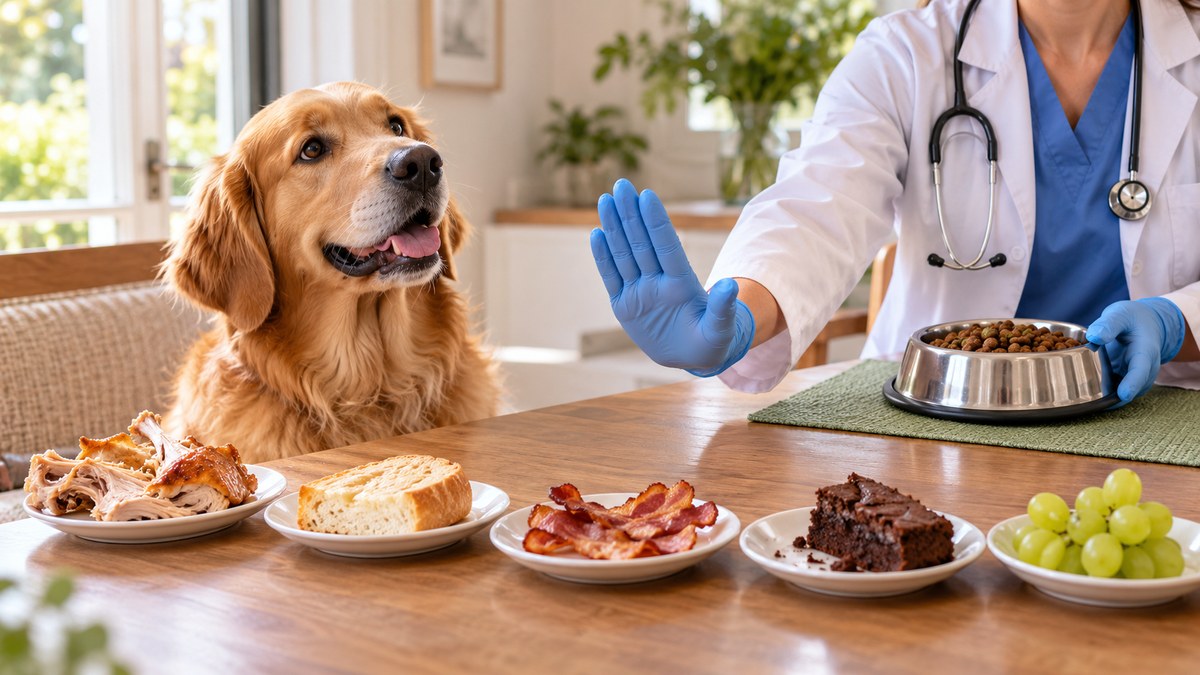
You slide a piece of plain cooked chicken under the table. Your dog catches it with a soft wag of the tail. You feel a little guilty. But should you?
Most dog owners have been told at least once that table scraps are dangerous. That they cause begging, obesity, or even poisoning. Some of that is true. A lot of it is not. The truth about feeding your dog from your plate is more nuanced than a simple “never do it” rule. We talked to veterinarians to separate real risks from old wives’ tales. Here is what the science says about the most stubborn dog table scraps myths.
Not all table scraps are dangerous, but many common beliefs about feeding them are wrong. Vets confirm that plain, unseasoned meats and certain vegetables are safe in moderation. The real dangers are hidden ingredients like garlic powder, xylitol, and high fat content. Understanding which myths are false helps you share meals safely without harming your dog’s health or encouraging bad behavior.
Myth 1: Table Scraps Always Cause Pancreatitis
Pancreatitis is a serious condition. It causes inflammation of the pancreas and can be life threatening. Many pet parents believe that any human food will trigger this painful episode. That is not accurate.
The real trigger is high fat content. A few bites of lean roasted turkey or plain green beans will not cause pancreatitis. The danger comes from fatty meats, greasy gravy, butter laden mashed potatoes, and fried foods. Dogs with a history of pancreatitis or those with sensitive digestive systems are more at risk.
What vets actually see: dogs who get a whole plate of Thanksgiving leftovers covered in butter and skin. That is a problem. But a single piece of boiled chicken breast? That is usually fine.
The rule of thumb is simple. If the food is lean, unseasoned, and cooked without oil, it is unlikely to trigger pancreatitis in a healthy dog. If it is dripping in fat, skip it.
Myth 2: Even One Bite of People Food Will Create a Beggar
You have heard it from well meaning friends. “Do not give him anything from the table or he will beg forever.”
Behavioral science tells a different story. Dogs learn from reinforcement. If you give your dog a treat while you are eating, and you do it consistently, they learn to hover. But if you give food randomly, or only after the meal is over, the begging behavior does not stick.
Vets point out that begging is often a sign of boredom or habit, not a biological response to table scraps. Dogs beg because it works. If you stop rewarding the behavior, it will fade.
Here is a better approach:
- Feed your dog their own meal before you sit down to eat.
- Ignore begging completely. Do not make eye contact or talk to them.
- If you choose to share food, put it in their bowl after you finish eating, not during the meal.
- Use a place command like “go to your mat” during dinner.
- Reward calm behavior with a small safe scrap only after the meal is done.
This breaks the association between your plate and their mouth. The myth that one bite ruins everything ignores how dog training actually works. It takes repeated reinforcement to create a habit.
Myth 3: Dogs Can Eat Any Vegetable We Can Eat
This myth is half true and half dangerous. Many vegetables are safe for dogs. Carrots, green beans, cucumber, and zucchini are fine in small amounts. But some common vegetables are toxic to dogs.
Onions and garlic are the biggest offenders. They belong to the allium family and damage red blood cells in dogs. Even a small amount of onion powder, which is common in many human dishes, can cause anemia. Garlic is less toxic but still harmful in larger amounts.
Grapes and raisins cause kidney failure. Macadamia nuts cause weakness and vomiting. Even seemingly harmless foods like raw potatoes contain solanine, which is toxic to dogs.
| Safe Vegetables (Plain, Cooked) | Dangerous Vegetables (Any Amount) |
|---|---|
| Carrots | Onions |
| Green beans | Garlic |
| Broccoli | Grapes |
| Zucchini | Raisins |
| Sweet potatoes | Macadamia nuts |
| Cucumber | Raw potatoes |
| Peas | Mushrooms (wild) |
The safest rule: if you are not sure, do not share it. Stick to the safe list and always serve vegetables plain. No butter, salt, or seasoning.
Myth 4: Bones Are Fine Because Dogs Are “Supposed” to Eat Them
This is one of the most persistent dog table scraps myths. It is also one of the most dangerous.
Cooked bones splinter. Chicken bones, turkey bones, and pork chop bones become brittle when cooked. They break into sharp shards that can puncture the esophagus, stomach, or intestines. Vets see emergency cases from cooked bone ingestion every holiday season.
Raw bones are safer but still carry risks. They can break teeth, cause blockages, or introduce bacteria like salmonella.
Many dogs have eaten bones without issue. That luck does not change the risk. A single splintered bone can cause a life threatening perforation.
If you want to give your dog something to chew, use a vet approved dental chew or a rubber toy. Never give cooked bones. The myth that dogs have always eaten bones ignores the fact that wild dogs rarely eat cooked, splinter prone poultry bones.
“I have treated multiple dogs for intestinal perforations caused by cooked chicken bones. It is not worth the risk. If you want to share a bone, give a raw beef knuckle from a butcher, but supervise them closely.” – Dr. Sarah Klein, DVM
Myth 5: Table Scraps Will Ruin a Balanced Diet
This myth has a kernel of truth, but it is often overstated. A few bites of plain cooked meat or vegetables will not unbalance your dog’s nutrition. The problem is when table scraps replace a significant portion of their regular diet.
Commercial dog food is formulated to meet specific nutritional requirements. If your dog eats 10 percent of their calories from table scraps, and those scraps are lean protein and vegetables, the impact is minimal. If table scraps make up 30 percent or more of their calories, they will miss out on essential vitamins and minerals.
The real danger is not the scraps themselves. It is the imbalance of nutrients. Many table scraps are high in sodium, fat, and phosphorus. Too much phosphorus can harm kidney function in older dogs. Too much sodium can cause dehydration and electrolyte issues.
A balanced approach looks like this:
- Keep table scraps to no more than 10 percent of daily calories.
- Choose lean proteins and plain vegetables.
- Avoid anything with added salt, sugar, or spices.
- Do not feed scraps every single day.
- Adjust your dog’s regular food portions to account for the extra calories.
If you follow these guidelines, table scraps become a healthy supplement rather than a nutritional problem. For more detailed guidance on building a balanced diet, check out our guide on essential tips for creating a balanced homemade dog food diet.
What Vets Actually Recommend
Veterinarians do not universally ban table scraps. They recommend caution, knowledge, and moderation. The most common advice from vets we spoke to includes:
- Know the toxic foods list by heart. Onion, garlic, grapes, raisins, chocolate, xylitol, macadamia nuts, and raw dough are non negotiable no’s.
- Seasoning is the enemy. Even safe foods become dangerous when cooked with salt, garlic powder, onion powder, or butter.
- Watch the fat content. High fat scraps can cause pancreatitis, especially in small breeds like Miniature Schnauzers and Shetland Sheepdogs.
- Be consistent with training. If you do not want a beggar, do not reward begging.
- When in doubt, leave it out.
A few vets even recommend keeping a small jar of safe scraps in the fridge. Plain cooked chicken, carrots, and green beans can be added to your dog’s dinner bowl as a topper. This turns table scraps into a controlled, healthy addition rather than a spontaneous handout.
How to Safely Share Your Plate
If you want to share your meal with your dog without falling for dog table scraps myths, follow this simple process.
- Check the ingredient list. Does the dish contain onion, garlic, or excessive salt? If yes, skip it.
- Remove the portion before seasoning. Cook a small piece of meat or vegetable without any spices, then set it aside for your dog.
- Cut it into small pieces. Large chunks can cause choking, especially in smaller dogs.
- Serve it in their bowl, not from your hand. This reduces begging behavior.
- Reduce their regular food portion. If you give them a handful of chicken, take away a handful of kibble.
This method keeps your dog safe, maintains their balanced diet, and lets you enjoy the act of sharing without guilt.
The One Food You Should Never Share
There is one human food that vets worry about more than any other. It is not chocolate or grapes. It is cooked bones, which we already covered. But the second most dangerous food is anything containing xylitol.
Xylitol is a sugar substitute found in sugar free gum, peanut butter, baked goods, and some brands of peanut butter. It causes a massive insulin release in dogs, leading to dangerously low blood sugar within 30 minutes. It can also cause liver failure.
Always check the label of any processed food before sharing it with your dog. Even “natural” peanut butter sometimes contains xylitol. When in doubt, give your dog plain cooked meat or vegetables instead.
Sharing Smart Means Sharing Safe
The most important takeaway from this conversation with vets is that dog table scraps myths often cause unnecessary fear. You do not have to treat your dog like a porcelain doll. You also do not have to treat them like a garbage disposal. The middle ground is simple: know what is safe, keep portions small, and never share seasoned or fatty foods.
Your dog loves being part of the family meal. That bond matters. With a little knowledge, you can keep them safe and still slide them a piece of plain chicken under the table. Just skip the bone, skip the seasoning, and keep the portions reasonable.
For more ideas on what to cook for your pup, take a look at our healthy homemade dog treats your pup will love. And if you are worried about your dog’s digestion after trying new foods, read our guide on essential tips for maintaining your dog’s digestive health.
Feeding your dog from the table does not have to be a source of stress. It can be a small, joyful moment. As long as you know the facts, you can share your plate with confidence.