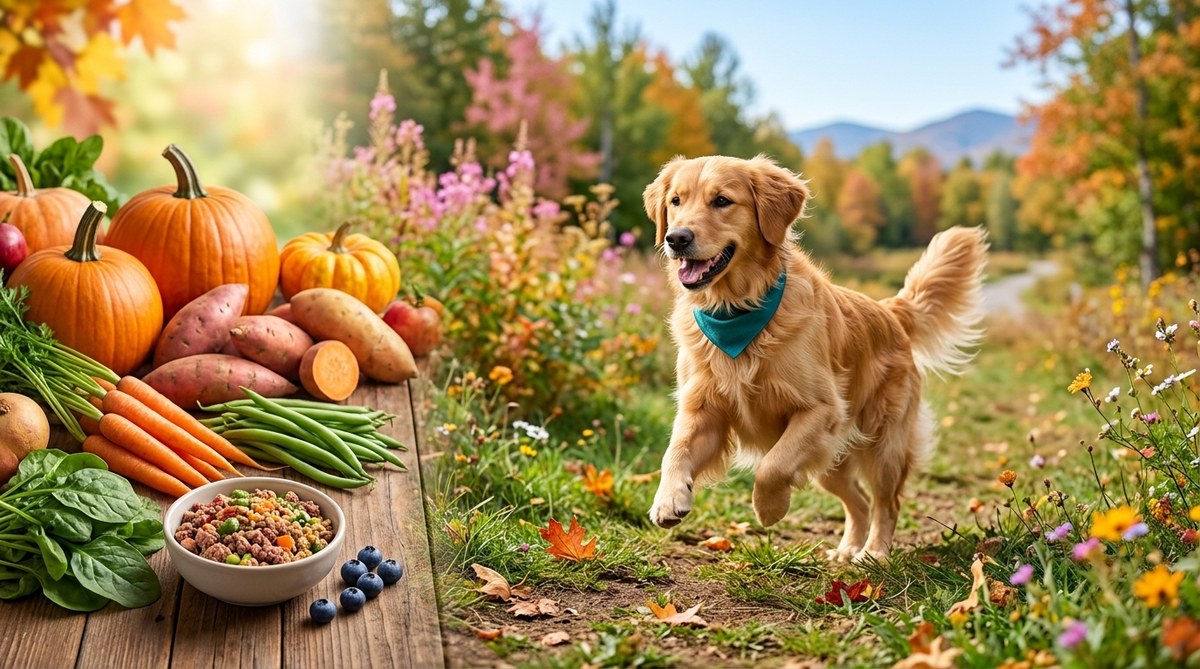
Your dog’s energy levels probably shift with the seasons. In the summer, your pup might sleep through the hottest part of the day and then bounce off the walls at dusk. Come winter, you might notice a slower pace, a little more time curled on the bed, and less enthusiasm for the morning walk. These changes are normal. Dogs, like people, respond to temperature, daylight, and humidity. The food you serve plays a big part in how well your dog handles those shifts. Seasonal eating for dogs energy is not a fad. It is a practical way to support your dog’s body as it adapts to each new season. By matching ingredients to the weather, you can help your dog stay steady, active, and comfortable all year long.
Seasonal eating for dogs energy works because a dog’s metabolism, hydration needs, and activity levels change with the weather. Feeding cooling foods in summer and warming, nutrient-dense foods in winter helps prevent energy crashes. Rotating seasonal produce also adds variety, which can improve gut health and keep your dog interested in meals. This guide covers what to feed in each season, how to transition safely, and which ingredients to avoid.
Why Your Dog’s Energy Drops When the Weather Changes
A drop in energy is often a sign that your dog’s body is working harder to regulate its temperature. In summer, dogs cool themselves mainly through panting and their paw pads. That process uses energy. If the food you provide is heavy or high in carbohydrates, your dog may feel sluggish because digestion generates extra heat. In winter, your dog burns more calories to stay warm. If the diet lacks enough healthy fat or quality protein, your dog may not have the fuel needed for play or even basic warmth.
Another factor is daylight. Shorter days can affect your dog’s sleep-wake cycle. Just like humans, dogs produce melatonin in response to darkness. That can make them sleepier. But you can offset some of that lethargy by adjusting meal timing and ingredients. Feeding a larger portion earlier in the day during winter, for example, gives your dog more usable energy during daylight hours.
How Seasonal Foods Affect Your Dog’s Body
Different foods have different thermic effects. Some foods cool the body from the inside. Others generate heat during digestion. This is where seasonal eating for dogs energy becomes practical.
- Cooling foods include cucumber, watermelon, celery, and leafy greens. These have high water content and are easy to digest. They are ideal for hot weather because they help maintain hydration and do not raise body temperature.
- Warming foods include sweet potatoes, pumpkin, oats, and fatty fish like salmon. These take a little more energy to break down and can help your dog feel warmer in colder months.
- Neutral proteins like chicken, turkey, and eggs work well across all seasons. They are lean enough for summer and can be paired with warming sides in winter.
By rotating these foods, you give your dog exactly what the body needs for the current weather. You also avoid the common problem of overloading your dog with heavy food when it is too hot, which can lead to lethargy and even digestive upset.
Seasonal Eating Plan for Dogs: A Season-by-Season Guide
The table below breaks down what to emphasize in each season and what to limit. Use it as a reference when planning your dog’s meals.
| Season | Focus | Best Ingredients | Limit These |
|---|---|---|---|
| Spring | Light proteins, fresh greens, allergy support | Turkey, eggs, spinach, blueberries, parsley | High-fat cuts, heavy grains |
| Summer | Hydration, cooling, low-heat digestion | Watermelon, cucumber, zucchini, lean chicken, mint | Red meat, high-carb kibble, dairy |
| Fall | Immune support, warming fiber, joint health | Pumpkin, sweet potato, apple (no seeds), salmon, turmeric | Cold raw foods, excess fruit sugar |
| Winter | Healthy fats, dense protein, warmth | Beef, lamb, oats, coconut oil, bone broth | Raw vegetables, large portions late at night |
Spring is a good time to introduce fresh greens. Your dog may have been eating heavier foods all winter. A gradual switch to leaner proteins and vegetables can help reset digestion. Summer is all about water content. If your dog is not drinking enough, watery fruits and vegetables can help. Fall is the season to add immune-supporting foods like pumpkin, which is rich in fiber and beta-carotene. Winter demands more calories. A little extra fat from coconut oil or salmon oil can make a big difference in your dog’s energy and coat condition.
Three Steps to Transition Your Dog’s Diet Safely
Changing your dog’s food too fast can cause stomach upset. Follow these three steps to make the switch smooth.
-
Start with a 7-day overlap. For the first three days, serve 75 percent of the old food and 25 percent of the new seasonal food. On days four through seven, shift to a 50/50 split. By day eight, you can serve 75 percent new food and 25 percent old. Monitor your dog’s stool and energy level during this period.
-
Add one new ingredient at a time. If you want to add pumpkin and sweet potato, do not add both in the same week. Introduce one, watch for any reaction, and then add the second. This makes it easier to identify any sensitivity.
-
Adjust portion size based on activity. In summer, your dog may eat less because heat suppresses appetite. That is normal. Do not force extra food. In winter, your dog may need 10 to 15 percent more calories. Pay attention to body condition. If you can feel the ribs too easily, increase portions slightly.
For more details on creating balanced meals at home, check out our guide on Essential Tips for Creating a Balanced Homemade Dog Food Diet.
Foods That Boost Energy Without the Crash
Some foods provide steady energy. Others cause a spike and then a drop. You want the steady kind. These are the best options for maintaining energy across all seasons.
- Blueberries. These are rich in antioxidants and support brain function. They are light enough for summer and can be served frozen or fresh.
- Pumpkin puree. Canned pumpkin (not pie filling) is excellent for digestion and provides steady energy. It works well in fall and winter.
- Salmon oil. A small drizzle provides omega-3 fatty acids that support joint health and energy metabolism. Use it more in winter when your dog needs extra calories.
- Sweet potato. Cooked and mashed, sweet potato provides complex carbohydrates that release energy slowly. It is a great base for winter meals.
- Eggs. Scrambled or hard-boiled eggs offer high-quality protein. They work in any season and are easy to digest.
“Rotating ingredients based on the season is one of the simplest ways to support your dog’s natural rhythms. It does not have to be complicated. A few small changes can prevent the energy slumps that many owners mistake for aging or laziness.” — Dr. Laura Simmons, DVM, canine nutrition specialist
Common Mistakes When Adjusting Your Dog’s Diet
Even with good intentions, some mistakes can backfire. Here are the most common ones to avoid.
- Switching too fast. A sudden change can cause diarrhea or vomiting. Always transition over at least a week.
- Ignoring water intake. In summer, watery foods help, but you still need fresh water available at all times. In winter, dogs sometimes drink less because the water is cold. Use room-temperature water to encourage drinking.
- Overdoing fruit. Fruits like apples and blueberries are healthy, but too much sugar can cause loose stool or weight gain. Treat fruit as a topper, not a main ingredient.
- Skipping protein rotation. Feeding the same protein source all year can lead to food sensitivities. Rotate between chicken, turkey, beef, and fish.
- Forgetting about fiber. Seasonal eating is not just about protein and fat. Fiber from vegetables helps regulate digestion and keeps energy levels stable.
If you want to learn more about specific nutrients that are often missing in commercial food, read our article on 5 Essential Nutrients Often Missing in Commercial Dog Food.
How to Read Your Dog’s Energy Signals
Your dog will tell you if the seasonal eating plan is working. Look for these signs.
- Consistent energy throughout the day, not just at meal times.
- A healthy, shiny coat.
- Normal stool consistency and frequency.
- Willingness to play and go on walks.
- No excessive panting or shivering after meals.
If you notice your dog is lethargic after eating, the meal may be too heavy for the current season. Scale back on fat or protein and add more vegetables. If your dog seems restless or hungry shortly after eating, you may need to increase the protein or fat content.
Putting It All Together for 2026
Seasonal eating for dogs energy is about listening to your dog and adjusting the bowl accordingly. You do not need to buy expensive specialty foods. Most of the ingredients are already in your kitchen or available at the grocery store. A bag of frozen blueberries, a can of pumpkin, a sweet potato, and some eggs can cover most of the seasonal rotation.
Start with the current season. If it is winter, add a little salmon oil or coconut oil to your dog’s dinner. If it is summer, swap half the kibble for some shredded zucchini or cucumber. Watch how your dog responds. Within a few days, you should see a change in energy and mood.
For more ideas on adding nutrient-dense foods to your dog’s meals, see our guide on How to Incorporate Superfoods Into Your Dog’s Daily Meals in 2026.
Your Dog’s Best Year Yet Starts with the Bowl
The connection between food and energy is immediate. When you feed with the seasons, you work with your dog’s biology instead of against it. Your dog will have more consistent energy, better digestion, and a stronger immune system. That means more walks, more play, and more good days together. Start this week. Pick one seasonal change and try it for three days. Your dog will thank you with a wagging tail and a brighter, bouncier step.