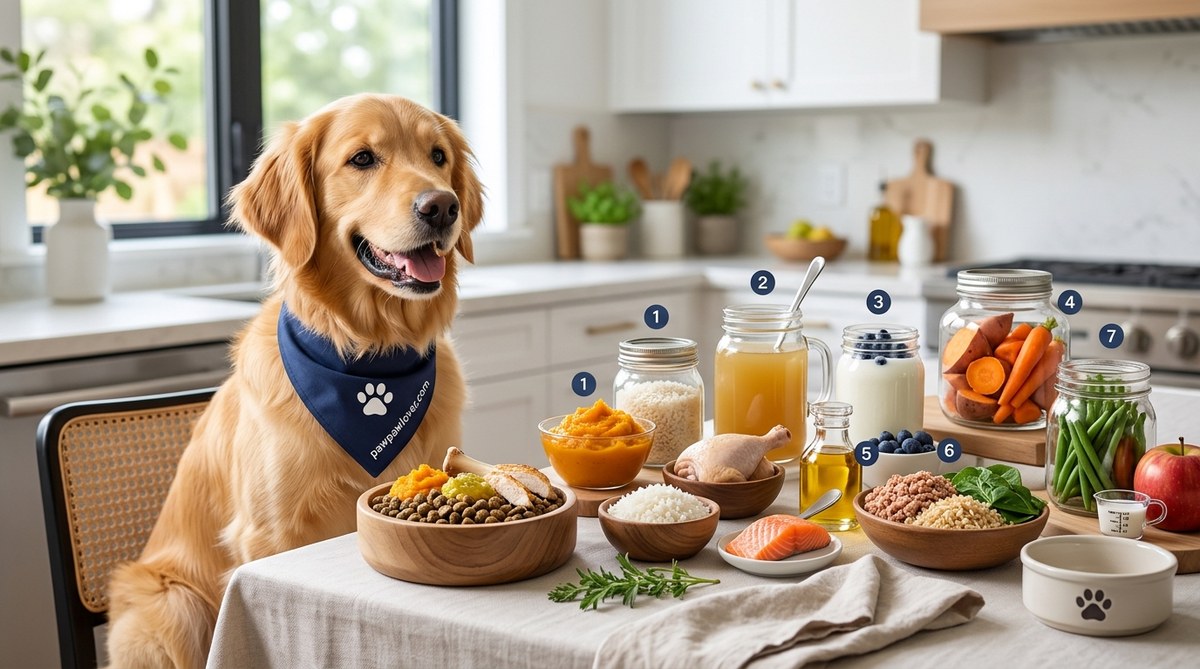
Your dog’s stomach is speaking, and it’s not happy. Maybe you have noticed the gurgling sounds after dinner. Perhaps the yard has become a landmine of loose stools. Or you have cleaned up vomit one too many times this month. You want to help, but a vet visit feels like a big step for what seems like a minor issue. The good news is that you can often fix these problems right in your own kitchen. By making a few simple food swaps, you can support your dog’s gut without a prescription or a pricey appointment.
Improving your dog’s digestion in 2026 does not require a complete diet overhaul. Swapping out low quality kibble for whole food ingredients like pumpkin, bone broth, and fermented veggies can reduce gas and firm up stools. Start with one swap at a time, watch how your dog responds, and build from there. Small changes lead to big relief.
Why Your Dog’s Digestion Needs a Reset
Dogs are not built to process heavily processed food day after day. Many commercial kibbles are packed with fillers, artificial preservatives, and low grade proteins. These ingredients sit in the gut and ferment, causing gas, bloating, and irregular bowel movements. Over time, the gut lining becomes irritated. Your dog might vomit more often or refuse to eat altogether.
The goal is to feed the good bacteria in your dog’s gut while reducing the load on their digestive system. You do not need to become a pet nutritionist. You just need to know which foods to swap and which to keep.
The 7 Food Swaps That Improve Dog Digestion
Here are seven practical swaps you can start using this week. Each one targets a common digestive issue like gas, loose stools, or vomiting.
1. Swap Processed Kibble for Canned Pumpkin
Pumpkin is a gut superfood for dogs. It is packed with soluble fiber that soaks up excess water in the intestines. This helps firm up loose stools. It also feeds beneficial bacteria.
- How to use it: Replace 10% of your dog’s kibble with plain canned pumpkin (not pumpkin pie filling). Mix it into their bowl at dinner.
- What to watch for: Stools should become firmer within 24 to 48 hours. If your dog has chronic loose stool, this swap often fixes it.
2. Swap Dry Treats for Bone Broth
Many commercial dog treats are loaded with starches and sugars that irritate sensitive stomachs. Bone broth is a gentle alternative that provides collagen and gelatin. These compounds heal the gut lining and reduce inflammation.
- How to use it: Serve a few tablespoons of unsalted, onion free bone broth over your dog’s food. You can make it at home by simmering beef or chicken bones for 12 to 24 hours.
- What to watch for: Less vomiting and a calmer stomach after meals.
3. Swap Low Quality Protein for Boiled Chicken and Rice
When your dog’s stomach is upset, the last thing they need is a heavy, fatty protein. Boiled chicken and white rice is the gold standard for a bland diet. It is easy to digest and gives the gut a break.
- How to use it: Cook boneless, skinless chicken breast in plain water. Shred it and mix with cooked white rice. Feed this as a temporary meal for 2 to 3 days.
- What to watch for: This swap is ideal for vomiting or diarrhea episodes. Once stools normalize, transition back to their regular food slowly.
4. Swap Sugary Toppers for Plain Greek Yogurt
Yogurt is a natural source of probiotics. These are live bacteria that help repopulate the gut with good bugs. Many dogs love the taste, and it can replace sugary, processed toppers that cause gas.
- How to use it: Stir one tablespoon of plain, unsweetened Greek yogurt into your dog’s morning meal. Look for brands with live active cultures.
- What to watch for: Reduced gas and better overall stool quality. Avoid yogurt with added fruit or sugar.
5. Swap Wheat Based Kibble for Oatmeal
Wheat and corn are common allergens in dogs. They can cause chronic loose stool and skin issues. Oatmeal is a gentle, gluten free carbohydrate that is easier on the gut.
- How to use it: Cook plain rolled oats in water until soft. Let them cool and mix a small portion into your dog’s food. Start with one tablespoon for small dogs and two for larger breeds.
- What to watch for: Firmer stools and less itching. Oatmeal also helps dogs who struggle with chronic soft stool.
6. Swap Fatty Scraps for Steamed Carrots
Table scraps are often too rich for a dog’s stomach. Steamed carrots are a healthy, low calorie alternative. They provide beta carotene and fiber that supports regular bowel movements.
- How to use it: Steam carrots until soft, then mash them. Mix a spoonful into your dog’s dinner. You can also use them as training treats.
- What to watch for: More regular pooping and less straining. Carrots are especially helpful for dogs that eat too fast.
7. Swap Dry Kibble for Fermented Vegetables
Fermented foods like sauerkraut and kimchi are packed with enzymes and probiotics. They help break down food more efficiently and reduce bloating.
- How to use it: Rinse a small amount of fermented cabbage to remove excess salt. Chop it finely and mix a teaspoon into your dog’s meal. Start with a tiny amount to see how they react.
- What to watch for: Less bloating and a happier belly. Some dogs love the tangy taste.
A Step by Step Guide to Making the Switch
Changing your dog’s diet too fast can cause more stomach issues. Follow this numbered process to make each swap safely.
- Pick one swap to start. Choose the issue that bothers you most. If your dog has loose stools, start with pumpkin. If they vomit, start with bone broth.
- Introduce the new food slowly. Mix a small amount of the swap into their regular food. For example, add one teaspoon of pumpkin to their kibble on day one.
- Increase the amount over five days. Each day, add a little more while reducing the old food slightly. This gives the gut time to adjust.
- Monitor their response. Watch for changes in stool firmness, gas levels, and energy. If you see negative signs like more vomiting, scale back.
- Lock in the new routine. Once your dog tolerates the swap well, make it a permanent part of their diet. You can then add a second swap if needed.
Common Mistakes to Avoid
Even well intentioned swaps can backfire. Use this table to avoid the most common pitfalls.
| Mistake | Why It Hurts Digestion | Better Approach |
|---|---|---|
| Switching too fast | Sudden diet changes shock the gut | Introduce new foods over 5 to 7 days |
| Using sweetened yogurt | Sugar feeds bad bacteria | Use plain, unsweetened Greek yogurt only |
| Overfeeding pumpkin | Too much fiber causes loose stool | Stick to 10% of the meal |
| Giving raw bones | Splinters can damage the gut | Use bone broth instead of whole bones |
| Ignoring portion sizes | Extra calories strain the system | Treats should be no more than 10% of daily calories |
“A calm gut starts with a calm introduction. Always give your dog’s digestive system time to adapt to new foods. Patience prevents problems.” — Dr. Sarah Klein, DVM
How to Know If a Swap Is Working
You do not need a lab test to see results. Watch for these signs over the first week:
- Firmer stools. The poop should hold its shape and not be mushy.
- Less gas. You should hear fewer gurgles and smell less flatulence.
- More consistent energy. Dogs with good digestion have stable energy levels.
- Better appetite. If your dog was refusing food, they should start eating again.
If you see these positive changes, stick with the swap. If you notice the opposite, remove the new food and try a different one.
What to Do If Your Dog Still Has Issues
Sometimes a food swap is not enough. If your dog continues to have loose stools, vomiting, or gas after trying several swaps, it may point to a deeper issue. This could be a food allergy, a parasite, or a chronic condition.
In that case, a vet visit is the right next step. You can also read our guide on essential tips for maintaining your dog’s digestive health for more advanced strategies. The food swaps in this article work best for mild to moderate digestive upset. They are not a replacement for medical care when something is seriously wrong.
The Best Foods to Keep on Hand for Good Digestion
Once you have found swaps that work, stock your pantry with these gut friendly staples. They make it easy to support your dog’s digestion every day.
- Canned pumpkin (plain, no spices)
- Bone broth (homemade or low sodium store bought)
- Plain Greek yogurt
- Rolled oats
- Steamed carrots
- Boiled chicken and white rice
- Fermented cabbage (rinsed)
Having these items ready means you can respond to a gassy belly or a loose stool episode without a trip to the store.
How to Build a Long Term Digestive Routine
Consistency is the secret to a happy gut. Dogs thrive on routine. Once you find the swaps that work, make them part of your daily feeding schedule.
- Morning meal: Add a spoonful of plain Greek yogurt to their regular food.
- Evening meal: Mix in a small portion of canned pumpkin or steamed carrots.
- Weekly treat: Offer a few tablespoons of bone broth as a special topper.
This routine keeps the gut bacteria balanced and prevents flare ups. It also makes your dog look forward to mealtime.
Your Dog’s Digestion Is in Your Hands
You do not need a cabinet full of supplements or a degree in animal nutrition to improve your dog’s digestion. The answer is already in your kitchen. By swapping out processed, irritating ingredients for whole, gentle foods, you give your dog’s gut the support it needs to function well.
Start with one swap this week. Watch your dog’s reaction. Adjust as needed. Over time, you will build a diet that keeps their stomach calm, their stools firm, and their tail wagging. Your dog will thank you with every happy, healthy poop in the yard.