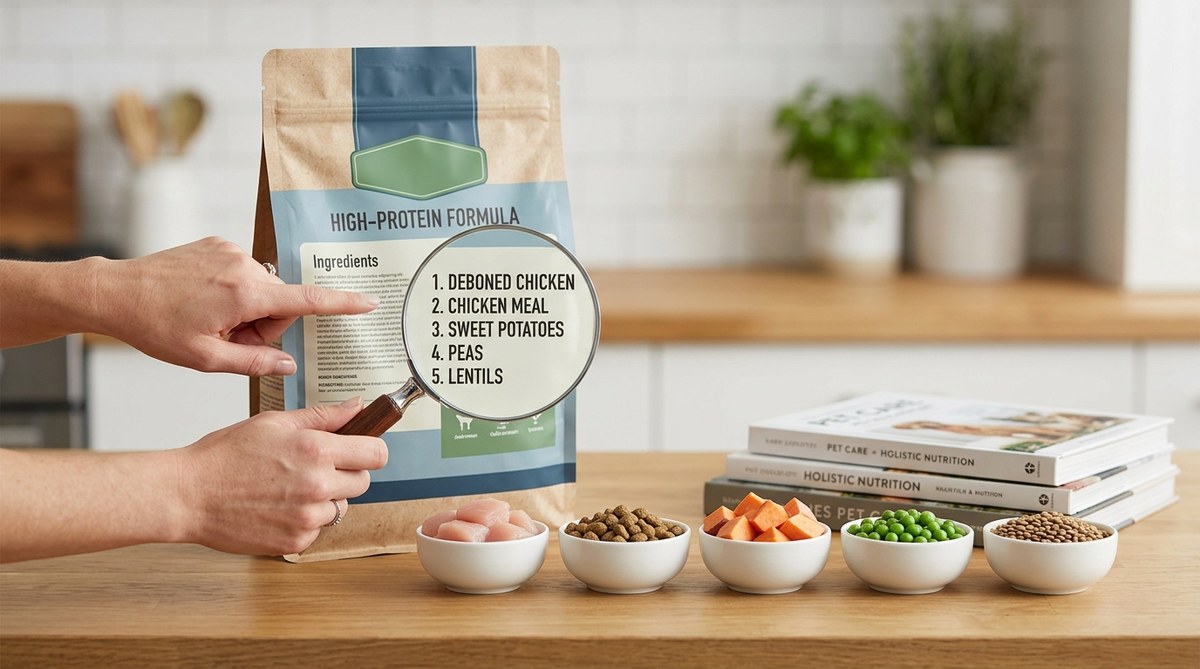
You grab a bag of dog food off the shelf. The front says “premium” and “natural” in big letters. You flip it over. And then you stare at a wall of tiny text. What is chicken meal? Why is there corn listed twice? And what on earth is “animal digest”? You are not alone. Most pet owners feel lost the moment they try to read a dog food label. But here is the truth: the first five ingredients tell you 90 percent of what you need to know. Once you learn to read them, you will never look at a bag the same way again.
Ingredients are listed by weight, from most to least. The first five ingredients make up the bulk of the food. If you see a named protein source like “deboned chicken” or “beef” in spot one, that is a good sign. If you see corn, wheat, or a vague “meat meal” in the top three, the food is mostly filler with low quality protein.
Why the First Five Ingredients Rule Everything
Pet food regulations require manufacturers to list ingredients in descending order of weight. That means the first ingredient weighs the most. The second ingredient weighs a little less, and so on. By the time you reach ingredient six or seven, the amounts are often tiny. Some ingredients are added in such small quantities that they barely register on the scale.
This system is not perfect. Wet ingredients like whole chicken contain a lot of water weight. Dry ingredients like chicken meal are concentrated. But the rule still holds: the first five ingredients are the foundation of the recipe. If that foundation is weak, the rest of the bag cannot fix it.
Here is a practical way to scan the first five ingredients on any bag:
- Look for a named animal protein in the first slot (chicken, beef, salmon, lamb)
- Check that at least three of the first five are animal based
- Watch out for generic terms like “poultry meal” or “meat meal”
- Avoid foods where corn, wheat, or soy appear in the top three
- Skip bags that list sugar or sweeteners anywhere in the first five
How to Read Dog Food Ingredients in Three Steps
You do not need a degree in animal nutrition to make smart choices. Follow this simple numbered process every time you shop.
1. Find the named protein source.
The first ingredient should be a specific animal. “Chicken” is good. “Deboned chicken” is better because it means less bone and feather content. “Chicken meal” is concentrated protein, which is fine. “Poultry meal” is vague and could include any bird. “Meat meal” is the lowest quality option and often includes rendering plant scraps.
2. Count the animal based ingredients in the top five.
A high quality food will have at least two or three animal proteins in the first five slots. For example: chicken, chicken meal, and chicken fat. That tells you the food is protein forward. If you see one protein source and then four grains or starches, the food is mostly filler.
3. Identify the carbohydrate source.
Every kibble needs some starch to hold its shape. The question is what kind. Whole grains like brown rice or barley are better than refined flours. Potatoes and peas are common in grain free formulas. Avoid foods where corn, wheat, or soy are listed as the second or third ingredient. Those are cheap fillers that offer little nutritional value.
Common Mistakes People Make When Reading Labels
Even careful owners fall into traps. Here is a table that shows the difference between what a label says and what it really means.
| What the label says | What it often means |
|---|---|
| “Chicken and brown rice” | The chicken is weighed wet. The rice is dry and concentrated. The actual meat content may be lower than it looks. |
| “Meat meal” | Rendered animal parts from unknown sources. Could include roadkill or expired grocery meat. |
| “Corn gluten meal” | A byproduct of corn processing. It adds protein on paper but is not a quality source for dogs. |
| “Animal digest” | Cooked down animal parts used as a flavor spray. It makes low quality food taste good so dogs eat it. |
| “Brewers rice” | A broken rice fragment left over from beer production. It is a cheap filler with low digestibility. |
| “Pea protein” | A concentrated plant protein used to boost protein numbers in grain free foods. Some dogs struggle to digest it. |
Expert advice from a board certified veterinary nutritionist: “If you cannot recognize the first five ingredients as real food, neither can your dog’s digestive system. Stick to ingredients you would find in a kitchen.”
What About “Grain Free” and “Limited Ingredient” Claims?
Marketing terms are not regulated the same way ingredients are. A bag labeled “grain free” might still contain potatoes, peas, or tapioca as the main starch. Those are not grains, but they can still cause digestive upset for some dogs. A “limited ingredient” diet is helpful for dogs with allergies, but you still need to check the first five ingredients to make sure the protein source is clean and the carbohydrate is gentle.
For dogs with sensitive stomachs, the first five ingredients become even more critical. If your dog has loose stools or itchy skin, look at the protein source first. Many dogs react to chicken or beef. Switching to a novel protein like duck, venison, or kangaroo can help. You can learn more about supporting your dog’s digestion in our guide on essential tips for maintaining your dog’s digestive health.
Ingredients That Should Never Be in the First Five
Some ingredients are not toxic in small amounts, but they have no business being a main component of your dog’s diet. Watch for these red flags in the top five slots:
- Corn: Hard for dogs to digest and provides empty calories
- Wheat flour: A cheap binder with little nutritional value
- Soybean meal: Often used to boost protein numbers cheaply
- Sugar or molasses: Added to make low quality food palatable
- Cellulose: Powdered plant fiber used as a filler
- Propylene glycol: A synthetic moisture retainer sometimes found in semi moist foods
If you see any of these in the first five ingredients, put the bag back on the shelf. Your dog deserves better. For a deeper look at what to avoid, check out our article on 10 hidden dog food ingredients that could be harmful to your pet.
Putting It All Into Practice at the Store
Next time you shop, take 30 seconds to do this. Flip the bag. Find the ingredient list. Read only the first five items. Ask yourself three questions. Is the first ingredient a named animal protein? Are at least two of the five animal based? Is the carbohydrate source a whole food rather than a cheap filler? If you answer yes to all three, you have found a solid option.
This method works for kibble, canned food, and freeze dried raw diets. It works for puppy food, adult maintenance, and senior formulas. It works for every brand at every price point. The first five ingredients never lie. They tell you exactly what the manufacturer prioritized.
The Best Next Step for Your Dog’s Bowl
Learning to read ingredients is the single most powerful skill you can develop as a pet owner. It saves you money. It saves your dog from unnecessary fillers. And it gives you confidence that every meal supports their health. Once you master the first five ingredients, you can move on to understanding guaranteed analysis, calorie content, and feeding guidelines. But start here. Start with the ingredients.
If you want to take control of your dog’s nutrition even further, consider making some meals at home. Our guide on essential tips for creating a balanced homemade dog food diet will help you get started safely. And for owners who want to add a nutritional boost without switching foods entirely, check out top natural supplements to boost your dog’s nutrition naturally.
Your dog cannot read the label. But you can. And now you know exactly what to look for. Grab that bag, flip it over, and read the first five ingredients with confidence. Your dog will thank you at dinner time.