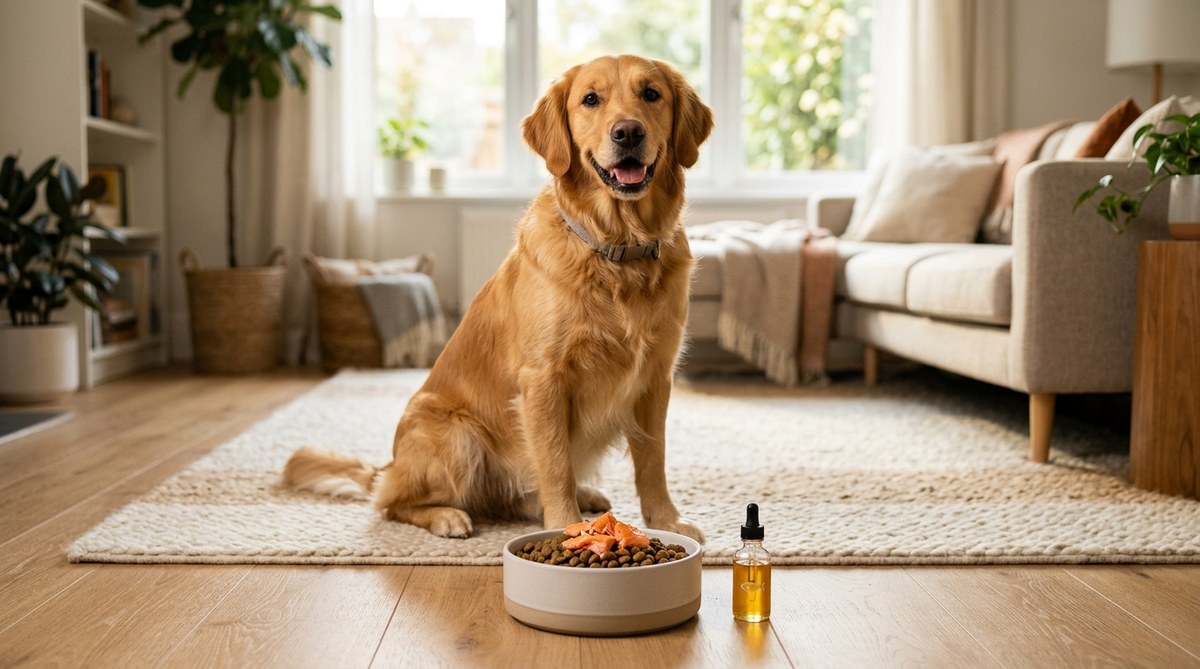
You want the best for your dog. That means good food, regular walks, and plenty of belly rubs. But there is one nutrient that often gets overlooked: omega-3 fatty acids. These healthy fats play a huge role in everything from a shiny coat to strong joints. Yet many dog owners are not sure if their pet is getting enough. This guide will help you understand exactly what omega-3 for dogs does, how to spot a shortage, and the simplest ways to boost your pup’s intake.
Omega-3 fatty acids support your dog’s skin, coat, joints, heart, brain, and immune system. Most commercial dog foods fall short, so supplementation or omega-rich whole foods help. Look for EPA and DHA from animal sources like fish oil. Start with 75–100 mg combined EPA+DHA per 10 pounds of body weight, then adjust with your vet. Signs of deficiency include dry skin, dull fur, and joint stiffness.
What Are Omega-3 Fatty Acids and Why Do Dogs Need Them?
Omega-3s are a group of polyunsaturated fats. The three main types are alpha-linolenic acid (ALA), eicosapentaenoic acid (EPA), and docosahexaenoic acid (DHA). Dogs do not produce these fats efficiently on their own. They must get them from food.
ALA comes from plant sources like flaxseed, chia seeds, and walnuts. But dogs have a limited ability to convert ALA into the more usable EPA and DHA. That is why animal-based omega-3s are far more effective. EPA and DHA are found in fish oil, krill oil, and algae oil. They work directly in the body to reduce inflammation, support cell membranes, and promote healthy organ function.
Without enough omega-3s, your dog’s body has a harder time managing inflammation, building brain cells, and keeping skin and fur in top shape. Think of these fats as the oil that keeps the whole machine running smoothly.
Signs Your Dog Might Be Low on Omega-3s
How can you tell if your dog is not getting enough? Look for these common clues.
- Dry, flaky skin or dandruff
- A dull, coarse coat that lacks shine
- Excessive shedding or hair thinning
- Stiff joints or reluctance to run and play
- Frequent ear infections or skin allergies
- Slow wound healing
- Low energy or a weaker immune system
If you notice several of these signs, it may be time to talk to your vet. Blood tests can measure the omega-3 index in red blood cells. But even without testing, many dogs benefit from a small increase in dietary omega-3s.
The Top Benefits of Omega-3 for Dogs
Adding omega-3s to your dog’s routine can improve their quality of life in many ways. Here are the most important benefits backed by research.
- Healthy skin and a glossy coat. Omega-3s help regulate oil production and reduce inflammation that causes itching and shedding.
- Joint comfort and mobility. EPA and DHA lower inflammatory chemicals that contribute to arthritis and stiffness, especially in senior dogs.
- Brain development and function. DHA is a major building block of the brain. Puppies need it for learning and memory. Older dogs benefit from protection against cognitive decline.
- Heart health. Omega-3s help maintain normal heart rhythm, lower triglycerides, and reduce blood pressure.
- Immune support. These fatty acids strengthen the immune response and can help manage allergies.
- Cancer support. Some studies suggest omega-3s may slow tumor growth and improve the effectiveness of certain treatments.
How Much Omega-3 Does Your Dog Need?
Dosage depends on your dog’s weight, activity level, and health status. The general recommendation is 75 to 100 milligrams of combined EPA and DHA per 10 pounds of body weight per day. This is a starting point. Always consult your veterinarian for a precise dose, especially if your dog has a medical condition.
The table below shows estimated daily amounts for healthy adult dogs.
| Dog’s Weight (lbs) | EPA + DHA (mg per day) | Example Serving (fish oil) |
|---|---|---|
| 10 | 75–100 | 1/2 of a typical 1000 mg softgel |
| 25 | 187–250 | 1 softgel (1000 mg) |
| 50 | 375–500 | 2 softgels |
| 75 | 562–750 | 3 softgels |
| 100+ | 750–1000 | 4 softgels |
Note that the total oil weight on a label is not the same as the EPA and DHA content. Always check the guaranteed analysis for EPA and DHA numbers.
Best Sources of Omega-3 for Dogs
You have several options to give your dog a healthy dose of omega-3s.
- Fish oil (salmon, sardine, anchovy, menhaden). This is the most common and well-researched source. Look for a product that lists the EPA and DHA amounts.
- Krill oil. It contains omega-3s in phospholipid form, which some owners feel is more absorbable. It also has a natural antioxidant called astaxanthin.
- Algae oil. A plant-based option that provides DHA directly. Good for dogs with fish allergies or for owners who prefer a vegetarian source.
- Whole fish. Small, low-mercury fish like sardines or mackerel can be fed raw or cooked (boneless) as a treat.
- Flaxseed and chia seeds. These provide ALA, but remember conversion is limited. They work better as a complement to animal-based sources.
How to Add Omega-3 to Your Dog’s Diet
You do not need to completely revamp your feeding routine. Follow these steps to start safely.
- Pick a high-quality supplement or whole food source. Check the label for purity and third-party testing.
- Calculate the starting dose based on weight. Use the table above as a guide.
- Start with half the recommended dose for the first week. This helps your dog’s digestive system adjust.
- Monitor your dog’s stool, coat, and energy level. Loose stools can be a sign of too much fat.
- Gradually increase to the full dose after a week. Split the amount into two meals if needed.
- Store liquid oils in the refrigerator after opening to prevent rancidity.
If you prepare homemade meals, you can mix the oil right into the food. For kibble, drizzle it over the top just before serving. You can also buy fish-based treats that are naturally high in omega-3s.
Common Mistakes to Avoid
Giving omega-3s is simple, but a few errors can reduce benefits or cause problems.
| Mistake | Why It’s a Problem | How to Fix It |
|---|---|---|
| Using human fish oil without checking dose | Human formulas may have different concentrations and additives. | Choose a dog-specific supplement or check the label for EPA/DHA levels. |
| Overdosing on oil | Too much fat can cause pancreatitis, diarrhea, or weight gain. | Stick to the recommended dosage per body weight. |
| Ignoring expiration dates | Rancid oil loses effectiveness and may upset the stomach. | Store oil properly and replace every 60–90 days. |
| Relying only on plant sources | ALA conversion is very low in dogs. | Combine with at least some EPA/DHA from animal sources. |
| Not introducing gradually | Sudden high fat can cause loose stools. | Start with a small amount and increase over one week. |
Expert Advice on Omega-3 for Dogs
“The best omega-3 source for dogs is marine-based oil rich in EPA and DHA. Look for products that are molecularly distilled to remove heavy metals and PCBs. A good rule is to aim for 100 mg of combined EPA and DHA per 10 pounds of body weight daily. Always talk to your vet before starting any new supplement, especially if your dog is on medications.”
– Dr. Sarah Mitchell, DVM, veterinary nutritionist
If you are feeding a homemade diet, you need to be extra careful about omega-3 balance. Homemade meals often lack the right fatty acid ratio. Check out our guide on essential nutritional tips to keep your dog healthy and happy for more guidance on balancing nutrients at home.
Putting It All Together for Your Dog
You now have the tools to make an informed choice about omega-3 for dogs. Start by observing your dog’s coat, skin, and mobility. If something seems off, a small addition of fish oil or sardines could make a big difference. Remember to pick a clean source, dose by weight, and go slow.
Many commercial dog foods already contain some omega-3s, but often not enough. If you are feeding kibble, check the label for named fish meal or fish oil. Even then, supplementation may still be beneficial. For a deeper understanding of what is in your dog’s bowl, read our guide to reading dog food labels like a pro in 2026.
Your pup depends on you for a long, healthy life. By adding a simple omega-3 routine, you give them a real leg up. That shiny coat and bouncy step will be your reward.