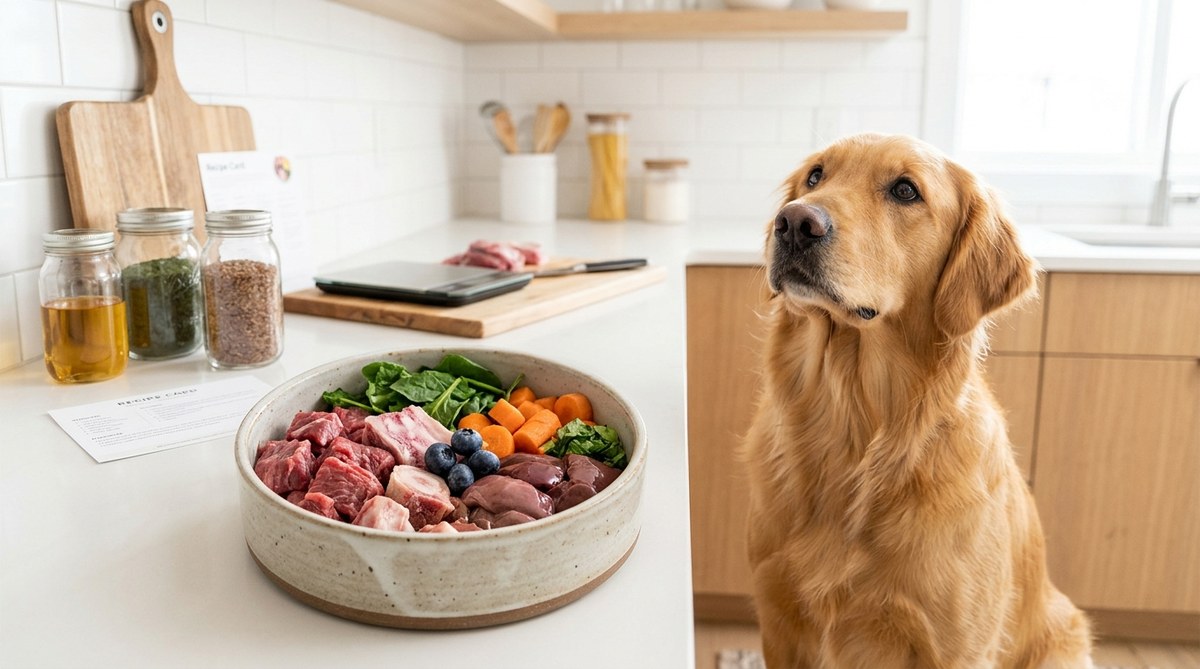
You have decided to feed your dog a raw diet. That is a big step, and you are not alone. More dog owners in the United States are moving away from ultra processed kibble toward whole, raw ingredients. The idea makes sense: dogs evolved on raw meat, bones, and plants. But switching to a raw dog food diet guide safely takes planning. You cannot just toss a chicken leg in a bowl and call it dinner. Your dog needs balanced nutrition, proper handling, and a slow transition. This guide will walk you through every step so you can feed raw with confidence in 2026.
A safe raw diet for dogs requires 70 to 80 percent muscle meat, 10 percent bone, 5 percent liver or secreting organ, and 5 to 10 percent vegetables or fruit. Start with a single protein like chicken or beef for two weeks. Add variety slowly. Always wash hands and surfaces after handling raw meat. Freeze fish and pork for three weeks before feeding to kill parasites. Work with a vet who supports raw feeding to check for nutrient gaps.
Why Raw Feeding Works for Dogs
Dogs share 99 percent of their DNA with wolves. Their digestive systems are built for raw meat, organs, and bones. Commercial kibble is a modern invention that relies on starches and fillers to hold its shape. A raw diet removes those fillers and delivers moisture, enzymes, and natural nutrients. Owners who switch report shinier coats, cleaner teeth, smaller stools, and higher energy levels. The goal of this raw dog food diet guide is to help you get those results without the risks.
The Core Components of a Balanced Raw Meal
A balanced raw meal is not just ground meat. It includes several categories that mirror what a wild canine would eat. Here is the breakdown.
| Component | Percentage of Diet | Example |
|---|---|---|
| Muscle meat | 70 to 80 percent | Chicken thighs, beef chunks, turkey breast |
| Raw meaty bone | 10 percent | Chicken wing, beef rib, turkey neck |
| Secreting organ | 5 percent | Beef liver, chicken liver, kidney |
| Vegetables or fruit | 5 to 10 percent | Pureed spinach, blueberries, pumpkin |
| Additional supplements | As needed | Fish oil, vitamin E, zinc |
Muscle meat provides protein and fat. Bones supply calcium and phosphorus in the right ratio. Organs deliver vitamins A, D, E, and B complex. Vegetables add fiber, antioxidants, and phytonutrients. Many owners also add a top natural supplement to boost your dog’s nutrition naturally like green lipped mussel powder or kelp.
How to Start Your Dog on a Raw Diet
Transitioning too fast causes stomach upset. Follow these steps for a smooth change.
- Choose one protein source. Start with chicken or beef. Stick with it for two weeks so your dog’s gut adjusts.
- Replace 20 percent of the kibble with raw meat. Mix it in the same bowl. Do this for three days.
- Increase raw to 50 percent. Remove half the kibble. Add more raw meat and a small raw meaty bone. Watch for loose stools.
- Go to 80 percent raw. Keep a little kibble if your dog has a sensitive stomach. Add a teaspoon of pureed greens.
- Feed 100 percent raw. By day 14 your dog should handle a full raw meal. Offer a liver piece once or twice per week.
“The biggest mistake I see is switching overnight. A dog’s gut microbiome needs time to shift from processing starches to digesting raw protein and fat. Take two full weeks for the transition.” — Dr. Karen Becker, integrative veterinary health expert
If your dog refuses to eat the raw food at first, warm it slightly in a sealed bag under warm water. Never microwave raw meat. For more help with picky eaters, read our guide on is your dog a picky eater these nutrient packed toppers will change their mind.
Common Mistakes and How to Avoid Them
Even experienced raw feeders slip up. Here is a table of the most frequent errors and their fixes.
| Mistake | Why It Happens | Safe Fix |
|---|---|---|
| Feeding only muscle meat | Owners think organs are gross | Add liver or kidney once a week for taurine and vitamin A |
| Using ground meat from the store | Ground meat has high surface bacteria | Buy whole cuts and grind fresh at home |
| Skipping vegetables | Dogs are carnivores, right? | Puree leafy greens so nutrients are accessible |
| Feeding pork raw without freezing | Pork can carry trichinosis | Freeze pork for at least three weeks at 0 degrees F |
| Ignoring calcium balance | No bones in the bowl | Feed raw meaty bones or add eggshell powder |
A raw diet that lacks variety leads to deficiencies over time. That is why it is so important to build a custom meal plan for your dog’s unique needs. Every dog is different. A senior Labrador needs less fat than a young Border Collie.
Safe Handling and Storage Rules
Raw meat carries bacteria like salmonella and E. coli. Your dog’s stomach acid handles it well, but you need to protect yourself and your family.
- Keep raw dog meat separate from human meat. Use different cutting boards and knives.
- Thaw meat in the refrigerator, not on the counter. A thawed raw meal stays good for two days in the fridge.
- Portion meals into single servings and freeze them. This prevents waste and lets you rotate proteins.
- Wash your dog’s bowl with hot soapy water after every meal. Do not let raw residue sit.
- If you have young children or elderly people in the house, feed your dog in a separate area and clean up right away.
For a deeper look at what goes into a balanced bowl, check out our guide on essential tips for creating a balanced homemade dog food diet. It covers ratios, supplements, and batch prep for busy weeks.
Signs Your Dog Is Thriving on Raw
How do you know the diet is working? Look for these markers after the first month.
- Coat condition. A glossy, soft coat with minimal shedding.
- Stool quality. Small, firm, and dark. Stools should break down easily when you pick them up.
- Energy level. Steady energy throughout the day. No post meal slump.
- Dental health. Cleaner teeth with less tartar buildup. Chewing raw bones acts like a natural toothbrush.
- Skin health. No itching, hot spots, or dry flakes.
If you see loose stools or low energy, go back to a single protein for a week. Sometimes a specific meat does not agree with your dog. Try a novel protein like rabbit or venison. You can also learn more about what your dog’s poop says about their diet in 2026 to fine tune your approach.
Raw Feeding for Puppies and Senior Dogs
Puppies need extra calcium and phosphorus for bone growth. Feed them ground whole prey or a commercial raw blend designed for growth. Avoid large weight bearing bones until their adult teeth come in around six months. Senior dogs often do better with softer meats and ground bone instead of whole bones. Their digestion slows down. Adding a probiotic or digestive enzyme helps. Read our article on how to choose the best probiotics for your dog’s gut health in 2026 for specific recommendations.
Protein Rotation Plan
Rotating proteins prevents food sensitivities and provides a wider nutrient profile. Here is a simple rotation schedule.
- Week 1 and 2: Chicken (starter protein)
- Week 3 and 4: Beef (adds iron and zinc)
- Week 5 and 6: Turkey or duck (leaner option for weight management)
- Week 7 and 8: Lamb or pork (richer fat content, freeze pork first)
- Week 9 and 10: Rabbit or venison (novel proteins for sensitive dogs)
After ten weeks, cycle back through the list. Each time you introduce a new protein, feed it alone for three days to check for reactions. For a full breakdown of rotating proteins, see the 7 step plan to rotate your dog’s protein sources for better health in 2026.
Your First Raw Shopping List
Before you start, stock your kitchen with these basics.
- Chicken thighs or drumsticks (bone in)
- Beef heart or chuck roast
- Chicken livers or beef liver (frozen)
- Whole raw eggs (shell included)
- Dark leafy greens (kale, spinach, collards)
- Blueberries or pumpkin (fresh or frozen)
- Fish oil supplement (wild caught salmon oil)
- A kitchen scale to weigh portions
Most of these items are available at your regular grocery store. For organs and novel meats, check with local butchers or online raw pet food suppliers. You can also find 7 superfoods that will transform your dog’s health in 2026 to add extra nutrition.
Putting It All Together for a Healthy Raw Fed Dog
You now have a clear roadmap. Start with one protein, go slow over two weeks, include organs and bone, and handle meat safely. Your dog will show you the results in their coat, energy, and digestion. Raw feeding is not complicated once you understand the balance. Trust the process, watch your dog, and adjust as needed. If you have a vet who supports whole food nutrition, share this raw dog food diet guide with them. You and your dog are on this journey together. Take it one meal at a time, and enjoy the peace of mind that comes from feeding real food.