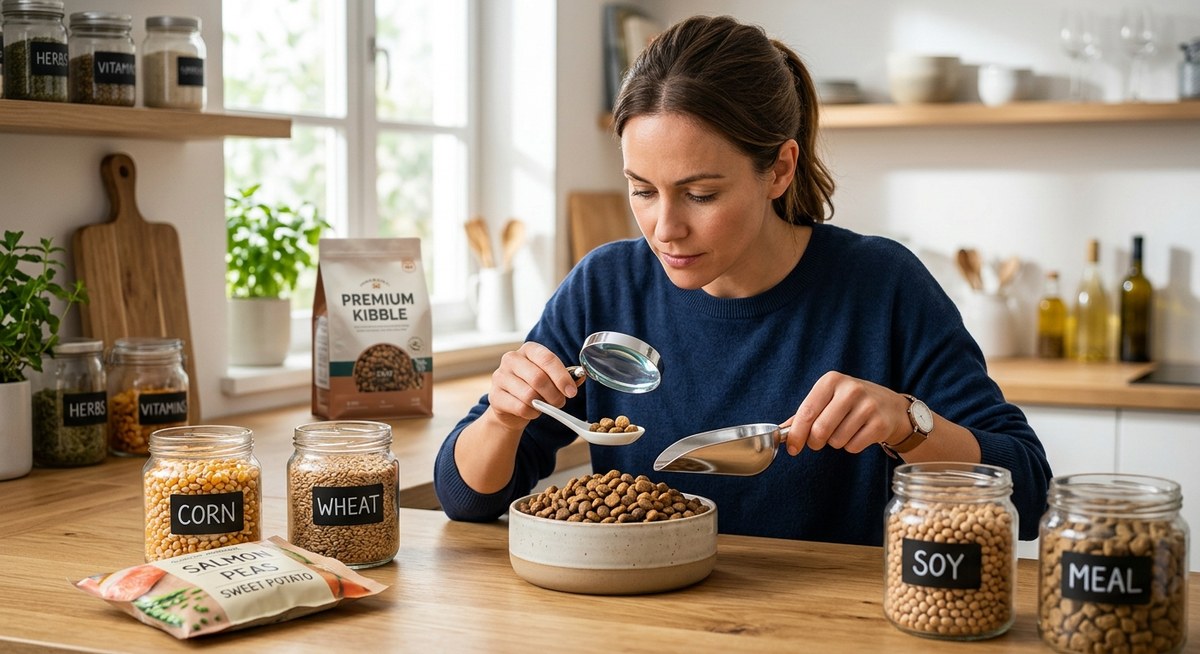
You pour a scoop of kibble into your dog’s bowl. It smells fine. The bag has a picture of a happy Golden Retriever and a list of ingredients that sounds healthy enough. But what if the bag is hiding things you never expected? In 2026, pet food companies still use clever tricks to pad their recipes with cheap fillers. These ingredients take up space, add calories, and offer almost no real nutrition. Learning how to spot them is one of the best things you can do for your dog’s health.
Hidden fillers in dog food are cheap ingredients that add bulk without providing real nutrition. Common culprits include corn gluten meal, cellulose, and artificial by-products. You can spot them by reading the ingredient list carefully, watching for vague terms like “animal digest,” and checking the guaranteed analysis for low protein or high fiber numbers. Switching to a whole-food diet or a high-quality brand with named protein sources is the best way to avoid these empty calories.
What Counts as a Hidden Filler?
A filler is any ingredient that adds volume or weight to the food but offers little to no nutritional value for your dog. Think of it like eating a bag of puffed rice cereal instead of a bowl of oatmeal. You feel full for a minute, but your body gets almost nothing it needs.
In the dog food world, fillers serve one main purpose: they make the bag cheaper to produce. Manufacturers use them to hit a certain protein or fat percentage without using high-quality meat or vegetables. Some fillers are dangerous over time. Others just waste your money.
Here are the most common hidden fillers you will see on labels in 2026:
Corn and Corn Gluten Meal
Corn itself is not toxic to dogs. But corn gluten meal is a cheap protein source that many dogs cannot digest well. It appears high on the ingredient list to make the food look more protein-rich than it really is. Your dog’s body struggles to break it down, so most of it passes through without delivering any amino acids.
Cellulose
This is a fancy word for powdered wood pulp or plant fiber. Manufacturers add it to create bulk and make the kibble feel more filling. Dogs cannot digest cellulose. It adds zero nutrition and can cause loose stools or constipation depending on the amount.
Animal Digest and Meat Meal
These terms sound fine at first glance. But “animal digest” can come from any rendered animal parts, including diseased tissues or restaurant grease. It is a vague term that lets companies hide low-quality protein sources. If the label does not name the animal (chicken meal, beef meal, salmon meal), you are likely looking at a filler.
Soy and Soybean Meal
Soy is a common allergen for dogs. It is also a cheap way to boost protein numbers on the label. Many dogs experience gas, bloating, or skin issues from soy-based fillers.
Wheat Middlings and Rice Hulls
These are leftovers from flour milling and rice processing. They add fiber and bulk but offer almost no digestible energy. You will often find them in lower-priced kibbles.
How to Read a Dog Food Label Like a Detective
The ingredient list is your best tool. But you need to know how to read it the right way. Brands in 2026 are getting smarter about hiding fillers behind healthy-sounding names.
Follow this numbered process every time you pick up a new bag:
- Check the first five ingredients. In most kibbles, the first five ingredients make up the majority of the food. If you see corn, wheat, soy, or “animal digest” in the top five, put the bag back.
- Look for named protein sources. You want to see “chicken meal,” “deboned chicken,” “beef,” “lamb meal,” or “salmon.” Avoid generic terms like “meat meal” or “poultry by-product meal.”
- Scan for the word “by-product.” By-products are the leftover parts after the meat is removed. They can include feet, beaks, and organs. While some organs are nutritious, by-product meals are often low-quality and inconsistent.
- Check the guaranteed analysis for fiber. If the crude fiber is above 5 percent, the food likely contains a lot of plant-based fillers like cellulose or beet pulp.
- Look for added sugars or sweeteners. Some brands add corn syrup, cane molasses, or even artificial sweeteners to make low-quality food taste better. Dogs do not need sugar.
A Handy Scanning Checklist
When you are standing in the pet store aisle, use this bulleted list to scan a bag in under 30 seconds:
- Is the first ingredient a named meat or meat meal?
- Are there more than two grains or grain by-products in the top ten ingredients?
- Does the label list “cellulose” or “powdered cellulose”?
- Is there any form of added sugar (corn syrup, sucrose, fructose)?
- Does the protein source use a vague term like “animal” or “poultry”?
- Is the crude fiber over 5 percent?
If you answered yes to any of the last four questions, that bag is hiding fillers.
Common Tricks Brands Use in 2026
Pet food companies know that health-conscious owners are reading labels. So they have adapted. Here are three sneaky tactics they use today:
Splitting ingredients. If a bag lists “ground corn,” “corn gluten meal,” and “corn bran” separately, each one appears lower on the list. Together, they might add up to more than the meat content. Always add up all the corn or wheat sources in your head.
Using “natural flavor.” This term can hide MSG, yeast extract, or other low-quality taste enhancers. It is a legal loophole that lets companies add flavor without listing the actual source.
Hiding fillers in the “other ingredients” section. Some brands put cellulose or soy protein isolate near the bottom of the list so it looks less important. But if your dog eats the same food every day, even small amounts of low-quality fillers add up over time.
“The biggest red flag I see on dog food labels is the use of generic animal meals,” says Dr. Laura Bennett, a veterinarian with 15 years of clinical nutrition experience. “If the label says ‘meat meal’ or ‘animal digest’ without naming the species, you have no way of knowing what your dog is actually eating. That is a gamble no owner should take.”
Comparing High-Quality and Filler-Heavy Foods
The table below shows a side-by-side comparison of a typical filler-heavy kibble and a high-quality alternative. Use this as a reference when you shop.
| Feature | Filler-Heavy Kibble | High-Quality Kibble |
|---|---|---|
| First ingredient | Corn or corn gluten meal | Named meat (chicken, beef, salmon) |
| Protein source | Animal digest, meat meal | Chicken meal, deboned chicken |
| Grain content | Wheat middlings, rice hulls | Brown rice, oats, or grain-free options |
| Added sugar | Corn syrup or molasses | None |
| Crude fiber | 6 to 8 percent | 3 to 5 percent |
| Artificial preservatives | BHA, BHT, ethoxyquin | Vitamin E (mixed tocopherols) |
| Price per pound | Lower | Higher, but better value per nutrient |
What to Do If Your Dog’s Current Food Has Fillers
Do not panic. You do not need to throw away the bag and start from scratch. A gradual transition is better for your dog’s digestive system.
Start by mixing a small amount of a higher-quality food with the old food. Over seven to ten days, slowly increase the new food while decreasing the old one. This gives your dog’s gut time to adjust.
While you switch, pay attention to these signs that the fillers were causing problems:
- Less gas and bloating
- Firmer stools
- Shinier coat
- More consistent energy levels
- Less scratching or licking
If you see improvements, you will know the fillers were holding your dog back.
A Simple Rule for Choosing Better Food
You do not need a degree in animal nutrition to make good choices. Follow this rule: if you would not eat the ingredient yourself, do not feed it to your dog. Cellulose, corn gluten meal, and animal digest are not things you would put on your dinner plate. Your dog deserves the same standard.
For more help building a healthier diet, check out our guide on top natural supplements to boost your dog’s nutrition naturally. And if you are ready to move away from kibble entirely, we have resources on essential tips for creating a balanced homemade dog food diet.
Your Next Step Toward Cleaner Nutrition
Hidden fillers in dog food are everywhere in 2026. But now you know exactly what to look for. You have the tools to read a label, spot the tricks, and choose food that actually nourishes your dog.
Start with the bag you have right now. Flip it over. Run through the checklist. If you find fillers, do not feel guilty. Every dog owner has been there. The important thing is that you are paying attention now.
Make the switch to a cleaner brand or try adding whole-food ingredients to your dog’s meals. Your pup will thank you with better health, more energy, and a happier tail.