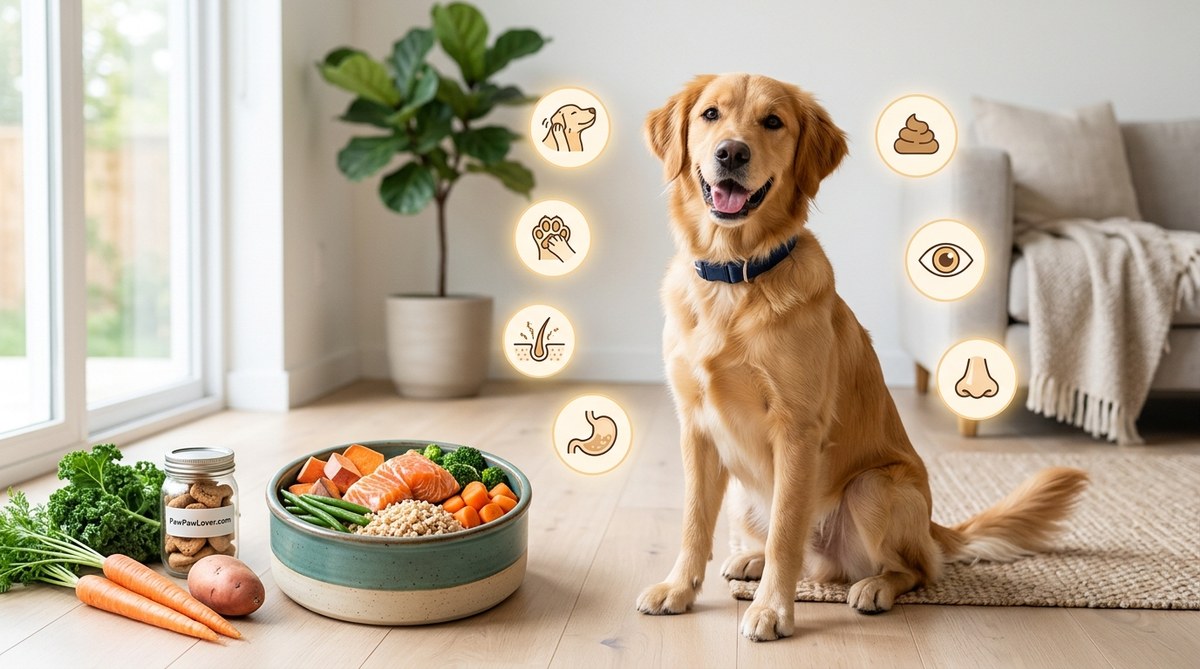
Your dog has been scratching nonstop for three days. You notice red, inflamed skin around their ears and paws. Their coat looks dull, and they seem uncomfortable even when resting. You wonder if it could be something they ate. You are not alone. Many dog owners see these changes and suspect a food allergy, but they are not sure what to look for or how to help. The good news is that once you recognize the signs of food allergies in dogs, you can take simple steps to adjust their diet and bring them relief. This guide walks you through the most common symptoms and shows you exactly how to make changes that work.
Food allergies in dogs show up as skin problems, ear infections, digestive upset, and even behavioral changes. The most reliable way to confirm an allergy is through an elimination diet. Once you identify the trigger, switching to a novel protein or limited ingredient food often resolves symptoms within a few weeks. Always work with your vet during this process.
What Is a Food Allergy in Dogs?
A food allergy happens when your dog’s immune system mistakes a protein in their food for a threat. This triggers a response that leads to inflammation, itching, and other symptoms. It is different from a food intolerance, which involves the digestive system and usually causes gas, bloating, or loose stools without an immune reaction.
Food allergies can develop at any age. A dog that has eaten chicken kibble for years can suddenly become allergic to chicken. This is frustrating, but it is also common. The most frequent culprits are proteins like beef, dairy, chicken, wheat, and eggs. Grains and fillers can also cause issues, but protein sources are the main triggers.
The 7 Most Common Signs of Food Allergies in Dogs
If your dog is showing any of these signs, a food allergy could be the cause. Keep a log of symptoms and when they appear. This will help you and your vet connect the dots.
1. Constant Itching and Scratching
This is the number one sign. Dogs with food allergies often scratch their face, paws, belly, and rear end. They may rub against furniture or roll on the carpet to get relief. If your dog seems to be in an endless scratching cycle, take note.
2. Chronic Ear Infections
Yeast and bacterial infections in the ears are common in allergic dogs. You might see dark discharge, a bad smell, or redness inside the ear flap. Some dogs shake their heads constantly. If your dog has repeated ear infections, their diet could be the root cause.
3. Red or Inflamed Skin
Look for redness between the toes, on the belly, or around the lips. Hot spots (moist, red, irritated patches) can appear quickly. Dogs may lick or chew at these areas, making them worse. This is often a direct reaction to a food protein.
4. Gastrointestinal Issues
Vomiting, diarrhea, or soft stools are common signs of food allergies in dogs. Some dogs also have increased gas or a gurgly stomach. If your dog has loose stools after meals, the food they are eating may be triggering an immune response in their gut.
5. Scooting or Licking the Rear
If your dog drags their bottom across the floor, it is often a sign of anal gland irritation caused by food allergies. Excessive licking of the rear area can also point to a dietary problem. This is not always about worms.
6. Hair Loss and Dull Coat
Allergic inflammation can affect hair follicles. You might notice thinning fur, bald patches, or a coat that looks dry and brittle. A shiny coat usually reflects good health. A dull coat can signal underlying inflammation from food allergies.
7. Behavioral Changes
Dogs in discomfort may become irritable, restless, or withdrawn. They might sleep more, avoid play, or seem less interested in walks. Chronic itching and digestive pain can wear down even the happiest dog. If your pup seems off, their food could be the reason.
Common Food Allergens in Dog Food
Knowing what to avoid helps you choose a better diet. Here are the most common triggers:
- Beef
- Dairy (cheese, milk, yogurt)
- Chicken
- Wheat and gluten
- Lamb
- Soy
- Egg
- Corn
Many commercial dog foods contain these ingredients. Even high quality brands use chicken or beef as primary proteins. If your dog is allergic to chicken, most standard kibbles will cause problems.
How to Confirm a Food Allergy
You cannot guess your way through this. Guessing leads to frustration. Instead, follow a structured process.
Step 1: Visit Your Veterinarian
Your vet can rule out other causes like parasites, environmental allergies, or skin infections. They may suggest a blood test or a skin test. However, the most accurate method is an elimination diet.
Step 2: Start an Elimination Diet
An elimination diet means feeding your dog a single novel protein and a single novel carbohydrate that they have never eaten before. For example, if your dog has only eaten chicken and rice, try venison and sweet potato. You feed only that food for 8 to 12 weeks. No treats, no chews, no flavored medications.
Step 3: Keep a Symptom Diary
Write down what you feed and what symptoms appear. Note the severity of itching, stool quality, ear health, and energy levels. This record is valuable for your vet.
Step 4: Reintroduce Old Foods
After symptoms improve, you can challenge your dog with one old ingredient at a time. If symptoms return within a few days, you have found the trigger. Avoid that ingredient permanently.
| Technique | What To Do | Common Mistake |
|---|---|---|
| Elimination diet | Feed one novel protein and carb for 8 weeks | Switching proteins too often |
| Symptom diary | Log daily itching, stool, and ear health | Forgetting to write down treats or chews |
| Reintroduction | Add one old ingredient at a time | Adding multiple ingredients at once |
| Vet consultation | Get a full exam before starting | Skipping the vet and guessing |
How to Fix Your Dog’s Diet for Good
Once you know the trigger, you can choose a safe food. Here are your best options.
Novel Protein Diets
These use proteins your dog has never eaten. Examples include kangaroo, bison, rabbit, duck, or fish. Many brands now offer limited ingredient diets with a single protein source.
Hydrolyzed Protein Diets
In these foods, the protein molecules are broken down into pieces so small that the immune system does not recognize them. These are often prescribed by vets and are highly effective.
Homemade Diets
Cooking for your dog gives you total control. You can prepare a balanced meal using a novel protein and safe vegetables. If you choose this route, work with a veterinary nutritionist to ensure your dog gets all necessary nutrients. Check out our guide on essential tips for creating a balanced homemade dog food diet for more help.
Limited Ingredient Commercial Foods
Many brands now make foods with 5 to 10 ingredients. These reduce the chance of hidden triggers. Always read the label. Look for foods that clearly state the protein source and avoid vague terms like “meat meal.”
“Food allergies are one of the most underdiagnosed issues in dogs. Many owners assume itching is normal, but it often points to something in the bowl. A proper elimination diet can change a dog’s life in weeks.”
Dr. Sarah Klein, DVM, veterinary nutritionist
What to Avoid When Changing Diets
Making changes too fast can cause more problems. Here are common pitfalls.
- Switching foods every week. Your dog needs time to adjust. Give any new diet at least 8 weeks before judging results.
- Giving treats that contain the allergen. One small biscuit can undo weeks of elimination.
- Ignoring cross contamination. If you feed a novel protein kibble but use the same scoop for old food, you may be exposing your dog to the allergen.
- Forgetting to check medications. Some flavored chews and heartworm preventatives contain beef or chicken. Ask your vet for a hypoallergenic version.
When to See a Specialist
If your dog does not improve after 12 weeks on a strict elimination diet, it is time to see a veterinary dermatologist or internal medicine specialist. Some dogs have multiple allergies or underlying conditions like atopic dermatitis that require advanced treatment.
Your regular vet can refer you to a specialist. Do not give up if the first diet change does not work. Finding the right food takes patience.
Supporting Your Dog Through the Transition
Changing your dog’s food can be stressful for them. Here are ways to make it easier.
- Mix the new food with the old food over 7 to 10 days.
- Add warm water or bone broth (check ingredients) to increase palatability.
- Feed smaller, more frequent meals to help digestion.
- Keep a consistent routine. Dogs feel safer when meals come at the same time each day.
For more ideas on keeping your dog happy during dietary changes, read our post on essential tips for maintaining your dog’s digestive health.
Your Next Steps Toward a Healthier Dog
You now know the signs of food allergies in dogs and how to address them. Start by observing your dog closely. Note any itching, ear trouble, or digestive upset. Schedule a vet visit to rule out other causes. Then begin a careful elimination diet with a novel protein. Track everything. Be patient. Within a few weeks, you should see real improvement.
Your dog depends on you to make the right choices. With the right information and a little persistence, you can help them feel comfortable, energetic, and happy again. That is a goal worth working toward.