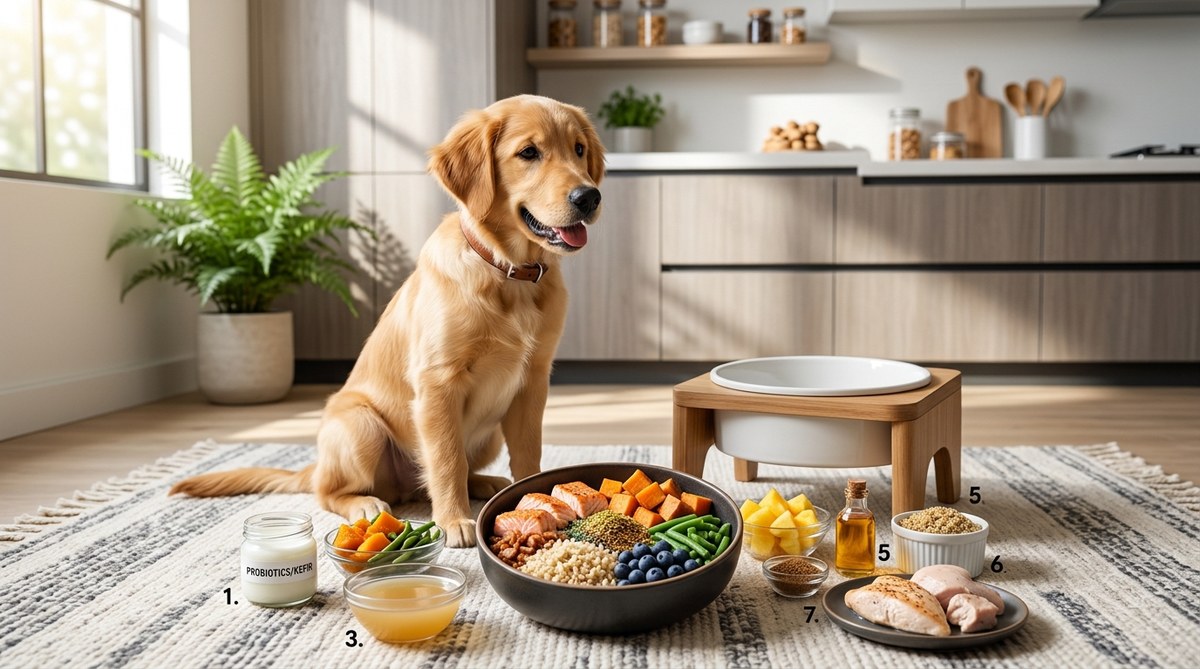
Your dog’s tummy has been telling you something. Maybe it’s the gurgling sounds after dinner. Maybe it’s the loose stool on your morning walk. Or perhaps your pup just seems uncomfortable after eating. You want to help, but you are not ready to spend a fortune on a prescription diet from the vet. That is completely understandable. The good news is that you can improve your dog’s digestion with simple food swaps you can start today. These are natural changes using ingredients you probably already have in your kitchen.
You do not need a prescription diet to fix your dog’s digestive issues. Simple food swaps like switching to a single protein source, adding plain pumpkin puree, or using bone broth instead of water can make a real difference. Focus on whole foods, proper hydration, and gradual changes. Your dog’s gut will thank you with firmer stools and better energy.
Why Your Dog’s Digestion Needs a Gentle Reset
Think of your dog’s gut like a garden. If you keep dumping processed kibble full of fillers and artificial ingredients, the soil gets depleted. The good bacteria struggle to grow. The bad bacteria take over. Your dog ends up with gas, diarrhea, or chronic loose stools.
A lot of commercial dog foods contain ingredients that are hard for dogs to process. Things like corn gluten, soy meal, and artificial preservatives can irritate a sensitive stomach. When you switch to simpler, whole food ingredients, you give the gut a chance to heal.
The goal here is not to overhaul your dog’s entire diet overnight. That would cause more problems. Instead, we are going to make one or two swaps at a time. This is the safest way to improve dog digestion food swaps without shocking your pup’s system.
The 7 Simple Food Swaps That Work
1. Swap Dry Kibble for a Single Protein Source
Many kibbles contain a mix of chicken, beef, fish, and lamb. That sounds great, but for a sensitive stomach, it is a guessing game. If your dog reacts badly, you have no idea which protein caused it.
Try this: Switch to a food that uses only one animal protein. Look for bags that say “limited ingredient diet” or “single source protein.” You can also cook a plain protein at home. Boiled chicken breast or lean ground turkey with no seasoning is a great start.
“The single most effective change I recommend for dogs with chronic digestive upset is moving to a novel or single protein source. It takes the guesswork out of food sensitivities.” — Dr. Sarah Klein, DVM
2. Swap Water for Bone Broth
Hydration is huge for digestion. Dry food pulls water from the body. If your dog does not drink enough, the stool becomes hard and difficult to pass.
Replace a quarter of your dog’s water with unsalted bone broth. You can make it at home by simmering beef or chicken bones (no onions, no garlic) for 12 to 24 hours. Strain out the bones and let it cool. The gelatin and collagen in bone broth coat the gut lining and support healthy digestion.
3. Swap Processed Treats for Pumpkin Puree
Those bright colored commercial treats are full of sugar, artificial dyes, and preservatives. None of that helps a troubled tummy.
Instead, offer plain canned pumpkin (not pumpkin pie filling). Pumpkin is a superfood for dogs. It is packed with fiber that helps with both diarrhea and constipation. It also soothes the stomach lining. Just one tablespoon mixed into their food can make a big difference.
4. Swap Dry Food Toppers for Fermented Veggies
Kibble toppers are often just glorified flavor sprays. They add taste but no real nutrition.
Try fermented vegetables instead. Sauerkraut (rinsed to remove excess salt) or fermented carrots add probiotics and enzymes. Start with a teaspoon for a small dog and a tablespoon for a large dog. Fermented foods introduce live beneficial bacteria directly into the gut.
5. Swap High-Fat Kibble for Lean Protein
Fat is hard to digest. If your dog is eating a food with 18% or more fat content, that could be the culprit. High fat slows down stomach emptying and can cause vomiting or diarrhea.
Look for a food with around 8 to 12% fat. If you are cooking at home, use lean meats like turkey breast, rabbit, or white fish. Remove visible fat before cooking.
6. Swap Grain-Filled Kibble for Cooked Sweet Potato
Many dogs struggle to digest corn, wheat, and soy. These grains are common fillers in budget kibbles.
Replace a portion of the kibble with mashed sweet potato. Sweet potato is gentle on the stomach. It is rich in fiber, vitamin A, and potassium. It also helps firm up loose stool. Steam a sweet potato, mash it, and mix it with your dog’s regular food. Start with a 25% swap.
7. Swap One Big Meal for Two Smaller Meals
This is not a food ingredient swap, but it is a crucial feeding swap. Feeding one large meal puts stress on the digestive system. The stomach stretches. Enzymes get overwhelmed.
Split the daily portion into two or three smaller meals. This gives the gut time to process food properly. You will notice less gas and more consistent stool within a few days.
A Simple 3-Step Process to Make the Switch
Follow this process to introduce any of the swaps above. Rushing will cause upset.
- Pick one swap. Do not try all seven at once. Choose the one that seems most relevant to your dog’s current issue. If they have loose stool, start with pumpkin or sweet potato. If they have gas, try the single protein swap.
- Introduce slowly. For any new food, start with a small amount. For example, add one teaspoon of pumpkin to their bowl. Wait two days. If all is well, increase to one tablespoon.
- Monitor the output. Check your dog’s stool every day. It should be firm but not hard. It should hold its shape for a few seconds before breaking down. If you see loose stool or mucus in the stool, back off and try a different swap.
Common Mistakes to Avoid
Here is a table of what to do and what to avoid when you improve dog digestion food swaps.
| What to Do | What to Avoid |
|---|---|
| Introduce one new food at a time | Mixing multiple new ingredients at once |
| Use plain, unseasoned ingredients | Adding salt, garlic, or onion powder |
| Cook meats thoroughly | Feeding raw meat without proper handling |
| Use canned pumpkin (not pie filling) | Using spiced or sweetened pumpkin |
| Add bone broth gradually | Replacing all water with broth |
| Choose lean proteins | Feeding fatty cuts of meat |
| Feed smaller meals more often | Leaving food out all day |
What to Expect After Making the Swaps
You will not see results overnight. The gut needs time to adjust. Here is a realistic timeline.
- Days 1 to 3: Your dog might have looser stool as the system flushes out old food. This is normal.
- Days 4 to 7: Stool should start to firm up. You may notice less gas and a calmer belly.
- Week 2: Energy levels often improve. The coat might start looking shinier.
- Week 3 and beyond: Digestion should be noticeably better. If not, try a different swap.
Keep a journal. Write down what you fed and what the stool looked like. This helps you identify what works for your particular dog.
When to Call the Vet
Food swaps can fix a lot of issues, but they are not a cure for everything. If your dog has chronic vomiting, blood in the stool, or significant weight loss, see a veterinarian. Also, if your dog has a known medical condition like pancreatitis or kidney disease, talk to your vet before making any diet changes.
For most healthy dogs with mild digestive trouble, these swaps are safe and effective. You can learn more about building a balanced diet in our guide on essential tips for creating a balanced homemade dog food diet. If you want to add targeted support, check out our recommendations for how to choose the best probiotics for your dog’s gut health in 2026.
What Your Dog’s Stool Should Look Like After the Swaps
Use this bulleted list as a quick reference.
- Firm and log shaped. Holds its shape for a few seconds.
- Brown color. Not black, not green, not white.
- Low odor. If it smells terrible, the food is not digesting well.
- Easy to pick up. Not too soft, not too hard.
- Consistent. Same quality every day.
If you see those signs, your swaps are working. If not, go back to basics. Sometimes less is more.
Your Dog’s Gut Will Thank You
Making these small shifts does not require a prescription or a special trip to the pet store. You have the power to help your dog feel better right from your own kitchen. Start with one swap. Give it a week. Watch how your dog responds. The changes might be subtle at first, but over time, your dog will have more energy, a shinier coat, and a much happier belly. You have got this.