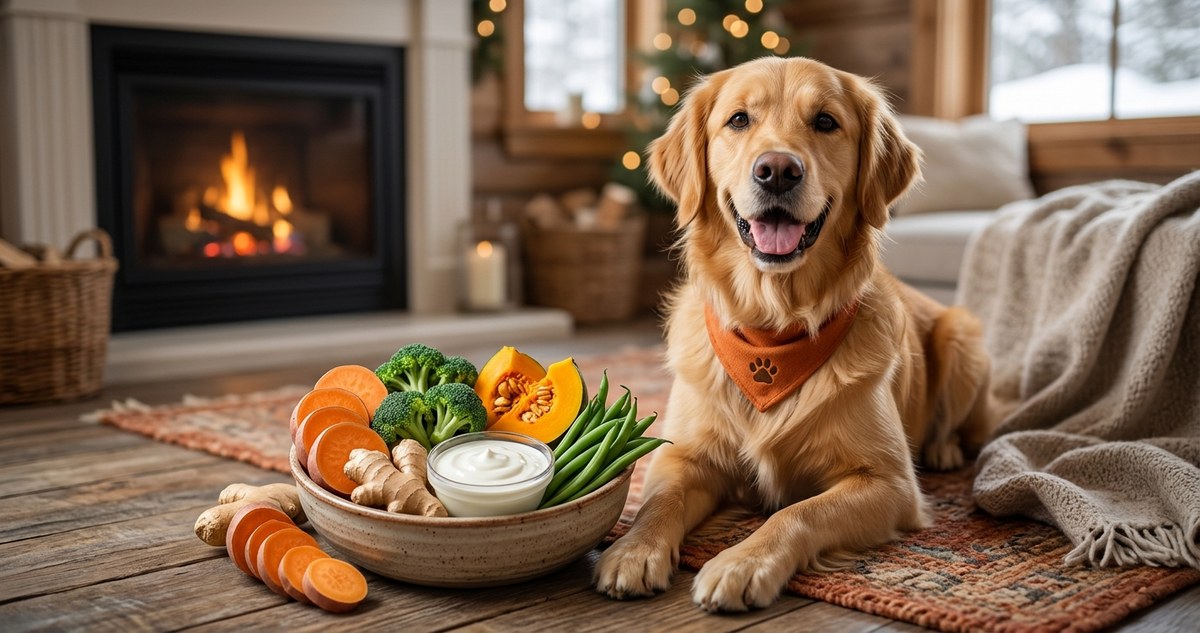
Your dog’s winter habits may have changed. The bowl sits half full. Walks are shorter. And you have noticed their bathroom schedule is off. This is not just a phase. Many dog owners in cold climates see the same shift when temperatures drop. The reason is simple: your dog’s digestion winter slow down is a real biological response to the season.
Cold weather affects your dog’s entire system. Their metabolism adjusts to conserve energy. They move less. They drink less water. All of these factors combine to make their digestive tract sluggish. The good news is you can help them feel better with the right foods. Let us look at why this happens and what you can do about it.
Cold weather naturally slows your dog’s digestion due to reduced activity, lower water intake, and metabolic changes. You can support their gut with warm, hydrating, and fiber-rich foods. This article explains the science behind the winter slowdown and shares 6 vet-approved foods to keep your dog regular and comfortable all season long.
What Happens to Your Dog’s Gut in Cold Weather
When the temperature drops, your dog’s body prioritizes heat retention over digestion. Blood flow shifts away from the stomach and intestines toward the skin and muscles to keep warm. This means less energy goes toward breaking down food.
At the same time, your dog is probably less active. In winter, you are not taking that long evening walk or playing fetch in the backyard for an hour. Fewer walks mean less movement in the intestines. This combination is a recipe for slow transit time.
You may also notice your dog drinks less water in winter. Cold water is less appealing, and the air is drier indoors. Dehydration thickens the mucus in the digestive tract and makes it harder for food to move through.
Dr. Sarah Klein, a veterinarian based in Minnesota, says: “I see a 30% increase in constipation-related visits between December and February. Many owners do not realize that a simple change in diet and hydration can prevent most of these issues.”
3 Signs Your Dog’s Digestion Has Slowed Down
Watch for these common indicators that your dog’s digestion winter slow issue is affecting them:
- Irregular bowel movements. Your dog may skip a day or have stools that are hard, dry, or small.
- Loss of appetite. A sluggish gut can make your dog feel full longer. They may leave food in the bowl.
- Visible discomfort. You might see your dog licking their belly, whining after meals, or having trouble passing stool.
If you see these signs, it is time to adjust their diet. Ignoring them can lead to more serious issues like bloat or impaction.
Why Your Dog Needs a Winter Diet Shift
Your dog’s nutritional needs do not stay the same all year. In winter, they need more moisture and fiber to compensate for the natural slowdown. Dry kibble becomes harder to digest when water intake is low. Colder meals also take more energy to process.
Think of it like this: you would not eat a giant salad on a freezing day and expect to feel great. Your dog feels the same way with a bowl of dry, cold kibble.
6 Foods That Support Dog Digestion in Winter
These six foods are safe, natural, and easy to add to your dog’s bowl. Each one targets a specific aspect of dog digestion winter slow issues.
1. Canned Pumpkin (Plain, Not Pie Filling)
Pumpkin is a fiber powerhouse. It adds bulk to stool and helps regulate the gut. The soluble fiber absorbs excess water, while insoluble fiber speeds up transit time.
How to serve: Add one to two tablespoons of plain canned pumpkin to your dog’s meal. Warm it slightly to make it more appealing.
2. Bone Broth
Warm bone broth is a winter superfood for dogs. It provides hydration, collagen, and amino acids that soothe the lining of the gut. The warmth alone helps stimulate digestion.
How to serve: Warm up a low sodium, dog safe bone broth and pour a few ounces over their kibble. This is a great way to increase water intake.
3. Cooked Sweet Potato
Sweet potatoes are gentle on the stomach and rich in fiber and vitamin A. They help bulk up stool without causing gas.
How to serve: Bake or boil a sweet potato, remove the skin, and mash it. Mix one to two tablespoons into their food. For more ideas, read our guide on can dogs eat sweet potatoes.
4. Plain Greek Yogurt
Yogurt contains probiotics that support healthy gut bacteria. A balanced microbiome is essential for regular digestion, especially in winter when the gut is less active.
How to serve: Add one teaspoon to one tablespoon of plain, unsweetened Greek yogurt to their meal. Make sure it has no artificial sweeteners, especially xylitol.
5. Steamed Green Beans
Green beans add moisture and fiber without many calories. They are a great low risk vegetable that most dogs enjoy.
How to serve: Steam fresh or frozen green beans until soft. Chop them into small pieces and mix into the food. You can find more ideas in our post on 5 surprising vegetables that can improve your dog’s digestion.
6. Oatmeal (Plain, Cooked)
Cooked oatmeal is a gentle source of soluble fiber. It helps regulate bowel movements and can soothe an irritated stomach.
How to serve: Cook plain rolled oats in water (no milk, no sugar). Let it cool and add one to two tablespoons to their meal.
How to Introduce These Foods Safely
A sudden change in diet can cause stomach upset. Follow this 3 step process to introduce any new food:
- Start small. Use half the recommended serving size for the first two days.
- Observe. Watch for loose stool, gas, or changes in appetite.
- Increase slowly. If all is well, move to the full serving by day four.
Foods to Avoid in Winter
Some foods make winter digestion worse. Avoid these:
- Raw vegetables. They are harder to break down in a slow gut.
- Cold kibble straight from the bag. It lowers body temperature and uses more energy to digest.
- High fat treats. Fat takes longer to digest and can cause pancreatitis in some dogs.
A Handy Comparison Table
| Food | Main Benefit | Best Way to Serve | Serving Size (Medium Dog) |
|---|---|---|---|
| Canned pumpkin | Fiber and bulk | Mixed into meal, warmed | 2 tablespoons |
| Bone broth | Hydration and warmth | Poured over kibble, warm | 1/4 cup |
| Sweet potato | Gentle fiber | Baked, mashed, mixed | 2 tablespoons |
| Greek yogurt | Probiotics | Plain, unsweetened | 1 tablespoon |
| Green beans | Moisture and fiber | Steamed, chopped | 1/4 cup |
| Oatmeal | Soluble fiber | Cooked with water | 2 tablespoons |
When to See a Vet
If your dog’s digestion winter slow symptoms last more than three days after you change their diet, call your vet. Signs that need professional attention include:
- Straining to pass stool for more than 48 hours
- Vomiting or bloating
- Complete loss of appetite
- Blood in the stool
Creating a Winter Feeding Routine
Consistency is key when managing dog digestion in winter. Try this daily schedule:
- Morning meal: Add warm bone broth and a spoonful of pumpkin.
- Afternoon snack: Offer a few steamed green beans or a frozen yogurt lick mat (use plain yogurt).
- Evening meal: Mix in cooked sweet potato or oatmeal.
This routine keeps moisture and fiber in every meal. It also gives your dog something warm to look forward to on cold days.
How Winter Hydration Changes Everything
We mentioned water intake earlier, but it deserves extra attention. Dehydration is the number one cause of slow digestion in winter. Dogs are less likely to drink cold water, and indoor heating dries out their environment.
Fix it with these tips:
- Use a stainless steel bowl that keeps water from freezing.
- Add a splash of warm water or broth to every meal.
- Offer an ice cube as a treat to encourage licking and drinking.
- Consider a pet water fountain. Moving water is more appealing.
For more on keeping your dog hydrated all year, check out our article on 7 hydrating foods that keep your dog healthy through summer 2026. The same principles apply in reverse for winter.
The Role of Exercise in Winter Digestion
Diet is only half the puzzle. Movement helps move food through the intestines. When your dog is less active, their gut slows down.
Indoor movement ideas for cold days:
- Set up a small obstacle course with pillows and boxes.
- Play hide and seek with their favorite toy.
- Use a flirt pole or laser pointer in a hallway.
- Practice training commands like sit, down, and roll for mental stimulation.
Even 10 minutes of indoor play makes a difference.
A Note on Senior Dogs
Older dogs feel the winter slowdown more intensely. Their metabolism is already slower, and they may have arthritis that makes movement painful. If you have a senior dog, be extra careful with their winter diet.
Use the foods listed above but in smaller portions. Senior dogs also benefit from a probiotic supplement. Learn more in our guide on how to choose the best probiotics for your dog’s gut health in 2026.
Common Mistakes Owners Make
Avoid these errors when trying to fix dog digestion winter slow issues:
- Adding too much fiber at once. This causes gas and bloating.
- Using cold water or cold food. Warm is always better.
- Skipping the transition period. Always introduce new foods slowly.
- Ignoring water intake. Focus on hydration first.
Your Dog’s Winter Gut Health Plan
Here is a summary of the steps to take this winter:
- Warm up every meal with broth or warm water.
- Add one or two of the six foods listed above.
- Encourage indoor activity every day.
- Monitor water intake and switch to a fountain if needed.
- Watch for signs of discomfort and adjust accordingly.
By following this plan, you can keep your dog comfortable and regular all winter long.
Keep Your Dog Happy Through the Cold Months
Winter does not have to mean digestive trouble for your dog. With a few simple food swaps and a little extra attention to hydration, you can support their gut through the coldest months. Your dog relies on you to notice the small changes in their behavior. A slower digestion is a signal, not a problem you have to accept.
Start tomorrow morning by warming their food and adding a spoonful of pumpkin or broth. See how they respond. Most dogs show improvement within 24 hours. You have the tools to make this winter a healthy one for your best friend.