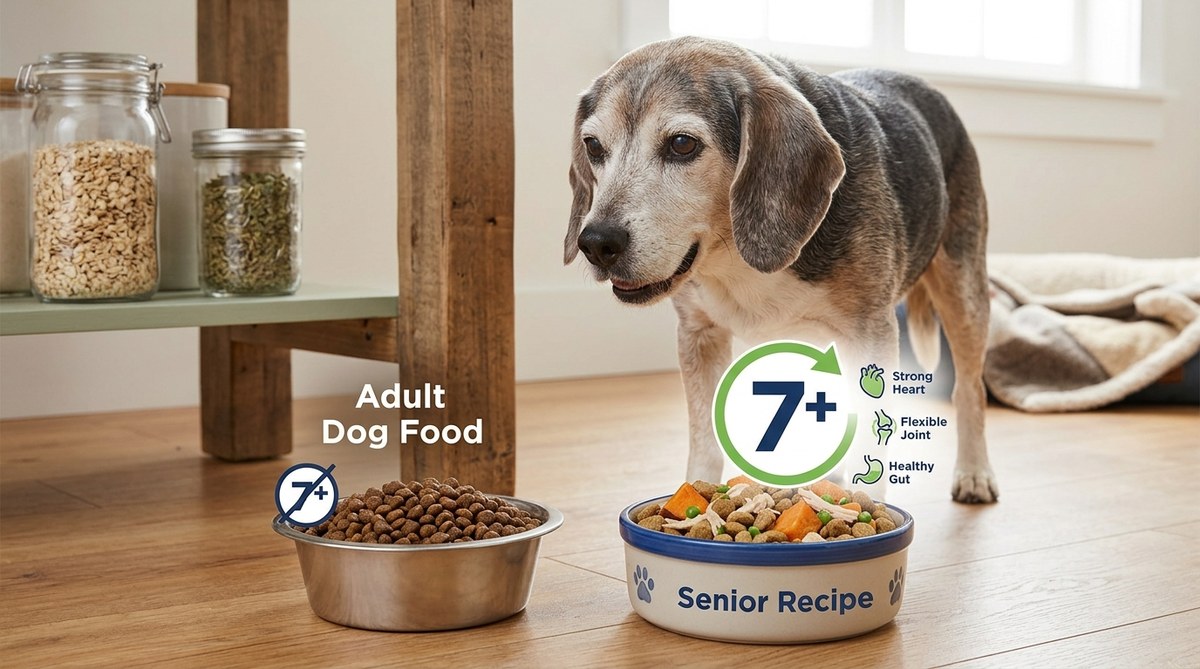
You have probably noticed the small changes. Your dog takes a little longer to get up from a nap. They stop halfway through a walk to catch their breath. Maybe they leave a few kibble pieces in the bowl, or their coat does not shine the way it used to. These shifts often start right around age 7, and they are not random. A dog’s body begins processing food differently at this stage, and the diet that kept them energetic at age 3 can actually cause problems now. Adjusting what you feed them is one of the most effective ways to support their health through these golden years.
After age 7, your dog’s metabolism slows, joints need extra support, and digestion becomes more sensitive. Switching to a senior diet that is lower in calories, higher in quality protein, and rich in omega-3s, fiber, and joint-supporting nutrients can prevent weight gain, ease arthritis, and improve energy. Start the transition gradually over 7 to 10 days to avoid stomach upset.
Why Age 7 Marks a Turning Point for Your Dog
Age 7 is not a magic number for every breed, but it is a reliable benchmark for most medium and large dogs. Small breeds often reach their senior years closer to 9 or 10, while giant breeds like Great Danes can be considered seniors as early as 5 or 6. For the average family dog weighing between 30 and 60 pounds, age 7 is when internal changes start to show on the outside.
Think of it like a human in their late 40s or early 50s. The engine still runs, but it needs a different fuel blend. Your dog’s metabolism slows down by roughly 10 to 20 percent. Their kidneys and liver become less efficient at filtering waste. Their digestive tract produces fewer enzymes, making it harder to break down certain fats and fibers. And their joints have been taking impact from every jump, run, and stair climb for years.
These changes mean that feeding your 7-year-old dog the same food they ate at age 2 is like putting regular gas into a car that now needs a premium mix. It will run, but not well, and not for as long.
What Actually Changes in a Senior Dog’s Body
Understanding the “why” behind the diet shift makes it easier to choose the right food. Here are the main biological changes that happen after age 7:
- Slower metabolism. Your dog burns fewer calories at rest. If you keep portion sizes the same, weight gain is almost guaranteed. Extra weight puts more strain on already aging joints.
- Reduced protein efficiency. Older dogs need more protein per pound of body weight than adult dogs, but the protein needs to be highly digestible. Low-quality protein sources can stress the kidneys.
- Weaker digestion. The gut lining gets thinner, and enzyme production drops. This can lead to bloating, gas, or loose stools if the diet is too high in fat or complex carbohydrates.
- Joint wear. Cartilage thins over time. Nutrients like glucosamine, chondroitin, and omega-3 fatty acids become critical for maintaining mobility.
- Dental issues. By age 7, many dogs have some degree of tartar buildup or gum sensitivity. Hard kibble can become painful to chew, which leads to reduced food intake.
The Right Nutrients for a Senior Dog Diet After Age 7
When you look at the ingredient panel on a senior dog food bag, you want to see specific things. Here is what to prioritize and why.
High-Quality Animal Protein
Look for named protein sources like chicken meal, deboned salmon, or lamb. The Association of American Feed Control Officials (AAFCO) recommends that senior dog food contain at least 25 to 30 percent protein on a dry matter basis. That protein should come from real meat, not by-products or fillers. High-quality protein helps maintain muscle mass, which naturally declines with age.
Controlled Fat and Calories
Senior formulas should have less fat than adult formulas. Aim for 8 to 15 percent fat on a dry matter basis. This helps prevent weight gain while still providing essential fatty acids for skin and coat health.
Added Joint Support
Glucosamine and chondroitin are not just for big breed puppies with growing pains. They are vital for senior dogs. Look for at least 300 to 500 mg of glucosamine per cup of food. Green-lipped mussel powder is another excellent source of natural joint support.
Omega-3 Fatty Acids
DHA and EPA from fish oil or marine microalgae reduce inflammation throughout the body. This can ease arthritis pain and support brain function. A good senior food will have around 0.1 to 0.3 percent omega-3s.
Fiber for Digestive Health
Senior dogs benefit from moderate fiber levels, around 3 to 5 percent. Sources like pumpkin, beet pulp, or chicory root help keep bowel movements regular and feed healthy gut bacteria.
Reduced Phosphorus and Sodium
Aging kidneys struggle to filter excess phosphorus and sodium. Senior diets should have controlled levels of both minerals to reduce the risk of kidney disease.
| Nutrient | Adult Dog (Age 2-6) | Senior Dog (Age 7+) | Why the Change |
|---|---|---|---|
| Protein | 20-25% | 25-30% (highly digestible) | Maintain muscle, support immune system |
| Fat | 15-20% | 8-15% | Prevent weight gain, reduce pancreatitis risk |
| Fiber | 2-3% | 3-5% | Improve digestion, prevent constipation |
| Glucosamine | Not required | 300-500 mg/cup | Support joint cartilage |
| Omega-3s | 0.05-0.1% | 0.1-0.3% | Reduce inflammation, support brain |
| Phosphorus | Moderate | Controlled | Protect kidney function |
How to Transition Your Senior Dog to a New Food
Switching foods too fast can cause vomiting, diarrhea, or a refusal to eat. Follow this 10-day plan to make the change gentle on their stomach.
- Days 1-3: Mix 25 percent new food with 75 percent old food.
- Days 4-6: Mix 50 percent new food with 50 percent old food.
- Days 7-9: Mix 75 percent new food with 25 percent old food.
- Day 10: Feed 100 percent new food.
Watch your dog’s stool during this time. If you see loose stool, stay at the current ratio for an extra day or two before moving forward. If your dog refuses to eat the new food, try warming it slightly with a little warm water to release the aroma.
Dr. Sarah Mahan, a veterinarian with 15 years of experience in canine nutrition, says: “The most common mistake I see is owners switching their senior dog to a ‘light’ or ‘weight management’ food without checking the protein level. Many low-calorie diets are also low in protein, which accelerates muscle loss. Always read the guaranteed analysis before you buy.”
Common Mistakes to Avoid When Feeding a Senior Dog
Even well-meaning owners can make errors that harm their dog’s health. Here are the biggest pitfalls.
- Feeding the same portion size as before. Your dog’s calorie needs drop by 10 to 20 percent. Reduce portions accordingly, or switch to a senior formula with fewer calories per cup.
- Choosing grain-free without a reason. Grain-free diets are not automatically healthier for seniors. Some senior dogs benefit from easily digestible grains like white rice or oatmeal, which provide energy without irritating the gut.
- Ignoring dental health. If your dog struggles to chew kibble, switch to a canned or fresh food diet. You can also add warm water or bone broth to soften the kibble. Do not let them go hungry because the food hurts their teeth.
- Adding too many supplements at once. It is tempting to add fish oil, joint chews, probiotics, and pumpkin all at the same time. Introduce one supplement at a time over two weeks so you can see if your dog has a negative reaction.
- Forgetting about water intake. Senior dogs are more prone to dehydration, especially if they eat dry kibble. Always have fresh water available. Consider adding moisture to their meals with wet food or a splash of low-sodium chicken broth.
Best Food Options for a Senior Dog in 2026
The pet food market has evolved significantly. Here are the categories that work best for senior dogs and what to look for in each.
High-Quality Dry Kibble
Choose a brand that lists a named protein as the first ingredient and includes added glucosamine and omega-3s. Look for “complete and balanced” for the senior life stage on the label. Avoid foods with artificial preservatives like BHA, BHT, or ethoxyquin.
Canned or Pouched Wet Food
Wet food is excellent for seniors with dental issues or low appetite. It has higher moisture content, which supports kidney health. Look for options that are grain-free or use gentle grains like oatmeal, and check that they meet AAFCO nutrient profiles for seniors.
Fresh or Frozen Prepared Meals
Services that deliver human-grade, gently cooked meals are growing in popularity. These meals are typically lower in sodium and phosphorus and use whole ingredients like sweet potatoes, green beans, and deboned chicken. They are a good choice if your dog has multiple health issues and needs a custom approach.
Homemade Diets (With Vet Guidance)
Cooking for your dog gives you full control over ingredients, but it is easy to create nutritional imbalances. If you go this route, work with a veterinary nutritionist. A typical homemade senior meal might include boiled chicken, white rice, steamed carrots, and a teaspoon of fish oil. For more ideas, check out these easy dog food recipes for sensitive stomachs.
When to Talk to Your Vet About the Diet Change
You should always consult your veterinarian before making a major diet change, especially for a senior dog. But there are specific signs that mean you should not wait.
- Your dog has lost more than 10 percent of their body weight in three months.
- Your dog is drinking excessive water and urinating frequently.
- Your dog has visible lumps or growths in their mouth or on their body.
- Your dog has chronic diarrhea or vomiting that does not resolve with a bland diet.
Your vet can run blood tests to check kidney function, thyroid levels, and organ health. They can also recommend a specific therapeutic diet if your dog has a condition like kidney disease, diabetes, or pancreatitis. In some cases, a prescription diet is the safest option.
Putting It All Together for Your Dog’s Best Years
Reaching age 7 is not a decline. It is a transition. Your dog still has plenty of good years ahead, and the right diet is the foundation for those years. Think of it as upgrading their fuel for a longer, more comfortable journey.
Start by evaluating their current food. Check the protein and fat percentages. Look at the ingredient list for joint support and omega-3s. If something is missing, begin the transition to a senior formula using the 10-day plan above. Monitor their weight, energy, and stool over the next month. Adjust portions as needed.
Your dog has spent seven years trusting you to take care of them. This is the time to return that trust with the best nutrition possible. Every meal is a chance to support their heart, their joints, their digestion, and their happiness. You have the knowledge now. You know what to look for and what to avoid. The next step is simple: make the switch with care, and watch your dog thrive in their senior years.