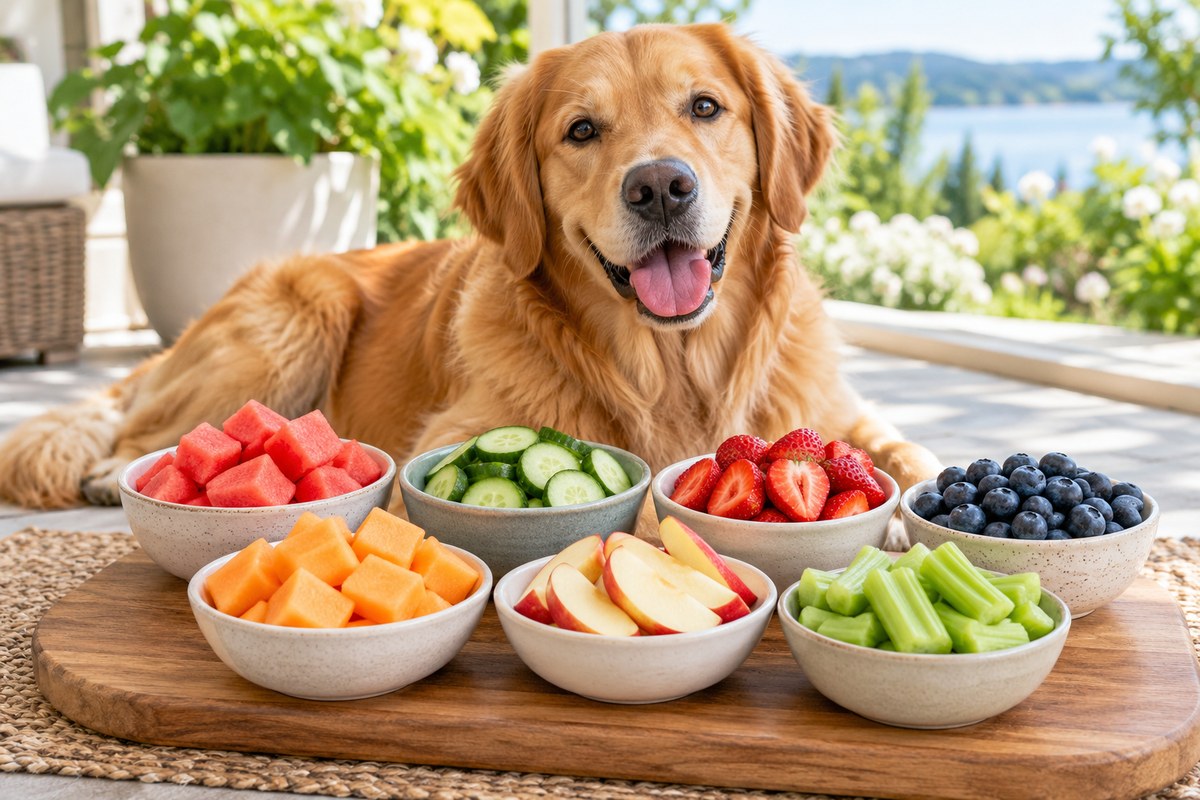
It is noon in July. The pavement shimmers. Your dog is panting on the shady porch, and you can almost feel the weight of the humidity in their heavy breath. You reach for the water bowl, but they barely touch it. That is a familiar summer struggle. Dehydration in dogs can creep up fast, and a water bowl alone is not always enough. The good news is that some of the best hydrating foods for dogs are already in your kitchen. These foods add moisture, vitamins, and electrolytes to your dog’s diet. They turn snack time into a refreshing, health-boosting moment. Let us look at seven foods that will help your dog stay cool and hydrated this summer.
Adding hydrating foods to your dog’s summer routine is one of the easiest ways to prevent dehydration and heat stress. Watermelon, cucumber, and cantaloupe top the list of safe, moisture-rich snacks. Always remove seeds and rinds. Introduce new foods slowly. Pair these treats with fresh water and shade for a complete summer care plan.
Why Your Dog Needs Extra Hydration in Summer
Dogs cool themselves mainly by panting and through the pads of their paws. Unlike humans, they do not sweat over most of their body. When the temperature climbs, panting becomes less efficient. Your dog loses water vapor with every breath. On a hot day, a medium-sized dog can lose up to 500 milliliters of water just through respiration.
Dry kibble makes the problem worse. Most commercial dry foods contain only 6 to 10 percent moisture. If your dog eats a bowl of kibble on a hot day, their body has to pull water from its own tissues to digest it. That is the opposite of what you want.
Adding high-moisture foods to their diet helps in two ways. It delivers water directly into their system. It also provides electrolytes and natural sugars that encourage drinking. A dog that eats hydrating foods is more likely to visit the water bowl on their own.
The 7 Best Hydrating Foods for Dogs This Summer
These foods are safe for most dogs. They are common, affordable, and easy to prepare. Always wash produce thoroughly before serving.
1. Watermelon
Watermelon is 92 percent water. It is a summer classic for a reason. The flesh is soft and sweet, and most dogs love it.
Remove the rind and all seeds before serving. The rind is tough to digest and can cause a blockage. Seeds, especially the black ones, are a choking hazard. Cut the flesh into bite-sized cubes. Freeze a few cubes for a crunchy, cooling treat on the hottest afternoons.
“Watermelon is a fantastic hydrating snack, but the rind and seeds must be removed. Stick to the red flesh only.” — Dr. Sarah Klein, DVM
2. Cucumber
Cucumbers are nearly 96 percent water. They have almost no calories, which makes them perfect for dogs watching their weight. The crunch is satisfying, and the mild flavor appeals to picky eaters.
Slice cucumbers into thin rounds or small sticks. Do not add salt or seasoning. If your dog has a sensitive stomach, peel the cucumber first. The skin is safe but can be tough for some dogs to digest.
3. Cantaloupe
Cantaloupe is a hydrating powerhouse with about 90 percent water content. It is rich in vitamins A and C, which support the immune system.
Remove the rind and seeds completely. The rind is fibrous and can cause digestive upset. Cut the orange flesh into small cubes. Serve chilled but not frozen solid. Cantaloupe is sweeter than cucumber or watermelon, so keep portions small to avoid excess sugar.
4. Strawberries
Strawberries contain 91 percent water. They also provide fiber and an enzyme called malic acid, which may help whiten teeth.
Wash strawberries well. Remove the green tops. Slice larger berries in half to prevent choking. Frozen strawberries make a great teething treat for puppies. Give no more than two or three medium berries per day for a 50-pound dog.
5. Celery
Celery is about 95 percent water. It has a satisfying crunch and provides vitamins A, K, and folate.
Celery strings can be tough. Chop the stalks into very small pieces to reduce the choking risk. Better yet, blend a stalk into a puree and mix it into your dog’s regular meal. Some dogs love the texture, but others will spit out stringy pieces.
6. Blueberries
Blueberries are 84 percent water and packed with antioxidants. They support brain health and can help reduce inflammation.
Serve them whole for small dogs, or slice them in half for larger breeds. Frozen blueberries are a fun, bobbing treat in the water bowl. They encourage your dog to drink more as they try to fish them out.
7. Plain Yogurt
Plain yogurt is about 88 percent water. It provides protein, calcium, and probiotics that support gut health.
Use plain, unsweetened yogurt. Avoid any brand that contains xylitol, artificial sweeteners, or added sugar. Greek yogurt is thicker and has more protein. A tablespoon or two over their food is plenty.
| Food | Water Content | Prep Tip | Serving Size (50 lb dog) |
|---|---|---|---|
| Watermelon | 92% | Remove rind and seeds | 1/2 cup cubes |
| Cucumber | 96% | Slice thin; peel if needed | 1/4 cup |
| Cantaloupe | 90% | Remove rind and seeds | 1/4 cup cubes |
| Strawberries | 91% | Remove tops; slice large ones | 2 to 3 berries |
| Celery | 95% | Chop very small or puree | 2 tablespoons |
| Blueberries | 84% | Serve whole or frozen | 10 to 12 berries |
| Plain Yogurt | 88% | No sweeteners or xylitol | 2 tablespoons |
How to Introduce Hydrating Foods Safely
Your dog’s digestive system needs time to adjust to new foods. Follow these steps to avoid an upset stomach.
- Start with one new food at a time. Offer a small piece and wait 24 hours to watch for any reaction.
- Wash all produce thoroughly. Pesticide residue can cause drooling, vomiting, or diarrhea.
- Cut food into appropriate sizes. For small dogs, pieces should be no bigger than a pea. For large dogs, no bigger than a grape.
- Serve chilled but not frozen solid. Ice-cold food can shock the system. Frozen cubes are fine if your dog can chew them slowly.
- Remove uneaten fresh food after 20 minutes. Bacteria grow fast on wet food in summer heat.
Common Mistakes to Avoid
Even safe foods can cause problems if you are not careful. Here are the most common mistakes dog owners make when feeding hydrating foods.
- Leaving seeds or pits in fruit. Apple seeds, cherry pits, and watermelon seeds all pose risks. Some contain cyanide compounds. Always remove them.
- Feeding the whole rind. Rinds are tough and fibrous. They can cause intestinal blockages, especially in small dogs.
- Overdoing the fruit sugar. Hydrating fruits still contain natural sugars. Too much can lead to loose stools or weight gain.
- Using flavored or sweetened yogurt. Many yogurts marketed to humans contain xylitol, which is toxic to dogs. Always read the label.
- Ignoring individual allergies. Some dogs are allergic to strawberries or other fruits. Introduce one food at a time and watch for itching, swelling, or digestive upset.
If you want to build a more complete homemade diet for your dog, check out our guide on essential tips for creating a balanced homemade dog food diet. It walks you through the nutrients your dog needs beyond just hydration.
A Simple Summer Hydration Schedule
Consistency matters more than variety. Here is a sample schedule that mixes hydrating foods into your dog’s normal routine.
- Morning meal: Add two tablespoons of plain yogurt to their breakfast.
- Midday snack: Offer a few frozen watermelon cubes or a chilled cucumber slice.
- Afternoon walk: Bring a small bag of frozen blueberries. Offer them as a reward during breaks.
- Evening meal: Mix a tablespoon of pureed celery or cantaloupe into their dinner.
This schedule adds about 4 to 6 ounces of extra water to your dog’s day without forcing them to drink from a bowl.
When to Call the Vet
Hydrating foods help prevent dehydration, but they are not a cure. If your dog shows these signs, call your veterinarian immediately.
- Dry or sticky gums
- Sunken eyes
- Loss of skin elasticity (gently pinch the skin between their shoulders; if it does not snap back, they are dehydrated)
- Lethargy or weakness
- Excessive panting that does not stop after rest
Dehydration can lead to heatstroke, which is life-threatening. Hydrating foods are a preventive tool, not a treatment for an emergency.
Keep Your Dog Cool and Hydrated All Summer Long
Summer does not have to be a struggle for your dog. A few simple swaps in their diet can make a big difference. Watermelon, cucumber, cantaloupe, strawberries, celery, blueberries, and plain yogurt are all safe, effective ways to boost hydration. They are easy to find and even easier to prepare.
Start with one food today. See how your dog reacts. Adjust portions as needed. Your dog will thank you with more energy, a shinier coat, and a cooler, happier summer.
For more ideas on keeping your dog healthy through the warmer months, take a look at our top natural supplements to boost your dog’s nutrition naturally. And if you are curious about other superfoods that can improve your dog’s health, our list of 7 superfoods that will transform your dog’s health in 2026 is a great next read.