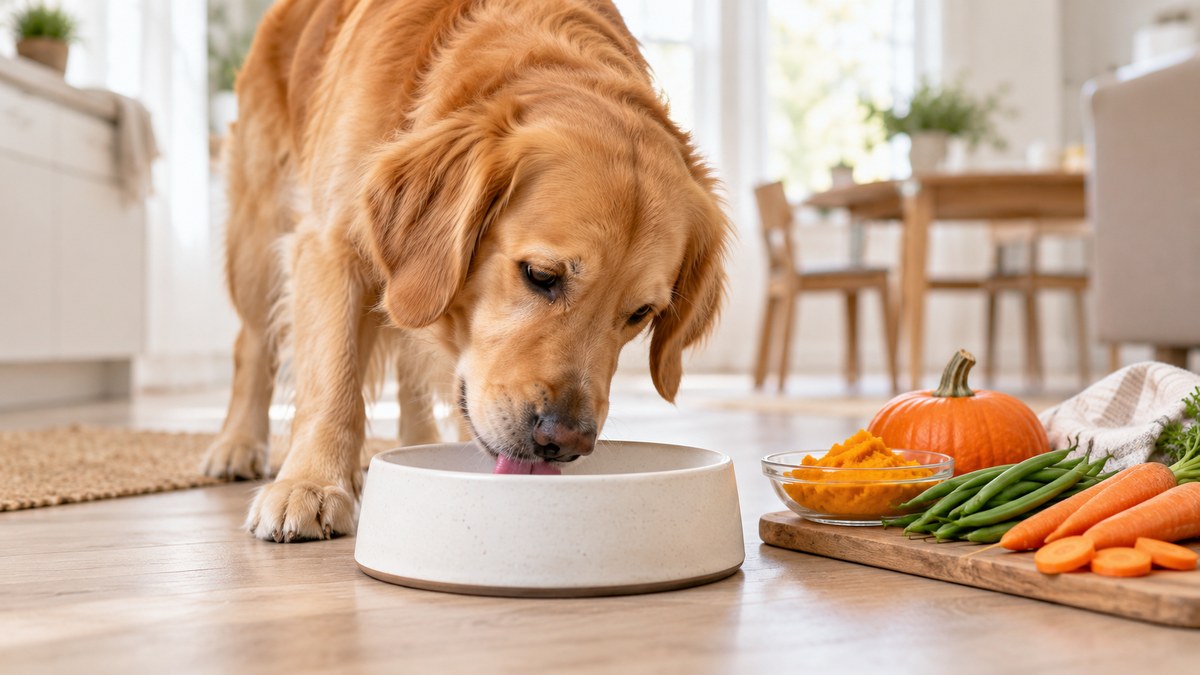
Your dog licks the bowl clean in seconds. Then he stares at you with those big eyes, tail wagging, begging for more. You might think he is still hungry. Maybe you even scoop out another portion.
But here is the truth that surprises most owners: a clean bowl does not mean a full belly. Not when it comes to nutrition, anyway. Your dog can eat the right amount of calories and still miss key nutrients. One of the most overlooked is fiber.
Fiber is not just for humans trying to stay regular. It plays a major role in your dog’s health, from digestion to weight management to steady energy levels. If your dog acts hungry all the time, or if his digestion seems off, fiber might be the missing piece.
Fiber helps dogs feel full longer, supports healthy digestion, and stabilizes blood sugar. Most commercial dog foods are low in fiber, which is why your dog may seem hungry right after eating. Adding fiber rich vegetables, fruits, or supplements to your dog’s diet can improve gut health, firm up stools, and help with weight control. Always introduce new fiber sources slowly to avoid gas or bloating.
What Fiber Actually Does for Your Dog
Most people think dogs are strict carnivores. That is a common myth. While dogs do need plenty of animal protein, they are actually omnivores. Their digestive systems can handle plant material, and in fact, they benefit from it.
Fiber is a carbohydrate that your dog cannot digest. That might sound useless, but it is anything but. As fiber moves through the digestive tract, it does several important jobs:
- Slows down digestion so nutrients get absorbed properly
- Adds bulk to stool which helps prevent both diarrhea and constipation
- Feeds good gut bacteria which supports the immune system
- Creates a feeling of fullness which can stop your dog from begging between meals
- Helps regulate blood sugar by slowing the release of glucose into the bloodstream
When a dog does not get enough fiber, food moves through the system too fast. That means less time for nutrient absorption. It also means your dog gets hungry again sooner, even if he ate enough calories.
Signs Your Dog’s Diet Is Low in Fiber
How do you know if your dog needs more fiber? Look for these clues:
- Loose or inconsistent stools. If your dog’s poop is soft, runny, or varies a lot from day to day, fiber could help.
- Constant begging. Dogs who feel full for longer are less likely to beg an hour after dinner.
- Scooting or licking the rear. This can signal anal gland issues that fiber helps resolve by firming up the stool.
- Weight gain despite small portions. Without fiber, your dog may eat more calories trying to feel satisfied.
- Gas or bloating. Paradoxically, too little fiber can cause gas because the gut bacteria are not balanced.
If any of these sound familiar, it is worth looking at your dog’s fiber intake.
How Much Fiber Does a Dog Really Need?
There is no single number that works for every dog. But most veterinarians agree that a healthy adult dog needs between 2% and 4% fiber in their total diet. Puppies and senior dogs may need slightly different amounts.
Here is a simple comparison of fiber levels in common foods:
| Food Type | Approximate Fiber Content | Best For |
|---|---|---|
| High quality kibble | 2% to 4% | Maintenance, good for most dogs |
| Low quality kibble | 1% or less | May cause hunger and loose stools |
| Canned/wet food | 0.5% to 1% | Needs a fiber boost |
| Raw or homemade diets | Varies widely | Depends entirely on ingredients |
| Pumpkin (canned, plain) | 7% | Excellent fiber supplement |
| Green beans (cooked) | 8% | Low calorie fiber booster |
| Carrots (steamed) | 6% | Good for dental health too |
The takeaway is simple. If you feed wet food or a homemade diet, you almost certainly need to add fiber. Even many dry kibbles are lower than you would expect.
The Best Sources of Fiber for Dogs
You do not need to buy expensive supplements. Some of the best fiber sources are probably already in your kitchen.
Vegetables That Work Well
- Pumpkin. Plain canned pumpkin (not pie filling) is a superstar. It firms up stools and settles upset stomachs. Start with one tablespoon for a small dog, two for a large dog.
- Green beans. Steamed or raw, these are low in calories and high in fiber. They make great training treats.
- Carrots. Steam them to make them easier to digest. They add fiber plus vitamin A.
- Sweet potatoes. Cooked and mashed, they are a gentle fiber source that most dogs love.
- Broccoli and cauliflower. Steam these first. They are high in fiber but can cause gas if introduced too fast.
Fruits in Moderation
- Apples. Remove the seeds and core. A few slices add pectin, a soluble fiber that helps digestion.
- Blueberries. Low in sugar, high in fiber and antioxidants. A handful goes a long way.
- Bananas. Good fiber source but higher in sugar. Use as an occasional treat.
Dr. Sarah Klein, a veterinarian based in Ohio, recommends starting with one new fiber source at a time. “Introduce a single vegetable, wait three days, and watch your dog’s stool. If everything looks good, you can add another. This way you know exactly what works and what does not.”
How to Add Fiber Without Causing Stomach Trouble
Adding too much fiber too fast can backfire. Your dog may end up gassy, bloated, or with diarrhea. Follow these steps to do it right:
- Pick one fiber source. Choose pumpkin, green beans, or another vegetable from the list above. Stick with one for now.
- Start with a small amount. For a 30 pound dog, that means about one tablespoon of pumpkin or a handful of green beans.
- Mix it into the regular food. Do not serve it alone. Mixing helps the digestive system adjust.
- Wait three full days. Watch your dog’s energy, stool quality, and behavior.
- Increase slowly if needed. If everything looks good, you can double the amount. If you see loose stool, cut back.
- Add more variety later. Once your dog handles one fiber source well, try a second. Rotate them for a range of nutrients.
This gradual approach works for puppies, adults, and seniors alike. The only exception is dogs with certain medical conditions like pancreatitis or kidney disease. If your dog has a health issue, check with your vet first.
Common Mistakes Owners Make with Fiber
Even with good intentions, it is easy to make mistakes. Here are the most common ones:
| Mistake | Why It Is a Problem | What to Do Instead |
|---|---|---|
| Adding too much at once | Causes gas, bloating, diarrhea | Start with a teaspoon or tablespoon |
| Using canned veggies with salt or seasoning | Too much sodium is bad for dogs | Use plain, unsalted, or rinse canned veggies |
| Forgetting to cook hard vegetables | Raw carrots and sweet potatoes are hard to digest | Steam or boil until soft |
| Relying only on commercial fiber treats | Many are full of fillers | Use whole food sources as the main fiber |
| Ignoring water intake | Fiber needs water to work | Make sure fresh water is always available |
When Fiber Might Not Be the Answer
Fiber is helpful for most dogs, but not all. Some dogs have medical conditions that require a low fiber diet. These include:
- Dogs with exocrine pancreatic insufficiency (EPI)
- Dogs recovering from gastrointestinal surgery
- Dogs with certain types of inflammatory bowel disease
- Dogs on a prescription diet for specific health issues
If your dog has a chronic health condition, talk to your vet before changing the diet. Fiber is powerful, and more is not always better.
How to Tell If You Have Found the Right Balance
Once you add fiber, how do you know you have hit the sweet spot? Look for these signs:
- Firm, consistent stools. Not too hard, not too soft. They should hold their shape for a few minutes.
- Less begging. Your dog seems satisfied after meals and does not act hungry an hour later.
- Stable energy. No big spikes or crashes. Your dog is alert but not hyperactive.
- Healthy weight. Your dog maintains a good body condition without gaining or losing unexpectedly.
If you see these changes, you have found the right fiber level. If not, adjust slowly.
For more guidance on building a well rounded diet, check out our guide to essential tips for creating a balanced homemade dog food diet. It covers protein, fat, and carb balance alongside fiber.
A Simple Fiber Boosting Routine You Can Start Today
You do not need to overhaul your dog’s entire diet. Small changes make a big difference. Here is a routine that works for most dogs:
Morning meal: Add one tablespoon of plain canned pumpkin to the breakfast bowl.
Evening meal: Add a small handful of steamed green beans or carrot slices.
Weekly treat: Offer a few frozen blueberries or a slice of apple as a snack.
That is it. Three small additions. Within a week, you will likely notice firmer stools and a calmer, more satisfied dog.
If you want to go deeper into gut health, read about essential tips for maintaining your dog’s digestive health. It covers probiotics, prebiotics, and other gut friendly foods.
Why Your Dog Still Acts Hungry Even with More Fiber
You might add fiber and still see your dog licking the bowl clean. That is normal. Dogs are driven by instinct, not by nutrition labels. A clean bowl triggers a reward response. Your dog is not necessarily hungry. He is just conditioned to hope for more.
Fiber helps reduce that drive over time. As your dog feels fuller longer, the begging behavior fades. But it takes a week or two. Be patient.
Also check the calorie content of your dog’s meals. Sometimes a dog is genuinely hungry because the food is too low in calories. Fiber helps with satiety, but it cannot replace missing calories. If your dog is active, growing, or a working breed, he may simply need more food.
The Big Picture on Fiber and Your Dog’s Health
Fiber is not a glamorous nutrient. It does not get the attention that protein or omega 3s get. But it is just as important. A dog who gets enough fiber will have better digestion, steadier energy, and a healthier weight. He will also be less likely to beg, which makes life easier for both of you.
Think of fiber as the supporting actor that makes the star nutrients work better. Without it, even the best diet falls short.
If you are interested in other ways to boost your dog’s nutrition, take a look at top natural supplements to boost your dog’s nutrition naturally. It covers probiotics, digestive enzymes, and other helpful additions.
Your Dog’s Bowl Tells a Story, But Not the Whole Story
That clean bowl your dog leaves behind is a good sign. It means he enjoyed his meal. But it does not tell you whether he got everything he needs. Fiber is one of those silent nutrients. When it is missing, you see the symptoms: loose stool, constant hunger, energy crashes. When it is present, everything just works better.
Start small. Add a tablespoon of pumpkin or a few green beans to tonight’s dinner. Watch what happens over the next few days. Your dog will thank you with better poops, calmer behavior, and fewer trips to the food bin. And you will sleep better knowing his bowl is not just clean, but truly nourishing.